1-Dodecylimidazole: A Closer Look at a Versatile Compound
Historical Development
Exploring 1-dodecylimidazole takes us back to the roots of organic chemistry where imidazole derivatives started gaining attention for their unique chemistry. Research during the late 20th century found value in long-chain alkyl imidazoles, with 1-dodecylimidazole standing out for its ability to mix the functional imidazole ring with a hydrophobic dodecyl tail. Scientists originally searched for new surfactants and corrosion inhibitors, and stumbled upon this compound as a bridge between basic heterocycles and practical chemical solutions. Academic studies and patent filings ramped up in the 1990s, and ever since, 1-dodecylimidazole's applications have only widened.
Product Overview
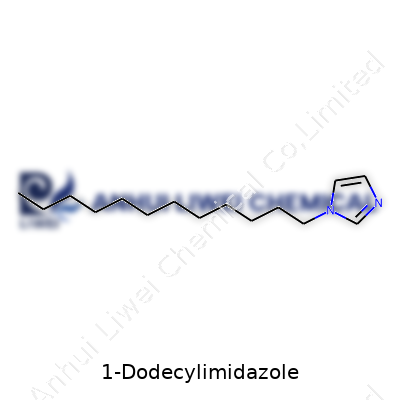
At its core, 1-dodecylimidazole is a synthetic organic molecule, part of the Imidazoles class, armed with a straightforward structure: a twelve-carbon straight-chain alkyl group planted onto the nitrogen in the imidazole ring. This unique arrangement gives the molecule both oil-loving and water-loving character, which opens the door for it to act where solubilization counts. The material typically arrives as an oily liquid with a light straw color, and its mild amine-like odor is tough to miss in a lab. Various suppliers put it up for sale at different purity grades with technical data to match the needs in lab research, materials science, or industrial chemistry.
Physical & Chemical Properties
1-Dodecylimidazole features a melting point below room temperature, so it leans toward existing as a viscous liquid. Its boiling point stretches toward the higher side (well above 350°C), giving it a solid foothold in high-heat environments. The molecule’s hydrophobic chain resists water, but the imidazole ring alone would want more time in an aqueous environment. Dissolution plays out differently depending on the solvent: you’ll see 1-dodecylimidazole dissolve easily in organic solvents like chloroform, ethanol, or ethyl acetate, but less so in water. It doesn’t corrode glass, nor does it show any volatility under standard lab conditions. The molecular weight sits at 246.4 g/mol, balancing bulk with chemical finesse. As for reactivity, acylation, alkylation, or other functionalization can occur at the imidazole nitrogens, but the dodecyl group stabilizes the entire package.
Technical Specifications & Labeling
Producers typically provide 1-dodecylimidazole in sealed HDPE or amber glass bottles with purity ranging from 95% to 99%, as verified by HPLC or NMR analysis. Standard labels tag the product with hazard statements, suggest PPE like gloves and goggles, and mention the relevant hazard pictograms. Data sheets emphasize flash point values, storage temperatures near room level, and precautions for avoiding contact with eyes and skin. Handling recommendations focus on good ventilation, closed transfer systems, and careful weighing, reflecting the compound’s moderate volatility and low acute toxicity. Shipment divides into laboratory and industrial categories, with the latter calling for secondary containment and spill kits nearby.
Preparation Method
Production relies mostly on alkylating imidazole with dodecyl bromide, often in the presence of a base like potassium carbonate or sodium hydroxide. This setup minimizes side reactions and maximizes yield, turning out dense, high-purity batches. Solvents like DMF or toluene let the reactants mingle efficiently, and gentle heating completes the job within hours. Purification can involve aqueous workup and column chromatography, with final cleaning sometimes requiring high-vacuum distillation for extra-sensitive applications. Commercial-scale operations may introduce flow chemistry techniques or solvent recycling streams to cut costs and improve sustainability.
Chemical Reactions & Modifications
One attractive feature of 1-dodecylimidazole is its flexibility for follow-up chemistry. Alkylation or acylation on the second nitrogen of the imidazole ring shapes derivatives with altered solubility and functional profiles. The alkyl chain itself can participate in oxidation, sulfonation, or even cross-linking under the right conditions, linking different 1-dodecylimidazole molecules into networks or gels. Some research labs have exploited its amphiphilicity to prepare micelles or nanoparticles that anchor catalysts. Others have explored further substitution on the ring to generate ionic liquids, where the molecule supports charge transport in advanced batteries or sensors. Each new step depends on understanding how the long hydrocarbon chain changes reactivity—a classic chemistry challenge that keeps synthetic chemists on their toes.
Synonyms & Product Names
Over the years, 1-dodecylimidazole has worn different names on safety sheets, catalogs, and research papers. It sometimes shows up as N-dodecylimidazole, laurylimidazole, or just dodecylimidazole. The CAS registry lists it under 6798-32-7, so searching by number locates it fast no matter the supplier. Companies in the specialty chemicals sector brand it for markets like coatings or detergents, sometimes blending or modifying it to create surface-active agents tailored for custom needs. The structure always boils down to a C12 alkyl chain tethered to the imidazole core, regardless of what label is on the bottle.
Safety & Operational Standards
No one takes safety lightly with organic chemicals, and 1-dodecylimidazole is no different. Direct skin contact can irritate, owing to the basic imidazole ring, so gloves and lab coats protect from splashes and spills. Standard ventilation, along with splash-proof goggles, cover the real-world risks of accidental exposure. Spills get absorbed with inert materials rather than washed. Storage conditions call for tightly sealed bottles away from strong acids or oxidizers. Waste disposal follows local chemical protocols, with authorities keeping a watchful eye on quantities disposed by laboratories or plants. Emergency protocols include eyewash stations and safety showers within arm's reach—this isn’t a compound to leave lying around on a crowded benchtop.
Application Area
Applications range widely thanks to both the imidazole ring and dodecyl tail. In the coatings industry, 1-dodecylimidazole stands out as a curing agent for epoxy resins, enhancing flexibility and chemical resistance. The world of surfactants also values its amphiphilicity, as the molecule tackles both oil and water, boosting cleaning power in detergents and degreasers. Similar traits allow it to serve as a corrosion inhibitor in oil pipelines or marine environments where water and steel constantly fight corrosion. Other uses pop up in pharmaceuticals—as intermediates—and even in the design of ionic liquids or specialty lubricants, where traditional surfactants fall short. Polymer chemists sometimes reach for it to help disperse fillers in composites, making plastics that resist water and stains. Each industry sees its own value, drawing on years of tailored know-how and plenty of trial and error in process design.
Research & Development
Researchers keep pushing the boundaries for what 1-dodecylimidazole can do, especially as the world looks for smarter, greener, and more robust chemicals. The bio-inspired approach has caught on, with academic labs exploring its antifungal and antibacterial activity—drawing on the natural origins of the imidazole scaffold in biological signaling. Teams have studied modification pathways to tune hydrophobicity and compatibility for cosmetic or pharmaceutical uses. Material scientists invest time in optimizing its performance as a dispersing agent, while engineers focus on cutting process costs using continuous flow or alternative, greener solvents. These ongoing projects show the appetite for innovation with a molecule that fits the bill for performance, safety, and versatility.
Toxicity Research
Toxicity studies play a critical role well before 1-dodecylimidazole enters mainstream consumer products. Acute toxicity appears low compared to strong organic bases, but long-term effects remain less understood. Animal studies point to mild irritation on repeated exposure, mostly from the imidazole group’s basic properties. Environmentally, persistence and bioaccumulation have not raised red flags at current scales of use, but regulators and environmental chemists keep tracking breakdown pathways, especially as more of the compound finds its way into industrial waste streams. Data are sparse on chronic inhalation or accidental ingestion, so safety data sheets lean conservative to account for unknowns. Research teams keep doing their due diligence on cell and animal models, looking for any surprise effects on human health or local ecosystems.
Future Prospects
The years ahead look bright for 1-dodecylimidazole, fueled by shifts to performance-focused and sustainable chemicals in manufacturing and consumer goods. In efforts to replace hazardous amines or imidazoles, industry leaders pay attention to compounds like this that pair chemical robustness with relatively mild toxicity. The potential for modification paves the way for next-generation surfactants and green solvents, especially in processes aiming for lower energy use and less waste. With the growth of smart materials and responsive polymers, there’s space to imagine 1-dodecylimidazole-based networks with programmable properties. Collaboration between academia, industry, and environmental groups will shape how this compound’s profile grows, with an eye toward greener, safer, and high-value applications across more sectors.
1-Dodecylimidazole: More Than a Chemical Name
In laboratories and factories, 1-dodecylimidazole shows up as a valuable tool in the world of chemistry and materials science. Its name doesn’t roll off the tongue, but this compound stands out for its unique structure—a combination of an imidazole ring and a long, greasy, twelve-carbon chain. This structure brings out a set of qualities you can’t find just anywhere.
Bringing Out the Best in Surfactants and Detergents
Most people don’t walk into the grocery store looking for 1-dodecylimidazole, yet they might trust products powered by similar surfactants every day. The two-ended nature of the molecule—one side loves water, the other side can't stand it—makes it perfect for lifting greasy smudges right off glassware, lab benches, or clothes. From my experience in research labs, the utility isn’t only about cleaning. It’s about consistency, about repeating tests and getting results that stand up to tough scrutiny. Chemists often depend on specialty surfactants like this one when they need something a little more precise, or if the environment demands a stable, low-foaming solution.
Industry leans on these chemical helpers during manufacturing too. Processing complex mixtures—emulsifying oils into water for creams, dispersing pigments for paints or inks, washing stubborn residues from precision parts—can all get easier and faster with compounds like 1-dodecylimidazole working behind the scenes. Purity counts here, and performance under strain can make or break a production line.
Boosting Chemical Reactions in the Lab and the Factory
The imidazole ring isn’t just a bystander in this molecule. It can act as a mild base or serve as a ligand, which means it binds to metals. This quality brings real value during certain organic reactions, especially those where you need to adjust pH or stabilize a reactive metal catalyst. I’ve seen researchers steer tough syntheses, hoping for higher yields or fewer side products, by carefully picking additives like 1-dodecylimidazole. These tweaks often create subtle advantages—cleaner final products, smoother separation, fewer headaches during purification.
And then there’s corrosion protection. Some metals, left unguarded, will pit, rust, and fall apart faster than you’d think. 1-dodecylimidazole latches onto metal surfaces and helps block out corrosive agents. Adding a touch of it to a lubricant or a water-based system can keep everything running longer and more reliably.
Safety and Environmental Impact: Points to Consider
No chemical comes without a flip side. 1-dodecylimidazole, like many surfactants, can stick around in the environment if it escapes into wastewater. The long hydrocarbon tail doesn’t break down easily. From an environmental standpoint, this sparks the need for better wastewater treatment and regular monitoring.
In my years working around specialty chemicals, I’ve seen how proper training and equipment shape safe practices. Lab managers often invest in clear labeling, good ventilation, and waste disposal that meets local rules. There’s always room to improve, though—manufacturers can look for greener synthetic routes, biodegradable alternatives, or methods that cut down how much escapes from their pipes into the outside world.
Moving Science and Industry Forward
1-dodecylimidazole doesn’t grab headlines, but the work it does helps keep science and industry humming along. Whether cleaning, protecting, or fine-tuning reactions, it highlights how clever chemistry bends to solve real-world problems. For researchers, product developers, and engineers, choosing the right chemicals shapes what gets built and how safe it is for people and the planet.
Understanding 1-Dodecylimidazole
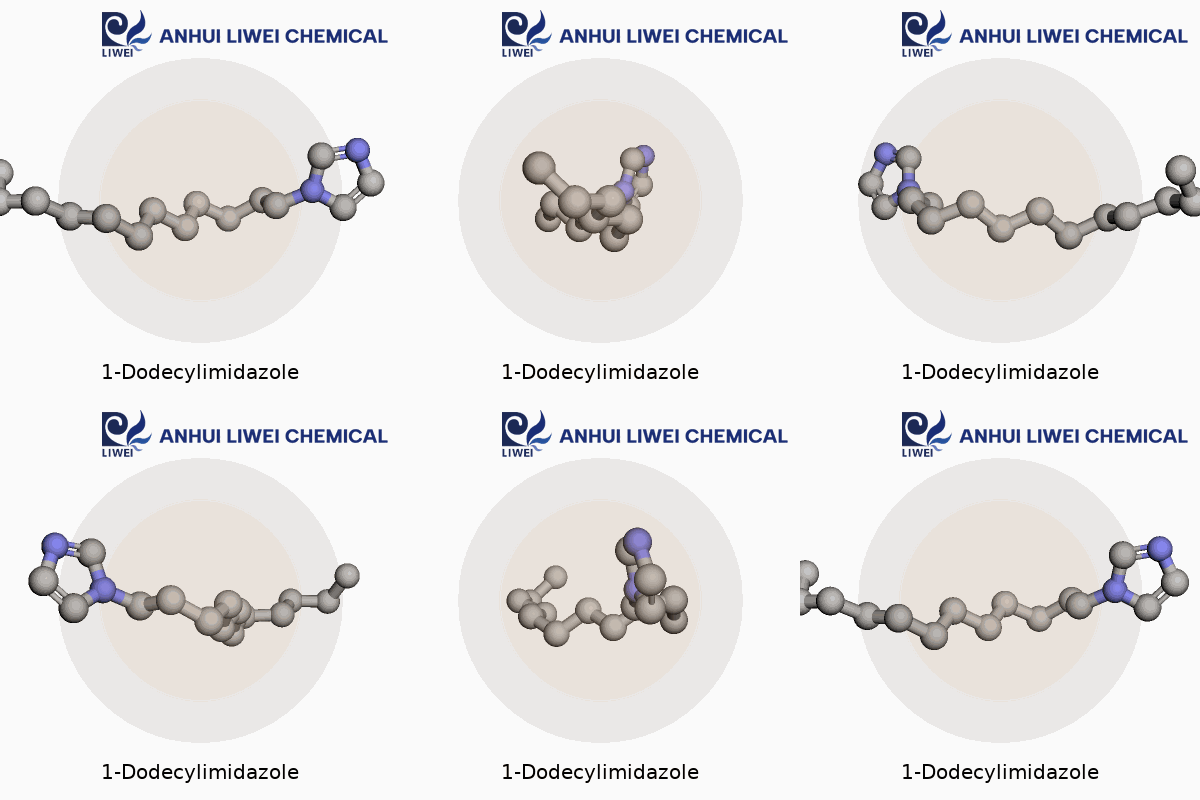
Working in a lab or navigating chemistry textbooks, I keep bumping into molecules like 1-dodecylimidazole. Just the name tells a story: a long hydrocarbon—dodecyl—hooked onto an imidazole ring. You end up with a molecule where a 12-carbon chain grows from the nitrogen at the first position on the imidazole. In shorthand, chemists often draw it as C12H25-C3N2H3, but writing it out as a structural formula, you see a straight alkyl (dodecyl) tail running into a five-membered aromatic ring containing two nitrogen atoms.
Why This Structure Matters
Out in the field, specialty chemicals with an imidazole ring tend to pop up in a lot of places. That five-membered ring, with two nitrogens, binds to metals, forms stable complexes, and shows antibacterial properties. Attaching a long hydrocarbon chain changes how it behaves. The whole molecule gets a boost in solubility in organic solvents, meaning it can dissolve in oils or help mix substances that usually refuse to blend.
Scientists from drug development to materials engineering value this imidazole structure. Attaching a dodecyl group increases surface activity, meaning 1-dodecylimidazole often works as a surfactant—a helper in mixing oil and water or creating stable emulsions. I’ve seen it used in formulations where one mole of function can punch above its weight, holding together pharmaceutical suspensions or cleaning solutions.
Uses in the Real World
1-Dodecylimidazole is used in ways that have real, everyday consequences, even if you never see the molecule up close. Corrosion scientists use the molecule in coatings that protect metals from water or salt. Its long hydrocarbon tail forms a barrier, while the imidazole ring helps the chemical “anchor” onto metal surfaces. Paints made for ships or oil rigs depend on molecules like these to slow rust.
I've seen research showing how the combination of hydrophobic (water-fearing) tail and hydrophilic (water-loving) ring creates a chemical that stands at the boundary between oil and water, grabbing both and coaxing them to coexist. That's a key property in detergents, emulsifiers, and even in novel drug delivery systems. In some medical applications, dodecylimidazole derivatives interact with cell membranes, helping shuttle drugs into places they wouldn't normally reach.
Challenges and Directions
Every strength in a molecule can turn into a problem if nobody pays attention. Longer hydrocarbon chains can bioaccumulate. If 1-dodecylimidazole escapes into groundwater, it might not break down easily. Persistent chemicals like this call for new disposal strategies and greener chemistry. Researchers now look for ways to build these molecules from substances that break down faster or to engineer the chain for easier biodegradation.
One solution: rethink how synthesis works. Biobased alternatives, greener solvents or catalysis, and enzymatic approaches trim down the environmental impact. In my own experience, green chemistry comes down to smart design: building only what you need, avoiding waste, keeping safety in mind from the first sketch on the blackboard.
Looking Ahead
From cleaning supplies to cancer research, 1-dodecylimidazole’s chemical structure brings real punch to every application. The blend of a strong functional ring and a long alkyl tail fuels both utility and complexity. Stepping into tomorrow, scientists and manufacturers keep balancing performance with responsibility, using what we know about these molecules to solve problems while watching for their shadows.
Getting Storage Right Matters
Anyone who has handled specialty chemicals knows how much the storage environment shapes both safety and the quality of your materials. 1-Dodecylimidazole, a surfactant used in research and certain cleaning agents, fits this bill. Simple habits in the lab go a long way. Keep the container tightly sealed. This blocks dust, airborne moisture, and possible contaminant gases from creeping in. Airtight lids, not crumpled foil or a shaky stopper, set the standard here.
Pay Attention to Temperature
Chemicals rarely forgive high heat or harsh cold. 1-Dodecylimidazole holds up best around room temperature—let’s say between 20 and 25°C. A regular spot on a shelf, well away from direct sunlight or heater vents, works well enough. Sunlight causes slow degradation in most organic compounds. The same goes for temperature swings near a window or in an unregulated storeroom.
Stay Dry
Lab workers often overlook humidity until someone discovers clumpy solids or sticky residues in a jar. This compound hates moisture. Dampness can alter chemical structure, even at small levels. High humidity turns white powders clumpy within months. I once saw an entire batch written off due to storage next to a sink, which doubled room humidity in summer. So dry shelves, closed cabinets, and a desiccator if you want to keep things extra crisp.
Keep Away from Oxidizers and Acids
Any time you line up bottles of chemicals, think about neighbors. 1-Dodecylimidazole shouldn’t mingle with strong acids or oxidizers. Even splashes or fumes from the next bottle can kick off unwanted reactions. Set it apart from bleach, nitric acid, and even certain peroxides. Most chemical safety guides spell out storage compatibility for a reason. A little discipline in how you group chemicals prevents surprise incidents that nobody wants in a shared space.
Labeling and Record-Keeping
Label every container with clear writing, use by dates, and hazard warnings. It’s easy to skip this during a busy afternoon, but proper labeling beats the panic of grabbing the wrong material. In my early days, I saw confusion over faded labels lead to lost samples and second guesses. Using a logbook or simple digital tracker cuts down on duplicate orders and accidental misuse.
PPE and Ventilation
No one expects a disaster, but gloves and eye protection help during every transfer or repackaging. 1-Dodecylimidazole doesn’t give off heavy fumes, yet a bit of powder in the air can cause irritation. Good ventilation—ideally, a fume hood—stays on the checklist. Simple details like this, repeated each day, create a safer lab that’s easier to manage and less likely to cause headaches down the road.
Common-Sense Solutions Work
Most mishaps stem from small lapses—an unscrewed cap, a mislabeled bottle, a jar left near the steam pipe. None of this takes fancy equipment. Just a habit for checking shelves weekly and nudging containers into their right place. I’ve seen storerooms at their best and worst. Places where chemicals enjoy attention and basics don’t slip, materials stay usable through their entire shelf life. Places where things get rushed, expensive compounds go to waste, and safety always feels one step behind. For 1-Dodecylimidazole, as for most chemicals, smart storage starts with respect for the basics and a willingness to look out for your colleagues.
References
- PubChem, National Center for Biotechnology Information
- Chemical Safety Data Sheets
- Personal laboratory experience
Understanding Chemical Safety in the Real World
Chemical safety goes far beyond industry labs and regulatory documents. 1-Dodecylimidazole, a substance used in specialty chemical manufacturing and research, raises some concerns that deserve honest discussion. I've worked around lab chemicals long enough to recognize how easily someone can brush off risk because of a lack of immediate irritation or a pleasant smell. But the real issues with a compound like 1-Dodecylimidazole go deeper, resting in its chemical structure and the lack of solid data about its effects on people and the environment.
What Makes 1-Dodecylimidazole a Concern?
Looking at the structure, 1-Dodecylimidazole features a long alkyl chain and an imidazole ring. The imidazole group sits in many bioactive molecules, which means there’s always potential for unwanted biological activity. The dodecyl (twelve-carbon) chain makes this compound more likely to mix with fats and cell membranes. This ability to slip into biological tissue increases the risk for skin penetration and possible cell disruption.
While most safety data sheets point to symptoms like skin and eye irritation after contact, it’s the long-term effects that trouble me. The science community just doesn’t have enough chronic exposure data on this compound. If you have sensitive skin or respiratory issues, even low-level exposure to many similar surfactants and imidazoles can trigger inflammation or allergies. Working several years in a polymer lab, I saw colleagues develop reactions to new chemicals long after initial contact. The unpredictable nature of chemical sensitivities keeps me cautious.
Environmental and Toxicity Factors
With so little public information about the breakdown of 1-Dodecylimidazole in water, soil, or air, it’s tough to gauge the real environmental impact. Chemicals with long hydrocarbon chains tend to stick around—sometimes bioaccumulating in wildlife. Practically speaking, compounds that cling to fats have a way of building up in living things. This persistence can lead to subtle, chronic effects that go unnoticed for years.
Toxicological research on compounds in the imidazole family does raise red flags. Some imidazoles have been linked to liver or reproductive effects in animal tests. Without robust studies on 1-Dodecylimidazole itself, no one can honestly say there’s no risk. Decades working with unfamiliar reagents have taught me that what we ignore today can become tomorrow’s environmental headache.
Safer Handling in Laboratories and Workplaces
In real life, nobody reads every safety sheet in detail. Shortcuts happen, especially in small labs under pressure. Still, choosing chemical-resistant gloves and good ventilation is worth the hassle for substances like this. Standard latex gloves slip up when chemicals dissolve in fats, so nitrile or butyl gloves make a safer bet. Spill containment and eye protection look basic, but they save a lot of trouble.
Pushing for Better Solutions
Industry and research teams should push for more complete toxicology and ecotoxicology studies when they introduce new compounds. Regulators cannot keep up with the number of novel molecules entering the market each year, so the responsibility shifts to those who use and distribute them. Requiring chemical suppliers to produce detailed safety data from the outset helps everyone know what they’re dealing with before exposure sneaks up.
If safer alternatives exist for a process or formula, trying them out—even if they cost more or take an extra step—can avoid regret and liability down the line. No one wants to discover years later that a chemical they handled with bare hands carried hidden dangers.
Digging Into Purity Specs: No Room for Guesswork
Anyone who’s spent time in a lab knows what happens if you cut corners on your chemicals. I remember ordering something as straightforward as sodium chloride for a set of tests. The purity stamped on the side of the jar wasn’t just a badge; it told us whether our results could hold any ground or needed to be tossed. That clarity counts even more for specialty molecules. 1-Dodecylimidazole, used for research and production, is a good example. You don’t simply look at the label to see if it “should be” pure. You double-check what manufacturers promise, because one slip and whole runs fall apart.
So what does “pure” mean in a world that’s always demanding higher standards? The most common purity for 1-Dodecylimidazole hovers at 98% or above. Anything less might sound impressive, but many applications turn unreliable if you dip below the threshold. While pharma-grade chemicals must reach almost surgical levels of purity—think 99% or more—general chemical supply for industrial or academic settings usually sticks with that 98% figure.
The Real-World Risks of Cutting Corners
Using the wrong grade drags along a list of headaches. One contaminant, and the dominoes start to fall. Imagine trying to synthesize a surfactant, only to find side reactions hijacking the whole batch. Or picture a graduate student, eager for publishable electrochemistry data, discovering weeks later that his “off” results came from a reagent with too much residual water. Even a small impurity can change melting points or throw off chromatography in ways you can't catch until it's too late. Data gets messy. People waste money and time.
In my own work, trace byproducts from poorly purified chemicals used to ruin runs, costing my group hours of rerun experiments. The best suppliers tag each batch with their specific analysis—like GC, HPLC, or NMR profiles—so you know what you’re working with. If there’s a bump at 98%, you expect only 2% or less to be anything else, and that “else” needs to get listed. Without transparency, you roll the dice every time you pipette from the bottle.
How Purity Gets Checked and Why It Builds Trust
Deciding on a source for 1-Dodecylimidazole isn’t about taking the first offer. Tough lab protocols depend on COAs (Certificates of Analysis). These notes won’t just drop a single figure; they detail the levels of common impurities and lay out how those were measured. I’ve relied on COAs to spot issues before they torpedoed longer projects. If the label says 98%, but the water content or unidentified peaks run higher than that, it’s a red flag.
Suppliers who test with precise techniques like high-performance liquid chromatography or gas chromatography back up their claims. With these reports at hand, researchers and production teams sidestep costly surprises. You pair that hard-won data with reviews from other buyers: word spreads fast in science about brands who cut corners.
Pushing the Industry to Up Its Game
Groups pushing for cleaner chemistry have real power: they keep suppliers honest. Whenever enough buyers demand reliable info on every batch—down to the contaminants at 0.1% levels—companies listen. Going further, automation and tracking in supply chains make it easier for us to spot who’s trending higher in purity and who’s lagging.
For anyone in the market for 1-Dodecylimidazole right now, don’t just read the number on the bottle. Ask for the full analytical run. Check for water content, residual solvents, and trace metals, because every little bit can twist your results. Pushing for high standards and clear documentation doesn’t just save hassle; it keeps the whole field moving forward one solid experiment at a time.