6-Chlorohexanoyl Chloride: A Closer Look into a Versatile Chemical
Historical Development
Chemistry likes to remember the compounds that change the way reactions take shape. 6-Chlorohexanoyl chloride traces back to a time when acyl chlorides started gaining attention among scientists looking to build new molecules. Back in the mid-20th century, organochlorine compounds found plenty of practical uses—ranging from pharmaceuticals to new polymers. Research efforts branched out from shorter-chain relatives, with scientists recognizing the potential in chlorine-substituted hexanoyl derivatives. The road wasn’t paved overnight, but over the decades, clearer understanding emerged. Academic articles from the 1960s and 1970s documented synthetic challenges with longer-chain acid chlorides, noting their value in surfactant and complex molecule construction. Experience shows the compound didn’t reach markets through one sudden discovery—it grew from steady progress in research labs and refiners’ patience in meeting purity and storage challenges.
Product Overview
6-Chlorohexanoyl chloride earns its keep through versatility. The molecule wears both a reactive acid chloride group and a six-carbon chain with a chlorine sitting at the sixth position. That combination means it serves as a valuable acylating reagent for building block synthesis, especially when a long chain and reactivity matter. It crops up in custom organic synthesis, the manufacture of certain agrochemicals, and the development of specialty pharmaceuticals. In my work with chemical suppliers, requests for this compound often tie to the need for custom molecules rather than bulk commodity chemicals. Researchers and product developers value its well-defined behavior, making it a strong choice where precision counts more than volume.
Physical & Chemical Properties
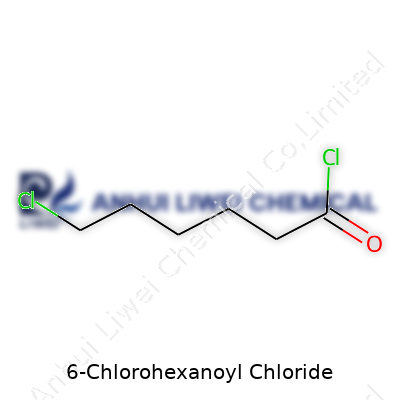
Properties of 6-chlorohexanoyl chloride connect strongly with both its acid chloride and alkyl chloride features. At standard temperature, the compound appears as a colorless to pale yellow liquid with a pungent, irritating odor—a trait common among acid chlorides. The boiling point sits around 85–90°C at reduced pressure, given its tendency for hydrolysis in moist air and its modest molar mass. The chemical formula, C6H10Cl2O, reveals the two chlorine atoms—one as part of the acyl chloride (-COCl) group and the other terminating the hexane chain. Its density hovers near 1.14 g/cm³. One feature that stands out in practice: sharp reactivity with water or alcohols, quickly liberating HCl gas, making handling equipment and location choice essential. Flammable solvents disperse it easily, but storage in tightly sealed containers reduces loss by hydrolysis.
Technical Specifications & Labeling
Manufacturers deliver 6-chlorohexanoyl chloride with tight purity specs, often above 97%. Certificate of analysis documentation details not only purity but water content, acid value, and residual solvents. Volume packaging ranges from small amber glass bottles for R&D to larger fluoropolymer-lined drums for scale-up. Shipping labels flag corrosive and toxic hazards, in line with GHS (Globally Harmonized System) requirements. UN number assignments and emergency contact information must be clear, following both local and global transportation rules. Customers demand full traceability from batch number through to shelf-life details, since both shelf stability and regulatory compliance tie closely to these details. I’ve found procurement departments take special care reading SDS (Safety Data Sheet) sections, focusing on incompatibility and first aid measures, particularly in academic and startup settings where less-experienced staff need training.
Preparation Method
Preparation involves a well-worn path in synthetic chemistry: conversion of a carboxylic acid into the corresponding acid chloride. For 6-chlorohexanoyl chloride, most synthesis routes start with 6-chlorohexanoic acid. Treating the acid with thionyl chloride (SOCl2), or occasionally oxalyl chloride, under anhydrous conditions generates the acid chloride, along with sulfur dioxide and hydrogen chloride as gaseous byproducts. Many labs use a catalytic drop of DMF to speed up the conversion with less excess reagent. Yields depend on dryness and purity of starting acid. Industrial settings favor batch reactors with precise temperature controls to limit side reactions, particularly hydrolysis back to the acid. Preparation steps demand vented hoods, dry glassware, and a steady hand, since acid chlorides react violently with water and alcohols. My own training included extra oversight for these steps, since amateur mistakes can damage equipment and put workers at risk.
Chemical Reactions & Modifications
In the hands of a skilled chemist, 6-chlorohexanoyl chloride serves as a key agent for introducing 6-chlorohexanoyl moieties into other molecules. The acid chloride group brings strong acylation power, making it a staple for coupling with amines (to form amides) or alcohols (to yield esters). Organic synthesis textbooks illustrate how it acts as an anchor in peptide modification, advanced polymer research, or specialty surfactant development. Reactions with nucleophiles demand careful measurement, controlled addition rates, and generous use of inert atmospheres. The alkyl chloride end also provides a chance for further transformations: nucleophilic substitution, such as converting the terminal chlorine to an azide or thiol, unlocks even more possibilities. In my experience, students often underestimate the double-edged nature of such dual reactive sites—getting comfortable with its use takes both time and direct exposure at the bench.
Synonyms & Product Names
6-Chlorohexanoyl chloride goes by several names in catalogs and literature. Chemists may encounter terms like "6-chlorohexanoic acid chloride", "6-chloro-hexanoyl chloride", or the systematized IUPAC name "6-chlorocapronyl chloride". CAS reference number 764-85-2 anchors its identity in regulatory systems and procurement platforms. Product listings across Europe, North America, and East Asia reflect similar synonyms, though spelling may shift slightly between "chloride" and "acid chloride". Some suppliers bundle it under specialty intermediate lines, flagging it as a customizable building block rather than as a primary product itself.
Safety & Operational Standards
Safety never sits on the back burner when using 6-chlorohexanoyl chloride. Strong reactivity, especially toward water, means direct contact causes immediate skin and eye irritation. Operations should run within fume hoods using face shields, chemical goggles, and acid-resistant gloves. Engineering controls fight vapor exposure, and safety showers and eyewash stations need to be close by. It’s not enough to trust experience—routine drills for chemical spills make a big difference. Waste management presents challenges: reaction residues and glassware washes need quenching before disposal to neutralize residual acid chloride. Facilities that handle multiple chlorinated compounds must monitor air quality and enforce daily checks of ventilation and chemical storage areas. The lessons I learned from my mentors stress that complacency, not just ignorance, poses risk—every bottle and each transfer can turn hazardous in less-prepared hands.
Application Area
Industries looking for specialized building blocks often find value in 6-chlorohexanoyl chloride. They use it to manufacture custom amide surfactants, experiment with agrochemical candidates, or explore modifications of pharmaceutical intermediates—the six-carbon chain and terminal chlorine offer targets for further development. Research chemists employ it as a stepping stone in synthesizing molecular scaffolds for polymer additives or specialty materials, pushing boundaries in product properties. My interaction with biotech and advanced materials companies often centers on their need for such tailor-made intermediates that strike a balance between reactivity and downstream modification potential.
Research & Development
Research efforts continue pulling 6-chlorohexanoyl chloride into new application spaces. Recent years have seen projects investigating its role in medicinal chemistry, especially in the search for prodrugs or more stable linkers in drug delivery systems. Polymer scientists and green chemistry advocates dig deeper into alternatives for its preparation and use, seeking less hazardous reagents or greener solvents without sacrificing yield or selectivity. Publications indicate growing activity across both academia and industry, with a clear trend toward customizing the acid chloride moiety for specialty syntheses. These studies help shape how the compound meets regulatory and sustainability expectations—areas that, from my discussions with colleagues, command greater attention than ever before.
Toxicity Research
Toxicologists approach 6-chlorohexanoyl chloride with healthy respect. The substance’s rapid response with nucleophiles means it harms by direct contact, with acute symptoms such as respiratory distress, severe skin burns, and temporary blindness if splashed in the eyes. Ingestion brings about corrosive injury to mouth and gastrointestinal tract. Chronic data remain limited, but structurally related acid chlorides and organochlorines broadly show environmental persistence and potential to bioaccumulate. Regulatory bodies monitor its use closely, setting clear exposure limits for workers and calling for proper incident reporting. Data from animal studies show possible inflammation and tissue damage at low thresholds, which reaffirms the need for robust engineering controls and worker training. My own take — reinforced by speaking with safety officers at chemical plants and research facilities — is that risk comes less from what is known and more from procedural gaps or lapses in training.
Future Prospects
Looking forward, 6-chlorohexanoyl chloride promises a place in sophisticated synthetic schemes, but changing attitudes on chemical safety and sustainability shape its future. The hunt for greener alternatives—both in its preparation and use—already impacts process development, from continuous-flow reactors designed for safer handling to efforts for solvent substitution. I see a push from product innovators keen to leverage its reactivity in making new functional materials, but also a demand to resolve concerns over downstream toxicity and environmental impact. Streamlined synthesis, better containment, and robust risk management can help unlock its full value, without leaving safety and stewardship behind. Conversations with R&D leaders reveal a vision shaped not only by chemistry but by the evolving demands of markets and regulators—making future developments in 6-chlorohexanoyl chloride fascinating to watch and shape.
Inside the World of Chemical Building Blocks
Anyone spending time around chemical labs or speaking with folks in pharmaceutical research will bump into specialized reagents that don’t attract much attention outside those walls. 6-Chlorohexanoyl chloride is a prime example. It’s one of those chemicals I often see in synthesis orders, quietly doing heavy lifting in the background of more headline-grabbing inventions. This compound steps into the toolbox for making other molecules, not for direct consumer use.
The Value in Pharmaceutical Synthesis
Drug development always depends on connections—the kind that build large, complicated molecules from smaller, well-designed parts. 6-Chlorohexanoyl chloride enters at this point, acting as a reactive building block. It attaches six carbon atoms, with a chlorine atom waiting on one end and an acid chloride group sitting on the other. That combination brings flexibility for medicinal chemistry teams trying to attach new pieces to early-stage drug candidates.
For example, researchers working on antiviral agents or antibiotics look to compounds like this to add specific functionality on a larger molecule. It’s less about the chemical itself, more about what happens when it joins with something else. The acid chloride group reacts strongly with amines or alcohols—those reactions set up new connections that can give a drug molecule different properties. These small changes sometimes unlock better solubility, longer shelf life, or higher activity against disease targets.
Specialty Use in Material Science and Agrochemicals
6-Chlorohexanoyl chloride pops up in other research circles, too. Material scientists use it when modifying surfaces or synthesizing polymers where a chlorine group on the “tail” end will set up a future reaction. Agrochemical companies rely on these specialized reagents for crafting molecules that work in herbicides or pesticides. These industries never work in isolation; experience in one corner often informs safer or more effective use in another.
Risks in Handling and Why Knowledge Matters
Chemists learn pretty early that acid chlorides bring hazards along with their usefulness. 6-Chlorohexanoyl chloride reacts with water, releasing hydrogen chloride gas. That’s not something to take lightly—inhalation irritates the lungs, and accidental spills burn skin. Proper training in handling, storing, and disposing of this chemical is not optional. Even experienced teams treat it with caution, wearing gloves and goggles and working in ventilated hoods.
Incidents involving improper disposal or poor labeling have shown up in research settings. These events highlight why experienced personnel and good documentation must stay in place. I’ve watched well-trained teams catch labeling mistakes in lab audits, which makes a real difference in preventing dangerous accidents later. Labs and manufacturers can’t cut corners here without risking safety and regulatory trouble.
Improving Responsible Use and Safer Alternatives
Responsible use of 6-chlorohexanoyl chloride extends beyond the bench. Suppliers screen orders carefully to limit sales to trained professionals. Purchasing departments often double-check buyers, especially in places without strict chemical controls. On a broader scale, researchers look for milder alternatives or less hazardous reagents every year. Green chemistry pushes for new ways of making similar connections without using these reactive, hazardous building blocks at all.
While tools like 6-chlorohexanoyl chloride make important things possible, their use always demands careful respect for safety and stewardship. Tighter controls, smart research, and better training each play a role in reducing risk and supporting continued progress in science and medicine.
Direct Answers for Chemistry Questions
Sometimes in the lab, getting the exact details right makes all the difference. Take 6-Chlorohexanoyl Chloride, for example. Its molecular formula is C6H10Cl2O. The molecular weight comes out to 169.05 g/mol. Grabbing these facts gets you started, yet knowing what these numbers mean for safety, planning, and research changes everything.
Getting Formula Right Under the Lab Lights
Chemical formulas aren’t just numbers and letters: they tell you which atoms, how many, and often hint at risks. 6-Chlorohexanoyl Chloride has two chlorine atoms in play. That sets it apart from milder acyl chlorides. Those chlorines often bring more reactivity, and usually, you want goggles and gloves—this isn’t something to handle without care. Experience in the lab taught me that missing a single atom can cause a chain of problems. An order goes wrong, a mishap in scaling up, or worse, unexpected reactivity. With chemicals, details never feel small.
Why Chemists Rely on Molecular Weight
Molecular weight does more than sit on a label. Synthesizing a compound, scaling up a batch, or just making solutions by molarity—it all circles back to this number. With 6-Chlorohexanoyl Chloride, the math runs with 169.05 grams per mole. Before I ever weighed out a compound, I spent years being drilled on double-checking this number for every calculation. Dry runs in my notebook sometimes saved disasters—the wrong molecular weight meant off-kilter reactions, poor yields, or costly do-overs. In industry, even minor mistakes waste money, time, and often set research back.
Knowing the Safety Picture
The formula doesn't just inform reactions. It predicts toxicity and handling needs. Chlorinated acyl chlorides require good ventilation, and their vapors can sting the eyes and lungs. I learned early to read beyond the label—chlorine atoms hint at potential byproducts, like hydrochloric acid fumes. Small errors in recognizing chemical identity quickly create big health or compliance problems. Labs have shut down over mismanaged chemicals that would have been easy to spot if the formula had been checked.
Supporting Chemical Confidence with Accurate Data
Trusted reference materials like PubChem keep chemists safe and work humming. Consistently, regulatory bodies look to established databases. Earning trust in this field means double-checking every number, down to decimal points. Researchers and manufacturers depend on each other’s attention to detail. One time, a supplier listed the wrong molecular weight for a basic reagent, and half a dozen researchers wasted a week tracing a cascade of bad results back to that simple typo. It taught me that data accuracy in chemistry isn’t a luxury—it’s a baseline that upholds everything else in science and business.
Moving Forward: Data Integrity and Human Skill
Using chemistry to solve real problems demands vigilance. Balancing lab experience, current safety data, and reliable sources gives an edge. Technology grows sharper, but eyes, training, and a healthy skepticism about every label I see drive the best chemical work. Details in chemical formulas and weights are more than trivia—they shape safety, budgets, and the chance to make something lasting in science.
6-Chlorohexanoyl Chloride: Not the Chemical You Want to Underestimate
Strong chemicals with reactive chlorine atoms, like 6-Chlorohexanoyl chloride, earned their reputation for a reason. This compound brings a stinging odor and a hunger for moisture wherever it goes, and in the wrong hands, it causes real harm. Plenty of accidents started with someone storing it in a damp cupboard or mishandling its container. Talk to any industrial chemist or technician who’s worked with acyl chlorides. Stories about unexpected fumes, corroded shelves, or ruined equipment stick with you.
Storing 6-Chlorohexanoyl Chloride: Why Location and Containment Matter
I spent years in labs and learned fast that plenty of chemicals act up if you don’t respect their quirks. 6-Chlorohexanoyl chloride breaks down at the first sign of water, releasing choking hydrogen chloride gas. No “dry enough” shortcuts or guesswork—only airtight, tightly sealed containers stand a chance. Store this compound in a cool space, away from direct sunlight, in a chemical storage room purposely designed for volatile acids and acid chlorides.
Some labs might think toughened glass offers a solution. Not with this chemical. Glass soaks up moisture over time, especially if humidity floats through the air during storage or when you open the container. Reliable packaging demands non-reactive, moisture-resistant materials—think high-grade polyethylene with secure screw tops. I’ve seen labels peel and ink blur on cheap bottles, so chemical-resistant, clearly marked secondary containment matters too.
Personal Safety: No Swapping Out Proper PPE
A seasoned chemist recognizes the red flags in handling acyl chloride: sudden burning eyes, nose that won’t stop running, and an urge to cough. Contact spills burn skin almost immediately, which is why I always use heavy nitrile gloves, shatterproof goggles, and a splatter-resistant apron. If your lab offers a fume hood, treat it as non-negotiable for any transfer, pouring, or sampling steps. I’ve seen near-misses from someone simply thinking a quick pour “wouldn’t matter.” Even a few seconds out in open air risks an eye-watering cloud and ruined lunch breaks for everyone within ten feet.
Emergency Preparedness Isn’t Optional
Every chemical storage room storing hazardous acyl chlorides needs more than a fire extinguisher. Spill response kits stand front and center, with absorbent pads and containers suited to acid cleanup. Eyewash stations and safety showers need clear floor space. It’s baffling how many places forget regular checks—blocking access with storage boxes or old glassware. Quick action with water can prevent long-term injuries. Run drills often so panic won’t rule in a real emergency.
Ventilation and Monitoring: Make Routine Part of the Culture
Chemical smells become invisible to regulars, but long exposure wears you down. Air quality monitors, tight seals on storage cabinets, and always working ductwork reduce the risk. Daily checks catch leaks early so they remain small hassles instead of full lab cleanouts. Encourage anyone who works with 6-Chlorohexanoyl chloride to spot-check their containers for drips or white, crusty residue. Larger operations should run inventory audits and keep usage logs so nothing slips through the cracks.
Solid Training Makes All the Difference
Training separates a safe space from a chaotic one. Mistakes usually tie back to gaps in basic knowledge. Nobody masters these chemicals without walking the walk: watching demonstrations, reviewing safety data sheets, running through mock scenarios. I’ve shared coffee with technicians who’ve handled thousands of liters and newbies afraid to open a bottle. Real understanding comes from repetition, not “just reading guidelines.” A team that reviews and practices together keeps each other far safer than lone experts or overconfident shortcuts.
The Real Hazards Behind the Name
6-Chlorohexanoyl chloride does not sound like something anyone would want to spill on their skin. Anyone who has worked around acid chlorides knows why. Skin contact leads to burns and irritation. Even the vapor can sting. If you get it in the eyes, there’s a real risk of severe injury and possible blindness. These dangers are not theoretical: Medical journals have reported cases where exposure led to long recovery times and permanent damage.
I once handled acid chlorides during undergrad research—just a splatter from a loose cap made me rethink lab safety. That small mistake taught me about vigilance, especially with reactive chemicals that do not remind you of their danger until it’s too late.
Why the Fumes Spell Trouble
Handling this chemical means dealing with fumes that do not quit. 6-Chlorohexanoyl chloride reacts strongly with water—including humidity in the air—to produce hydrogen chloride gas. That’s an acid mist that leaves your lungs burning and makes you cough. Chronic exposure can hurt breathing, even scar tissue over time. The strong smell is a warning, but it can numb your nose to the hazard if you stay around it too long. Safety data shows that regular exposure, even to low concentrations, increases the odds of chronic respiratory issues.
Environmental Fallout
Once out of the bottle, this chemical won’t just float away harmlessly. Spills can corrode stainless steel benches, ruin concrete floors, and pollute water sources. There’s plenty of evidence in environmental reports that even a small acid chloride leak can kill aquatic organisms if it reaches a drain. It reacts with water and releases acid, so damage spreads easily. Cleaning it up usually needs professionals, and lab mistakes become real emergencies fast.
Simple Steps Save Lives
Keep it simple, and some hard rules save a lot of pain. Work with 6-chlorohexanoyl chloride in a fume hood. Being in the open is a shortcut straight to trouble. Splash-proof goggles and gloves—nitrile is best—are not optional, and lab coats should cover exposed skin. I made a habit of double-checking glove integrity and wearing a face shield during transfers. If you drop or break a bottle, use absorbent pads designed for acids, not paper towels. That lesson never leaves you once you’ve seen acid eat through a trash bag.
Community and Training Make the Difference
No one handles chemicals like this alone if safety is a priority. Training matters. Good labs run through mock spill drills and make safety shower locations obvious. Quick access to running water for rinsing eyes and skin makes a difference between a scary close call and a long hospital stay. I’ve seen fast teamwork keep accidents small because everyone knew the plan—no hesitation, no confusion. Safety starts with knowing the risks and builds with practice.
Smart Planning Reduces Risk
Order only what you need and store it in secondary containment. Keep the material away from bases, water sources, and metals that can corrode. Use labels no one can miss. I worked in a place where every container had an extra hazard label and emergency contacts listed right on the jar. Practice speaks louder than rules: If you handle dangerous chemicals, you earn trust by showing you follow protocols, never skip corners, and make room for questions, every time.
Final Thought: Take It Seriously
Respect for chemicals like 6-chlorohexanoyl chloride doesn’t come from rules, but from real stories and responsible practice. Protecting yourself and others is about steady habits, not luck. The right mindset and routine safety checks keep everyone going home safe.
Behind the Lab Doors: Where 6-Chlorohexanoyl Chloride Shows Up
Anyone who’s spent time working in a chemical lab, especially in organic synthesis, runs into reagents that don’t make headlines but quietly keep industries moving. 6-Chlorohexanoyl chloride is one of those unsung helpers. Its main identity: a reactive intermediate that chemists lean on to build bigger molecules. It’s no household name, but the substances it helps create certainly touch daily life, particularly in pharmaceuticals, polymers, and biochemistry labs.
Pharmaceuticals: The Creative Backbone
Chemistry is about shaping molecules to fit a purpose. For those working on new drugs, 6-Chlorohexanoyl chloride acts a lot like a connector. Medicinal chemists use it to tack on a six-carbon chain that comes with a reactive group—the chloro, at one end, and an acyl chloride at the other. That means you can link it up with amines or alcohols to produce amides and esters, which stand at the core of many compounds with real therapeutic potential. Some researchers put it to work making building blocks for anti-inflammatory drugs, or as a step in synthesizing antiviral agents. This little reagent doesn’t take center stage on the medicine bottle, but its DNA often sits behind active ingredients.
Polymers and Specialty Plastics: The Engineering Playground
Work in any setting where plastics meet high standards—think medical devices, electronics, or automotive parts—and you’ll stumble on the need for tailored chemicals. 6-Chlorohexanoyl chloride fits in as a monomer, adding flexibility or chemical resistance to certain polymers. Its reactive groups let manufacturers change the backbone of a polymer, swinging the properties toward better performance in tough settings. It’s especially key in synthesizing specialty polyamides and polyesters, which need a specific mix of durability and adaptability. You won’t see its name on a consumer label, but it often plays a role in how products last longer or work better.
Biochemistry Tools: Building Better Probes and Labels
Lab research keeps getting more sophisticated, especially in studying proteins. Scientists developing new labeling agents or crosslinkers pull compounds like 6-Chlorohexanoyl chloride out of the toolkit for attaching molecules together in a predictable way. The long-chain structure helps reach specific sites on proteins, enzymes, or antibodies. This sets up research for imaging, diagnostics, and tracing biochemical pathways. The right linking chemistry means tighter results in clinical trials and diagnostics—never a small thing.
Safety First: Why Handling Methods Matter
Hands-on experience with corrosive reagents shapes attitudes fast. 6-Chlorohexanoyl chloride gives off fumes and reacts with water, so early training in chemical handling sticks with you. Proper storage, good ventilation, and respect for personal protective equipment go a long way here. Mistakes don’t often end in headlines, but follow strict safety protocols and support your lab workers with real training—they stay healthy, and productivity stays high.
Moving Forward: Efficiency and Responsibility
Waste management and greener chemistry always hover around the fine chemicals sector. Companies in the US and Europe push for moves away from hazardous reagents, but some syntheses still hinge on intermediates like 6-Chlorohexanoyl chloride. One route that gains attention: trapping or recycling the byproducts, cutting down on both costs and pollution. The pressure comes not just from regulators, but also from customers who want a cleaner supply chain. The trend toward sustainability isn’t just a buzzword. It means re-examining each step—right down to which building blocks we choose.