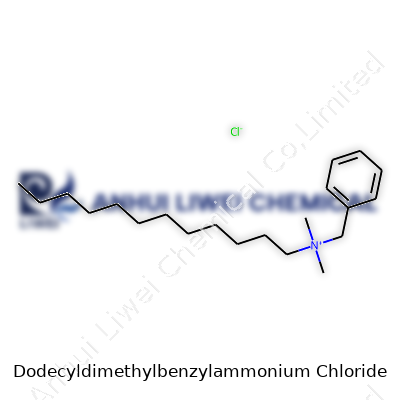
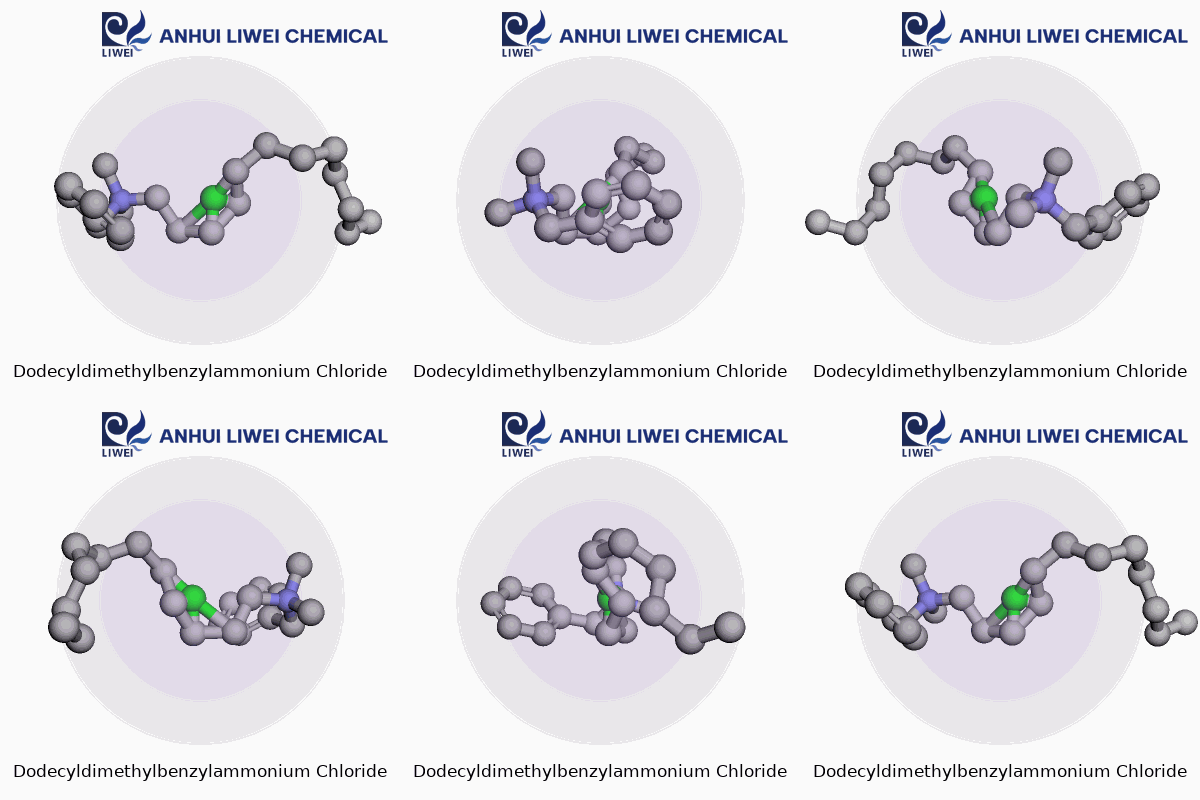
Dodecyldimethylbenzylammonium Chloride: Commentary on a Chemical Mainstay
Historical Development
To get a sense of how Dodecyldimethylbenzylammonium Chloride (Benzalkonium Chloride) carved out its place in chemistry and daily life, it's helpful to recall the mid-20th century push for more effective disinfectants. Hospitals and households needed a chemical weapon against germs that didn’t have the harshness or volatility of pure phenol or bleach. Researchers got interested in quaternary ammonium compounds for their blend of safety and power, with Benzalkonium Chloride standing out early. Companies rolled out its use in medical gears, floor cleansers, and food processing by the late 1940s. As regulations stiffened, the compound got tested further and steadily worked its way into product after product. It didn’t rest on its laurels—the scientific world keeps adjusting formulations to squeeze out even more impact or reduce unwanted side effects.
Product Overview
Walk down the cleaning aisle of a grocery store or check the labels on hospital disinfectants and Benzalkonium Chloride crops up often. This chemical makes up the germ-busting backbone of a surprising range of items—surface sanitisers, antiseptic wipes, mouthwashes, and even eye drops. Its surfactant structure lets it lift away dirt and bind to cell walls of microbes. For hospitals hunting for broad-spectrum action without irritation, and for industrial plants managing hygiene on a massive scale, it delivers a blend of antibacterial punch and practicality. Even skin cleansers lean on it where gentler touch is needed but effectiveness can't be sacrificed.
Physical & Chemical Properties
In the lab, you’ll find it as a white to off-white powder or clear, viscous liquid, depending on concentration and carrier liquid. The key lies in its amphipathic structure: hydrophobic dodecyl and aromatic benzyl tails give it solid solubility in both water and organic solvents. The chloride part tacks on full ionization in solution, adding to its effectiveness as a detergent and biocide. Thermal decomposition starts at moderate temperatures above 120°C, but at storage and usage temps, it stays stable if kept away from oxidizers and strong acids. The compound clings to surfaces, helping form a lingering germ barrier, which stands at the root of its performance.
Technical Specifications & Labeling
Product containers list a percentage w/w or w/v, often between 0.05% and 80%, specifying the range appropriate for end use—whether surgical scrubbing or food contact surface cleaning. Labels must note its status as a quaternary ammonium compound and refer to food hygiene or skin contact approval, sometimes under differing local FDA or EU guidelines. You'll see color, odor, and solution clarity mentioned, though, in practice, small differences mean little to the user. Technical bulletins flag its pH window—optimal between 4.0 and 10.0 for stability and antimicrobial strength. Many manufacturers insert expiry dates due to possible loss of potency in diluted form, and batch numbers trace production history in line with GMP rules.
Preparation Method
Industrial chemists synthesize Dodecyldimethylbenzylammonium Chloride by alkylating dimethylbenzylamine with long-chain alkyl halides, most often dodecyl chloride, under controlled heats and solvent conditions. The reaction produces a mixture of related compounds; distillation or crystallization pulls out the main fraction. Over time, more precise processes, like phase transfer catalysis, trimmed impurities and cut down toxic byproducts. Years of trial and error pushed yields and purity higher, lowering costs and opening up new applications. The process gets tweaked now and then for new regulations against trace contaminants, especially for pharmaceutical or food applications.
Chemical Reactions & Modifications
This molecule’s quaternary nitrogen center draws in nucleophiles, letting chemists reshape or add functional groups that adjust solubility or toxicity. Under strong base, it hydrolyzes—losing some surfactant power but picking up use in applications where mild breakdown products are needed. Certain reactions insert alkyl or alkenyl chains of different lengths, extending or reducing antimicrobial power. Formulators might blend it with other quaternaries, acids, or alcohols to tune hazard ratings or foaming behavior, catering for everything from hard surface sterilization to delicate surgical tools. Modifications can blunt corrosivity or boost stability under sunlight or high temperature.
Synonyms & Product Names
Beyond its IUPAC mouthful, the label Benzalkonium Chloride (BAC) pops up the most, though some refer to it as ADBAC, Zephiran, or under trade names like Barquat. In Europe, it’s usually listed by its alkyl chain range—C12-C16 Benzalkonium Chloride—since that mix makes a difference in performance. Catalogs for lab chemicals tend to drop the ‘dodecyl’ for just ‘benzalkonium chloride’ or stick to quaternary ammonium compound. Checking the Material Safety Data Sheet (MSDS) remains the best way to be sure you’re buying the right product grade and spectrum of isomers.
Safety & Operational Standards
One part of working with Benzalkonium Chloride that needs repeating: it’s potent against bacteria, but high concentrations carry hazard. Direct skin contact or inhalation at more than 0.8% can irritate, and some people show allergic reactions at lower levels. Workers keep gloves and goggles nearby, especially in concentrated handling. Spills clean up with copious water to avoid slippery floors or eye hazard. Regulatory bodies like OSHA and ECHA set workplace exposure limits, and guidelines keep popping up to reduce overuse or accidental mixing with incompatible chemicals. For end-users, approved concentrations in consumer products sit well below risk thresholds, supported by hundreds of toxicity studies and decades of incident tracking in real-world use.
Application Area
Hospitals, food manufacturing, and municipal water plants count on Benzalkonium Chloride to cut down microbial populations where lives and health depend on it. The same chemistry means it ends up in household cleaning sprays, veterinary preparations, contact lens solutions, dairy farm disinfectants, and hand sanitizers. It even plays a role in antistatic coatings and oilfield biocides. Rare for a chemical, it bridges inpatient care, animal husbandry, and industrial maintenance without big changes in core structure. Each use case has strict formulary guidelines: contact time, rinse steps, residue limits, and testing after application. These rules get stricter in places where ingestion or skin absorption could affect kids or immune-compromised adults.
Research & Development
Biochemists and industrial chemists haven’t stopped investigating tweaks to Benzalkonium Chloride, eyeing the changing landscape of microbial resistance and environmental footprint. Some labs work on analogs with more targeted action, hoping to cut off potential mutagenic concerns or cross-resistance with antibiotics. Others look at blending lower doses of Benzalkonium Chloride with plants’ essential oils or enzyme systems to keep effectiveness high while easing regulatory burdens. The drive to eliminate persistent trace pollutants has also sparked research into biodegradable forms that retain daily utility but break down after disposal. Over the last decade, a steady flow of patents reflects the race to balance potency, safety, and planetary health.
Toxicity Research
Overuse has always sparked caution. The EPA classifies Benzalkonium Chloride as a Category III disinfectant: effective but with moderate concern for skin, eyes, and aquatic life. Most controlled studies found little toxicity at common concentrations, but rare cases surface where repeated exposure triggered dermatitis or asthma-like symptoms in professionals. Aquatic toxicity stands out most; runoff from cattle dips or car washes can hurt fish at parts-per-million levels. Regulators responded by capping concentrations and demanding proof of biodegradability before new applications get green-lighted. Scientists propose using more sophisticated monitoring—tracking environmental levels in streams and sediment—to get a clear picture of long-term impact.
Future Prospects
Demand for reliable, affordable disinfectants isn’t going away. At the same time, the world wants transparency and safety promises on chemical baggage. Future Benzalkonium Chloride products will probably pack more punch per drop but degrade faster outside lab and hospital. Biotechnology holds promise, perhaps by producing similar antimicrobials through engineered bacteria, cutting the need for harsh starting materials or fossil feedstocks. Lawmakers, spurred by both health scares and ecological concerns, will keep pressing for tighter documentation, especially for uses in food and high-touch surfaces. Speeding up the feedback loop—from research bench to product recall to safer next-gen compounds—remains one of the trickiest and most critical challenges for every manufacturer and regulator tied to this old but still essential workhorse.
Everyday Disinfectant You Didn’t Know by Name
Walk into any hospital, school, or gym, and you’ll catch that familiar smell of “clean.” Hidden behind many bottles of surface sprays and wipes, Dodecyldimethylbenzylammonium Chloride—often shortened to Benzalkonium Chloride—stands as an old ally in the never-ending battle against germs. Most people might not recognize the name, but germaphobes everywhere rely on its power almost every single day.
Killing Germs Where We Live and Work
The stuff works by tearing up the outer layers of bacteria and some viruses. Sprayed onto countertops, wiped across bathroom tiles, mopped onto classroom desks, it cuts down pathogens reliably. Hospitals lean hard on it, especially for sanitizing non-critical surfaces—those bed rails, doorknobs, and medical carts that hundreds of hands touch every day. During the COVID-19 pandemic, its popularity soared as folks realized what it actually did for high-touch surfaces. According to the US Environmental Protection Agency, products made with Benzalkonium Chloride remain labeled as effective against coronavirus if used the right way.
Personal Experience: That Sticky Feeling on Gym Equipment
Think back to that faint sticky film on the handles of gym treadmills or the awkward moment you wipe a yoga mat you just borrowed. That’s often Dodecyldimethylbenzylammonium Chloride at work. In my college job cleaning a local fitness center, the spray bottles we used had big warnings about gloves—not for the smell, but because constant touch annoyed the skin. It seemed harsh, but the alternative—letting skin fungus and colds spread unchecked—looked worse.
Safety and Overuse: Not a Miracle Fix
There is no chemical around that will keep everyone healthy if basic hygiene falls apart. Overusing products like these sometimes triggers skin irritation, especially among cleaning crews or people cleaning at home. The Centers for Disease Control and Prevention notes that improper use or mixing with other cleaners causes real risks, from breathing issues to rashes. Disinfectants like this can’t work on heavy dirt—scrub first, then spray. Communities also have choices, especially schools and childcare centers, that need to watch both the safety of kids and their staff. Gloves, good ventilation, and following label instructions cut down on risks.
Environmental Impact and the Push for Smarter Use
The world has started to wake up to the environmental impact from these cleaning powerhouses. Residue sticking around in water after being washed down drains may harm aquatic life. Environmental groups encourage smarter use and proper disposal of these chemicals. Manufacturers already look at new formulas that break down faster or cause fewer problems for water treatment plants.
How to Make the Most of It Without Problems
Anyone using products made with Dodecyldimethylbenzylammonium Chloride should check the label, follow the timing listed, and always handle it with some respect. Gloves and open windows help a lot. Expecting a disinfectant spray to do all the work without regular cleaning or basic handwashing never leads to good results. Using it the right way, focusing on high-touch areas, and not skipping instructions, lets this common agent earn its keep—striking that tricky balance between health and safety for both people and the planet.
What Is Dodecyldimethylbenzylammonium Chloride?
Most people buying Lysol or similar disinfectants never flip the bottle to read the fine print. Even fewer pay attention to long names like dodecyldimethylbenzylammonium chloride—often shortened to benzalkonium chloride. It's a type of quaternary ammonium compound that finds its way into hundreds of cleaning sprays, wipes, and even some hand sanitizers. It works by breaking down cell walls, which kills bacteria and viruses on surfaces fast.
Concerns About Everyday Exposure
Many assume cleaners labeled “hospital grade” are safe around kids, pets, and everyone else just because stores sell them everywhere. But that doesn’t mean these ingredients come without risks. Skin irritation stands out as a common issue, especially with repeated exposure. My own hands started peeling and itching after a few weeks of daily use during peak COVID times, forcing me to wear gloves. Direct contact can trigger rashes or a burning sensation, particularly for people with eczema or sensitive skin.
Pets, especially cats and dogs that lick their paws or nap on freshly cleaned floors, face extra risks. The American Veterinary Medical Association and poison control centers have noted cases of poisoning—symptoms look like drooling, vomiting, or trouble breathing. Cats process chemicals differently than humans; even trace residue left on counters or floors after mopping can cause problems.
What Science Says
The U.S. Environmental Protection Agency lists dodecyldimethylbenzylammonium chloride as an active antimicrobial agent in registered disinfectant products. At approved levels and when used as directed, regulators say it should not cause major health issues. That safety assumes rinsing, proper ventilation, and keeping products out of reach—steps that don’t always happen in busy homes.
Over the last decade, peer-reviewed studies have pointed to questions about the long-term effects of quats. Researchers at the University of California found that chronic exposure in animals led to reproductive issues. Scientists also worry about possible connections to asthma, since inhaling residue after spraying can irritate airways—especially for children with allergies or pre-existing lung conditions.
Best Practices at Home
People can reduce these risks with simple steps. I switched from strong sprays to diluted vinegar solutions for regular cleaning—saving disinfectants for actual outbreaks or messes involving raw meat. When using any quats, always allow proper drying time, rinse surfaces that will touch skin or food, and never let pets walk on wet floors.
For those with immune-compromised family members, hospitals or health agencies remain the best source for up-to-date advice on safer disinfectants. Some newer products use hydrogen peroxide or alcohol-based formulas, which break down quickly and leave behind fewer chemical traces.
What Still Needs Attention
Companies rarely highlight risks on their labels. The U.S. Food and Drug Administration has called for further study into the long-term safety of quats, especially in hand sanitizers and wipes marketed to kids and schools. Lawmakers and health agencies must push for better labeling, more public education, and clear guidance about which situations actually demand these products.
Safe cleaning at home doesn’t depend on industrial-strength chemicals. It relies on knowing the ingredients, understanding their risks, and using the right product for the job. For families like mine, it means reading every bottle—and questioning whether that hospital-grade clean is truly worth the risk.
Understanding the Stakes
Disinfectants play a part in keeping our homes, hospitals, and public spaces healthy. Dodecyldimethylbenzylammonium chloride—sometimes called benzalkonium chloride or “quat”—packs a strong punch against germs and viruses, but it’s not something you pour straight from bottle to floor. A little personal experience cleaning clinics and hearing from hospital staff taught me: get the dilution wrong, and you miss the mark both ways. Too concentrated, and surfaces might get sticky or lead to skin irritation. Too weak, and you might as well use water.
Reading the Labels (and Not Guessing Mix Ratios)
The label on the product always lists the concentration: 10%, 20%, or even 80%. Most household surface sanitizing calls for that sweet spot of 0.1% to 0.2%. Hospitals may stretch closer to 0.5% for high-touch, high-risk areas. It takes a calculator and some caution here. With a 10% concentrate, you’d measure 10 milliliters for every liter of water to make a 0.1% solution. I once misread the decimal, mixed a solution twice as strong, and could feel the slick residue for days—it wasn’t cleaning, it was just creating more work.
Mixing and Safety: Don’t Rush the Steps
No need for fancy gear, just a well-marked measuring cup, gloves, and open windows. Add the concentrate to water; not the other way around. That helps avoid splashing and keeps concentrate where it belongs. I’ve seen gloves turn yellow and brittle after too many mixes without protection. Gloves keep your hands safe, and goggles guard against accidental sprays. Dilute only as much as you’ll use that day, since the active ingredient can break down in sunlight or after sitting out. Store the rest tightly capped, out of reach of kids and pets.
How to Put It on Surfaces
Soak a clean rag, wring enough that it’s damp not dripping, then swipe the surface evenly. For spray bottles, set it to a mist, not a jet. Give hard surfaces—doorknobs, bathroom counters, medical exam tables—a good coating. The trick learned from old janitors: let it sit. Minimum contact time often sits around 10 minutes. Wipe off extra or let air-dry, especially in food prep areas. If your table looks glossy or leaves behind a sticky feel, you might’ve gone a bit heavy.
Why Getting It Right Matters
Incorrect dilution wastes money and could mess up infection control, which we saw first-hand during flu season in a school district. Too much chemical, and custodial staff started reporting headaches and rashes. Too little, and parents complained about outbreaks and dirty classrooms. Relying on accurate, easy-to-understand instructions cuts down confusion. Sharing mixing charts on the storage room wall helped everyone follow the same playbook. Digital reminders or color-coded bottles add extra insurance that the mix matches the location: a lighter solution for everyday surfaces, the stronger blend saved for sick rooms or bathrooms.
Cutting Down Risk and Exposure
Overusing or storing big jugs in busy spaces leads to accidents. Keeping clear, locked supply areas and training every cleaner—no matter how new—makes a difference. Labeling every mix with concentration and date stops accidental swaps. At home, swapping out harsh cleaners for ready-to-use quats reduces headaches over dilution, especially for older relatives who might forget the ratios.
Moving Toward Better Practices
Sticking with manufacturer guidance, finding training that uses real-world examples, and keeping an open line between health officials and cleaning staff go a long way. It’s not about high science—just using care, a splash of common sense, and genuine teamwork.
Understanding What You’re Working With
Dodecyldimethylbenzylammonium chloride lands on the shelf in a lot of janitorial closets, veterinary clinics, and food processing plants. As a quaternary ammonium compound, it packs strong antimicrobial power. But it doesn’t belong in just any corner or cabinet. Many folks who handle industrial cleaners know the sting of a split bottle or the sting in your lungs if you breathe something harsh. It pays to respect the risks before you pop open a new drum of this stuff.
Storage Isn’t Just About Stacking
Stashing this chemical in the wrong spot creates problems you don’t want. Don’t tuck it next to acids, bleach, organic materials, or oxidizers. Accidental mixing can set off toxic fumes or even start fires. Even a drop of contamination may turn a routine cleaning day into a much worse situation.
Keep the containers tightly sealed, sitting upright and away from sunlight. Sunlight and heat speed up breakdown. Once that starts, less predictable byproducts may show up — some are corrosive or irritating. Walk through any well-kept warehouse and you’ll spot chemicals like this on shelves made of sturdy plastic or steel, not sagging wood, and always above local flood lines or damp floors.
I remember a small local hospital that saved money by buying disinfectants in bulk. They stored everything near the facility laundry — right by steamy dryers and chlorine-based bleaches. Leaks and fumes gave more than one employee a nasty cough and mild burns on the skin. OSHA got called in, and staff got some much-needed retraining. Simple changes like cooler locations, segregation from incompatible chemicals, and spill trays meant nobody had to lose time over avoidable exposures.
Personal Safety: No Room for Shortcuts
Pouring this compound without gloves or goggles sets up trouble. Skin contact can trigger burns, itching, or dry rash. Even a quick splash to the eye might bring days of irritation or vision risk. Respirators come into play if you're pouring large volumes or using it in tight spaces without much airflow. Most reputable facilities install fume hoods or require employees to gear up before working in those areas.
Every spill needs a real plan, not just a mop and bucket. Specialized kits with absorbents, chemical-neutralizing powders, or containment socks make the difference. Employees should know the route to an eyewash station or emergency shower by heart. It’s not science fiction — small spills get overlooked until someone pays for it with their health. Immediate cleanup and proper signage cut down on those risks.
Training Beats Luck Every Time
Dodecyldimethylbenzylammonium chloride works wonders in the right hands. In the wrong hands, it ends up causing medical bills and headaches. Many manufacturers publish simple guides and safety data sheets, often in several languages, because every person in the building needs the same clear message. Regular walkthroughs with a checklist — not just yearly, but monthly or whenever procedures change — help everyone stay alert to developing problems in storage or handling.
Regulations like OSHA’s Hazard Communication Standard and EPA’s requirements for hazardous materials keep companies honest and workers safer. Following data sheet recommendations, using proper labeling with clear hazard warnings, and sticking with common-sense habits don't just help the bottom line; they keep your team out of urgent care.
Looking at the Real Science Behind Everyday Disinfectants
Most folks grab a bottle of disinfectant and trust it will knock out germs lurking on surfaces. Dodecyldimethylbenzylammonium chloride, often shortened to benzalkonium chloride or BZK, shows up in many sprays and wipes at home and work. It's been used for decades, showing up just about everywhere people worry about germs: hospitals, dental offices, gyms, restaurants, and public buses.
I spent years cleaning dental chairs, then raised kids through every stomach bug to make the rounds at daycare. You don't need a science degree to notice which disinfectants work and which don’t seem to make a difference. Still, stories about “superbugs” and viral outbreaks push plenty to wonder if the stuff inside those bottles really handles the threats it claims to. So let's dig into whether dodecyldimethylbenzylammonium chloride lives up to the reputation.
This Compound Packs a Punch Against Germs
Benzalkonium chloride works as a quaternary ammonium compound, often called a “quat” on ingredient lists. These quats break down the membranes that hold bacteria and some viruses together. Without those protective layers, the germs can’t survive or stay infectious. I’ve seen science and regulatory agencies, including the EPA and Health Canada, put benzalkonium chloride on lists of approved ingredients for products that kill disease-causing bacteria. They do this by requiring companies to test surface disinfectants against stubborn bugs like Staphylococcus aureus and Salmonella enterica. Results keep showing strong effectiveness in controlled settings.
It’s not just for show. In real-world cleaning jobs, when public health is on the line, folks need something that knocks out both visible and invisible threats. Benzalkonium chloride has pulled hospitals through outbreaks for generations. It’s safe to say few disinfectant ingredients carry the same track record, and the stuff’s popularity isn’t a coincidence.
Germs It Can – and Can’t – Kill
Here’s where it gets complicated. BZK will kill lots of types of bacteria. It also tackles “enveloped viruses,” like flu and coronaviruses. These viruses have an outer coating that quats break down easily. Strong studies during the COVID-19 pandemic confirmed what hospitals have known for a long time: BZK-based products, when used according to directions, destroy viral coatings required for the virus to spread.
Not all bugs cooperate, though. BZK doesn’t do much against “non-enveloped” viruses. That group includes viruses like norovirus and some enteroviruses – the ones that run wild in schools and cruise ships. For those, bleach or hydrogen peroxide might fare better. Some bacteria can also develop resistance if they’re exposed to low concentrations of quats over and over without proper use or cleaning beforehand. So, spraying BZK on a dirty surface isn’t going to cut it. Dirt, grease, or leftover food scraps give germs a place to hide out. It matters to sweep and wipe before disinfecting if you want reliable results.
Making Cleaning Work For You
For families, clinics, or businesses, surface disinfectants using benzalkonium chloride help keep bacteria and certain viruses in check. Relying on them blindly won’t cut it. Read the product label, follow contact times, and prep surfaces right. Switching up disinfectants every so often, or rotating with different active ingredients, helps dodge resistance risks. Public education on these basics goes a long way.
Over the years, watching how folks use – or misuse – their cleaning sprays taught me one thing: even the best disinfectant only works if you put in the effort. Benzalkonium chloride stands tall in the fight, but beating germs still takes good habits and common sense.