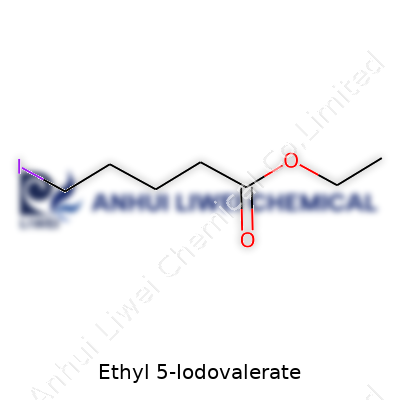
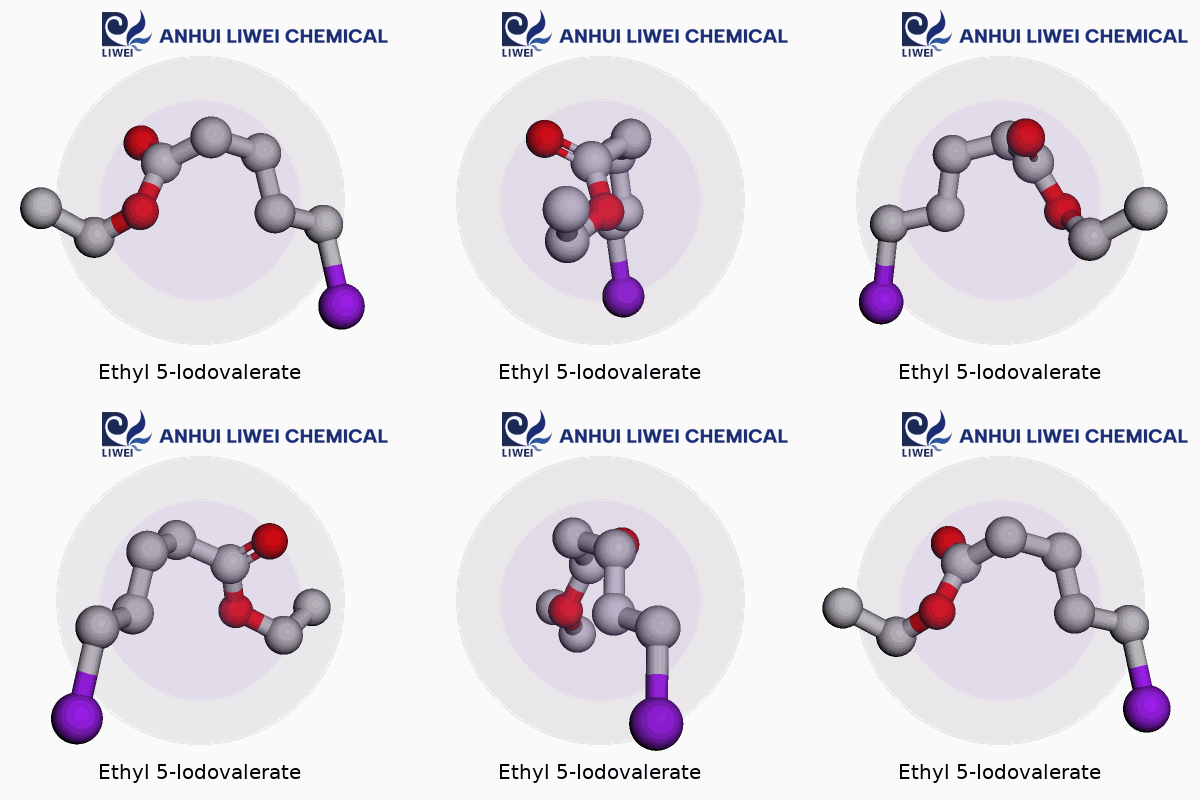
Ethyl 5-Iodovalerate: A Practical Perspective
Historical Development
Chemicals like Ethyl 5-Iodovalerate come out of a history where scientists pushed boundaries, hunting for new ways to build more complex molecules. The roots go back to the dawn of modern organic synthesis. Over time, iodinated esters gained value for their role in pharmaceutical and fine chemical development. Early researchers saw that if you stuck an iodine atom on a five-carbon chain, then attached it to an ethyl ester, you got a building block with more bite than you’ll find in plain valeric acid esters. That extra halogen means you can shuffle atoms around in less steps. Early records from the 20th century mention compounds like this in patent filings and academic journals, pointing out how handy they are in multi-step organic syntheses, especially when introducing functionality isn’t so easy. Chemists have kept coming back to this backbone, and it’s cropped up in more labs with the spread of cross-coupling reactions and pharmaceutical R&D.
Product Overview
Ethyl 5-Iodovalerate is a specialty ester, better known to chemists as a reactive intermediate thanks to the iodine attached at the terminal position. It isn’t a household product, but in laboratories, it’s a staple when you need to make longer chains or introduce functional groups through substitution. Suppliers usually offer it in high-purity liquid form. Chemical companies, universities, and innovation hubs working on new drugs and fine chemicals keep it close at hand because of the versatility the iodine group offers.
Physical & Chemical Properties
As a clear to pale yellow liquid, Ethyl 5-Iodovalerate doesn’t stand out in a bottle, but you’ll notice the faint ester smell that many chemists recognize. The molecular formula is C7H13IO2, and it usually weighs in with a molar mass of about 256.08 g/mol. The presence of iodine bumps up the density and makes it more noticeable compared to esters without a heavy halogen attached. Boiling points hover around 90–100°C at reduced pressure, which loops back to its role in reactions: manageable to work with, not prone to spontaneous problems, but heat it much above 150°C and decomposition can become an issue. The iodine atom at the omega position acts like a flag for nucleophilic substitution, making it both useful and potentially reactive around strong nucleophiles or reducing agents.
Technical Specifications & Labeling
Reliable suppliers ship Ethyl 5-Iodovalerate with high-purity claims (usually >97%). Labels spell out storage needs: keep out of sunlight, at room temperature or below, and cap tightly after use. Certificates of analysis come packed with gas chromatography or NMR purity checks so buyers know exactly what they’re handling. Shipping falls under dangerous goods classification because of the organoiodine content and potential for irritation, and documentation highlights UN codes and European CLP hazard statements. These aren’t bureaucratic checkboxes, but essential signposts for those who want predictable reactions and fewer safety surprises.
Preparation Method
The most straightforward prep starts from 5-iodovaleric acid or its halide. Chemists use Fischer esterification here: mixing the acidic starting material with ethanol and a bit of sulfuric acid, then heating it so the ester forms. Variables like moisture levels and purity of starting materials make a big difference. Some labs go another route, making the iodide from 5-bromovaleric or 5-chlorovaleric acid using sodium iodide and acetone, letting nucleophilic substitution swap halogen atoms. Once you have the 5-iodo derivative, standard esterification finishes the job. Because the starting materials bring their own risks, handling always involves gloves and fume hoods. Scale matters — while gram-scale is safe in most labs, larger batches call for proper engineering controls.
Chemical Reactions & Modifications
Out in the wild, Ethyl 5-Iodovalerate shines because the iodine acts as a leaving group that you can swap almost at will. Cross-coupling reactions (Suzuki, Heck, and Sonogashira types) tap into the aryl halide nature of the iodide position. The compound hooks easily to aromatic rings, alkynes, and other partners, letting researchers push into new drug candidate territory. Reduction with lithium aluminium hydride or similar makes 5-iodopentanol, a handy alcohol for downstream modifications. Chemists exploit it as a platform: the terminal position means almost any nucleophile can take a shot, so the molecule’s backbone opens doors to amines, thiols, and more.
Synonyms & Product Names
Chemical suppliers, regulatory agencies, and researchers list Ethyl 5-Iodovalerate under several names, including Ethyl 5-iodopentanoate, Pentanoic acid, 5-iodo-, ethyl ester, and sometimes by registry numbers like CAS 64268-07-1. The key is always in that five-carbon backbone, esterified with ethanol, and capped with iodine at the far end. Some databases or catalogs might shuffle the order, but if you see “5-Iodo” and “ethyl valerate” in the name, you’re working in the right chemical space.
Safety & Operational Standards
Safety matters more than ever with this compound. Direct skin and eye contact can cause irritation, so gloves, goggles, and a fume hood stay non-negotiable. Longer exposures or ingestion risk thyroid disruption because many iodinated compounds interact with hormone systems. MSDS sheets highlight the need for prompt cleanup of spills using non-sparking tools and well-ventilated spaces. Waste should be separated from regular organics and disposed with hazardous materials experts, since iodine compounds don’t play nice with typical waste streams. Training for users isn’t a suggestion — having handled this myself, even a few drops on a glove signals a clear warning scent and sometimes skin warmth, a real hint to respect these chemicals.
Application Area
Most Ethyl 5-Iodovalerate ends up as a building block in organic synthesis. Drug companies test its backbone for antiepileptic, anti-inflammatory, or metabolic effects. Chemical researchers reach for it in the hunt for functionalized chains or designed molecules, where putting iodine at the omega position is step one for further reactions. Radiologists have eyed organoiodine esters for making contrast agents, and specialists use them to produce custom surfactants, fragrances, or specialized lubricants. For small-scale innovation, its reliability and reactivity keep it in high demand.
Research & Development
Research teams spend time hunting for more efficient ways to make and use Ethyl 5-Iodovalerate, as well as greener reaction conditions. Academic journals feature new catalysts or one-pot systems that skip protecting groups, saving steps and cutting waste. Pharmaceutical labs have shown that changing the ester or shifting halogen position can lead to huge differences in biological activity. Open-access databases and trade publications highlight increases in patent filings involving this molecule, thanks in part to the explosion of combinatorial chemistry where modular synthons rule the day.
Toxicity Research
Toxicology studies on Ethyl 5-Iodovalerate itself haven’t filled libraries, but the structure gives some hints. Animal data from related organoiodine esters show moderate toxicity with repeated exposure and possible impacts on thyroid hormone regulation because the body uses iodine in hormone synthesis. Acute effects focus on irritation, and chronic high doses could cause thyroid swelling or altered metabolic profiles. Researchers keep watch because metabolites can behave unpredictably, so new data often gets shared at chemical safety symposia. Responsible manufacturers track these studies closely to make sure workers and downstream users get the latest risk updates.
Future Prospects
Looking ahead, development teams are targeting cleaner prep, lower waste, and smart modifications. Emerging cross-coupling strategies keep growing the case for new iodo-esters in medicinal chemistry. Greener solvents, alternative activation tactics, and continuous processing promise safer production without losing reactivity. With the global push for more personalized therapies and custom functional chemicals, the role of Ethyl 5-Iodovalerate seems set to expand further into areas like agrochemicals, biodegradable materials, and as a reference standard for new analytical techniques. Sustainability and worker safety will remain central—new innovation won’t mean much if the basics aren’t protected. My experience says this compound’s journey is just picking up steam.
Why Chemical Formulas Matter in Daily Science
Chemical names sound complicated, but the formula C7H13IO2 tells a straightforward story. That’s Ethyl 5-Iodovalerate, a compound that doesn’t make headlines but pops up in real lab work. I’ve spent enough time in research settings to know how a single substitution on a molecule can change a project’s direction. Ethyl 5-Iodovalerate isn’t just a set of atoms; it’s a gateway to creating new molecules, especially in organic synthesis.
Breaking Down the Compound
Let’s pick it apart: Ethyl (the -OCH2CH3 part) comes from ethanol, while 5-Iodovalerate is a valeric acid chain with an iodine atom on the fifth carbon. You get the whole thing by converting valeric acid into an ethyl ester and swapping a hydrogen for iodine at the right spot. The pieces stack up like this:
- Carbons: 7
- Hydrogens: 13
- Iodine: 1
- Oxygens: 2
Each atom serves a real function. The iodine atom isn’t just decoration; it allows chemists to swap it out for new groups in a custom reaction, especially when building more complex drugs or materials. The ester group brings in some stability and changes how the molecule behaves in both water and organic solvents. Every line in that formula points to a choice some chemist made in a lab, often after a few tries and a lot of cleanup.
Practical Importance of Precision
I’ve seen more than a few headaches from people guessing or mixing up chemical formulas. Getting a single atom wrong in a chemical structure can waste hours, or worse, make a reaction dangerous. Ethyl 5-Iodovalerate’s iodine piece isn’t easy to miss, but it does mean you need to handle it with care. Iodine isn’t always friendly—it can lead to unexpected reactions or health risks if mishandled. You have to respect the details, not just for your own safety, but for the accuracy of your science.
The pharmaceutical world especially depends on building blocks like Ethyl 5-Iodovalerate. This molecule can act as a launchpad for drugs or testing new reactions. I’ve worked with teams that need specific esters and substituted chains to test out new compounds for pain relief, neurological effects, or even agricultural uses. Every time, knowing the formula inside out made the difference between a clean result and a messy mixture.
Moving Science Forward
Access to precise formulas isn’t just for people with white coats. Farmers, policy makers, teachers, and students all need these building blocks. Science education depends on teaching how to read and use formulas to solve real-world problems. Better chemistry starts with careful attention to every atom in the structure, from the iodine down to the hydrogens tucked away at the end of a chain.
Increased efforts to provide clear safety information, straightforward handling guides, and rigorous chemical supply chain tracking would reduce risks. Many professionals now rely on digital tools and full structural diagrams to cross-check the details. That small investment in double-checking can prevent accidents, save money, and keep research moving in the right direction. The lesson from Ethyl 5-Iodovalerate—the details drive the outcomes, every time.
Understanding Ethyl 5-Iodovalerate’s Real Uses
Ethyl 5-iodovalerate pops up in labs more than most people imagine. In the world of chemistry, this compound doesn’t usually make headlines, but it plays a big role behind the scenes, especially as a building block for other products. With its five-carbon backbone and iodine sticking out in the right place, it gives chemists a solid place to start tinkering and testing.
Sparking Progress in Pharmaceutical Synthesis
The biggest demand for ethyl 5-iodovalerate comes from pharmaceutical companies. Its main draw is the iodine atom, which acts like a convenient handle for doing all sorts of things with organic molecules. In drug development, you often need to swap out pieces of a molecule or add something completely new. This molecule fits right in because it can jump into reactions called “cross-couplings” where new sections are tacked on. This has a direct line to life-saving medicines — beta blockers, pain medications, and antivirals often begin from simple building blocks like this one.
My time working in a contract research lab showed just how much energy the pharmaceutical world pours into finding the most useful building blocks. A chemist’s job means looking for the most reactive, stable, and cost-effective starting points. Because ethyl 5-iodovalerate carries its iodine in just the right spot, you see it being selected for routes to more complex molecules, helping to speed up timelines. This saves time and money and, frankly, makes breakthroughs possible.
Fueling Innovation Beyond Medicine
Research doesn’t stop at pills and powders. Specialty chemicals, especially those aimed at fragrance and flavor industries, sometimes call for tricky intermediates. The branched structure of ethyl 5-iodovalerate lets chemists add or remove groups with precision. These changes help craft new scents or food additives, sometimes leading to products with more stability or stronger impact in tiny doses. Plenty of process chemists have stories about trying out new reaction partners, and this ester shows up on those lists more than you’d think.
Opening Doors in Organic Chemistry Research
College labs stay busy. Ask a PhD candidate who just finished a long night in the hood, and they’ll tell you, having a versatile intermediate can mean the difference between months of struggle and a smooth sprint to publication. Ethyl 5-iodovalerate fits into teaching labs, too. In experiments, its iodine group handles nucleophilic substitutions and other advanced reactions, helping students explore the foundations of organic synthesis. Being able to turn theory into practice is a big reason why this molecule shows up again and again.
Challenges and Smart Solutions
This compound isn’t perfect. Large-scale production means dealing with concerns about safety and cost. Iodinated compounds sometimes give off waste streams that need careful disposal, both for worker health and the planet. Everyone working in chemical industries now faces stricter regulations and a clear need to shrink environmental footprints. Some companies have started screening greener alternatives for cross-coupling partners. Others work on recycling spent iodine and streamlining batch sizes to get more product from fewer steps. Morrison in the 1990s showed safer reaction conditions could help cut costs down the line. Smart sourcing and better training also lower risks and boost safety.
Moving Forward with Care
Every industry that picks ethyl 5-iodovalerate does so because it gets the job done quickly and effectively. Staying thoughtful about waste and worker safety will keep it in use for years. I’ve met researchers passionate about finding better ways to do classic chemistry. That mindset, combined with strict standards, pushes for applications that don’t cost the planet or slow down progress.
The Heart of Chemical Identification
Every researcher has found themselves in a confusing sea of chemical names at some point. One bottle might say “ethyl 5-iodovalerate,” another says “ethyl 5-iodopentanoate,” and panic briefly sets in. Here’s where CAS numbers earn their keep. The CAS number for Ethyl 5-Iodovalerate is 5744-06-1. This number speaks louder than a shelf of labels, cutting through confusion and pointing to the exact compound every time.
Why Scientists Rely On These Numbers
A chemical might have a dozen synonyms or multiple spellings. During grad school, I wasted hours chasing product specifications for research projects because names didn’t line up across supplier catalogs. What straightened everything out was typing in that unique CAS digit string. No more “Did you mean this?” or “Maybe it’s that?” moments. The lab moved faster. Experiments grew more accurate. Less waste. These numbers might look dull, but they’re the backbone of chemical safety and order.
Practical Use in Medicine and Synthesis
Ethyl 5-Iodovalerate isn’t a household term outside of organic chemistry, but it isn’t obscure in the pharmaceutical world. It’s a valuable building block in the synthesis of more complex drugs. For chemists working to reconstruct molecules or create analogs, the right raw material matters. CAS numbers make communication seamless between suppliers and scientists. Misordering the wrong iodine-containing ester by mix-up does more than waste money—it sometimes risks project safety.
Sourcing, Storage, and Regulations
With a number like 5744-06-1 saved, purchasing turns into a clear process. Suppliers list chemicals by their CAS numbers, and regulatory paperwork asks for these numbers, not common names. Try importing a shipment of chemicals without the right numbers—it guarantees paperwork headaches and time wasted in customs. Even for storage, knowing a CAS number means inventory gets tracked with clarity, reducing the risk of unwanted reactions or incompatible materials stacking together on a shelf.
Preventing Errors and Protecting Researchers
Mistakes aren’t just expensive; some can turn dangerous. Having worked in lab management, I’ve watched how a small error, like misreading a product label, can cascade into fire, toxic exposure, or ruined research. CAS numbers provide another line of defense, letting staff cross-check every container and data entry against a globally recognized registry. The stakes for accuracy climb with hazardous chemicals, and attention to detail starts with something as simple as this little number.
Modern Challenges, Smarter Solutions
Chemical identification may seem boring, but it keeps the wheels of innovation turning. That surprises people. More digital management systems, improved supplier listings, and barcode integrations all lean on CAS data for backbone support. The future could run into new problems—counterfeit goods or mislabeling in a growing world market stands out, for one. Digitizing the process, focusing on education among new chemists, and building tighter links between academic and industry databases can shut down many of these issues before they start.
The Chemistry in the Bottle
Ethyl 5-iodovalerate finds a spot in labs working with organic synthesis, pharmaceuticals, and research chemicals. It isn’t your everyday bottle on a shelf—this compound carries some heavy baggage in terms of reactivity and hazard. Its structure packs an iodine atom, which makes it much more reactive than typical esters. That iodine also means a higher risk of environmental impact and personal health complications if mishandled. My own years in academic labs have worn into me the respect for these subtler details. Leave out due diligence on storage, and unpleasant surprises follow.
Cool, Dark, and Dry: The Golden Rule
Storing this chemical for any length of time calls for extra attention to temperature and light. Out in ambient conditions, ethyl 5-iodovalerate starts to degrade, discolor, and break down. Keeping it in a refrigerator—ideally in a chemical-safe fridge—gives an edge against decomposition. Exposure to light hits it hard too; even regular room lighting can nudge it into instability. I make a habit of wrapping containers in aluminum foil or storing them in amber bottles just to cut out this risk. Not everyone sees the slow color change happening, but loss of chemical purity creeps in with every hour of careless storage.
Don’t Let Water In
Moisture rarely gets the kind of attention it deserves in chemical storage. Water vapor can sneak through seals that look tight, especially once months have passed. In my early days, I learned this the hard way—one sticky lid later, half the bottle’s contents went cloudy, and I ended up with a headache both from disposal and lost budget. Desiccators prove their worth in these scenarios. Keeping ethyl 5-iodovalerate capped tightly and away from humid spaces works too, but adding desiccant packs inside storage cabinets offers an extra line of defense. Even in climate-controlled storage, that little extra effort can save weeks of frustration during experiments.
Segregation Makes All the Difference
There’s real danger when chemicals jostle for space on crowded shelves. Ethyl 5-iodovalerate, with its iodine content, can react violently with strong bases or oxidizers. It might tempt some people to tuck it alongside other esters, but this isn’t a safe bet. Isolating halogenated compounds cuts down accident risk. At a shared university lab, a miscommunication about storage locations once led to a spill. No one was hurt, but the iodine stench hung around for weeks, and getting rid of cross-contaminated wastes meant days lost to paperwork. Every storage cabinet ought to have clear labeling and a bit of extra empty space—cramming shelves only invites trouble.
Safety Isn’t a One-Time Thing
Treating storage as a living, ongoing process beats any one-off safety check. I’ve seen well-written procedures ignored in the rush of a busy week. Setting calendar reminders for regular inspection pays off. Expiry dates matter—not just because chemicals “go bad,” but due to pressure building in old containers or unplanned degradation products forming over time. Looking beyond paperwork, it’s the everyday habits that keep both people and projects safe from harm.
Simple Steps, Real Protection
No need to overcomplicate storage. Refrigerate, shield from light, keep containers sealed. Identify their spot in the lab clearly, away from incompatible neighbors. Double-checking inventory beats losing precious samples or, worse, risking a hazardous incident. With these habits, no surprises—just safe and reliable work.
What This Compound Really Means For Health
Ethyl 5-iodovalerate isn’t a household name. It’s a specialty chemical, mostly used in labs and the occasional pharmaceutical process. Even though I have spent hours in research labs and seen my share of chemical bottles with warning labels, nothing quite gets your attention like the word “iodo” in a compound name. Iodine-containing compounds often show up in places where accurate handling is critical. Many chemists will tell you: the more obscure the compound, the harder it can be to find reliable safety data.
So the first thing I check before opening any bottle is the safety data sheet (SDS). For ethyl 5-iodovalerate, the SDS gives some straight answers: if you touch it or inhale the vapor, you’re looking at irritation, sometimes a persistent cough, and a pretty good risk of skin sensitivity. This particular molecule isn’t acutely toxic like cyanide or heavy metals, but it’s not friendly either. Most iodo-esters show a middle-of-the-road toxicity, bringing issues you'd see with both organic solvents and organoiodine chemicals.
Real-World Risks In the Workplace
I’ve spent enough time talking with colleagues who handle organohalides to respect their caution. In practice, exposures happen through skin contact, accidental splashes, or breathing in vapors. Anyone who’s ever worked with esters knows to keep experiments under a fume hood, and ethyl 5-iodovalerate is no exception. Fume hoods, gloves, and goggles aren’t just comforting—they’re essential. Rashes, eye redness, and breathing trouble are all on the table when dealing with this molecule outside of well-ventilated areas.
The dangers become clearer with reports from larger operations—labs and pilot plants—where gallons of solvent spill or ventilation fails. Emergency rooms don’t see many cases of iodo-ester poisoning, but that comes from strict safety rather than a low-level risk. Chronic low exposure can chip away at health; think coughing fits, itchy skin, maybe some brain fog after a long day in the lab.
What Science Says and Where We Stand
Most scientists agree that organoiodine compounds can disrupt thyroid function if they make it into the bloodstream. The thyroid uses iodine to build hormones, and chemicals like ethyl 5-iodovalerate confuse the body if exposures stay high. In animal studies, similar compounds have caused signs of organ stress and changes in blood chemistry.
Regulatory agencies haven’t placed ethyl 5-iodovalerate on their most hazardous lists, probably because its use stays limited. The fact remains: information gaps exist, and lower-profile chemicals can slip beneath the radar until someone makes a mistake. Chemists worth their salt don’t trust luck—they trust gloves and splash guards. Medical experts recommend a visit to the doctor after large accidental exposures, especially if symptoms develop.
Safe Practices and Real Solutions
The best approach starts with training: every chemist or technician working with this compound needs clear, real-world instructions. Straightforward advice—like changing gloves after spills and reporting symptoms early—works better than any rulebook. Equipment like spill kits and eyewash stations deserves a spot near the bench or reactor.
Companies using ethyl 5-iodovalerate might toughen their hazard assessments, checking on workers’ health more often and refining their handling procedures. Investing in better ventilation pays off when mistakes occur. Sharing accident stories and lessons learned helps new employees avoid repeating old blunders.
Hazardous or toxic? There's no clear black-and-white. Misuse and complacency lead to danger, but smart precautions keep people safe in a field where uncertainty shows up with every new label on a bottle.