Lauryldimethylamine Oxide: From Foundational Chemistry to Everyday Use
Historical Development
Lauryldimethylamine oxide, often listed under trade names like Lauramine Oxide or Dodecyldimethylamine oxide, crept into the spotlight in the mid-20th century when scientists, hunting for gentle, effective cleaning ingredients, turned attention toward amine oxides. Synthetic surfactants were reshaping industries through the 1950s and 60s. Research labs found that amine oxides—especially those with longer hydrocarbon chains—delivered robust cleaning without stripping surfaces or skin. Over the decades, companies standardized production. Lauryl-based amine oxides soon landed in thousands of households through shampoos, dish soaps, and hard surface cleaners. Companies stuck with it thanks to its stability, compatibility with other ingredients, and balanced cost-to-performance ratio.
Product Overview
Manufacturers produce lauryldimethylamine oxide as a pale yellow, viscous liquid, usually at a purity of around 30%. As a nonionic surfactant, it teams up cheerfully with many detergents, lending softness and foam to products that otherwise feel harsh or flat. Unlike anionic competitors like SLS, lauryldimethylamine oxide doesn’t rebel against water hardness and rarely causes irritation. Chemists lean on it not just for cleaning, but for thickening, emulsifying, and as a gentle antistatic agent in liquid detergents, shampoos, and mild cleansers meant for delicate fabrics and baby products.
Physical & Chemical Properties
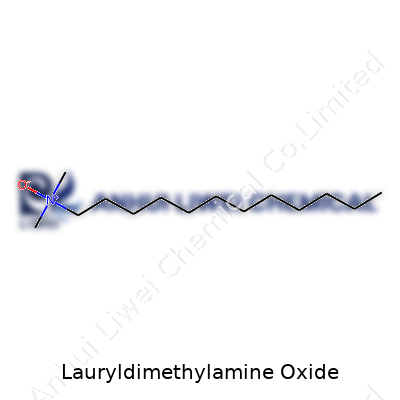
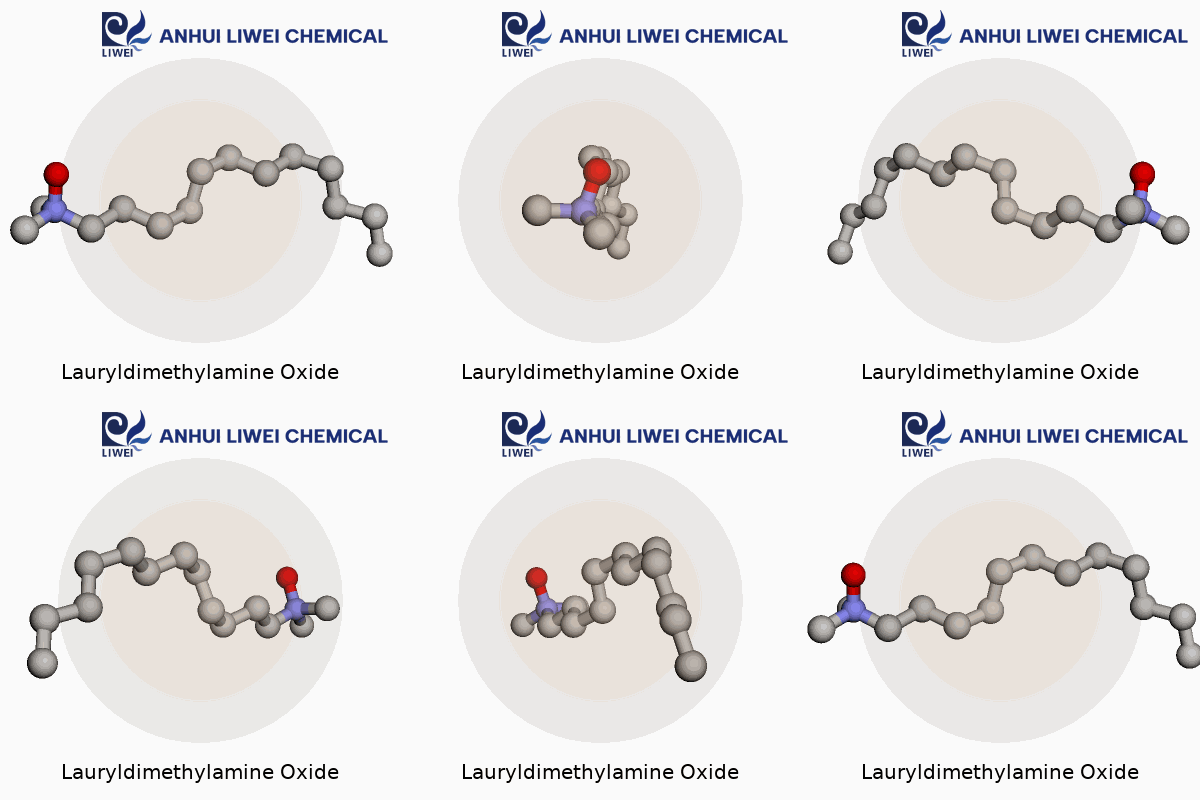
Lauryldimethylamine oxide stands out thanks to a twelve-carbon hydrophobic tail hooked to a dimethylamine head, split by an oxygen atom. As a pure compound, it appears as a solid wax close to room temperature, melting around 37-40 °C. In commercial form, you find it as a 25%-35% aqueous solution, which pours slightly thicker than water and brings a faint amine smell. Water solubility sits high, and its surface tension lowering ability makes it invaluable wherever foaming and cleaning matter. Unlike anionics, alkali or hard water won’t cripple its performance—a big reason why commercial cleaning products pick this over cheaper surfactants for consistency and gentleness.
Technical Specifications & Labeling
On product labels or technical data sheets, this compound often appears as Lauramine Oxide or Dodecyldimethylamine Oxide. Regulatory agencies guide suppliers to list CAS No. 1643-20-5 and specify contents—giving transparency on actives, water content, and pH (usually ranging 6 to 8 as supplied). European REACH law, US TSCA, and China’s IECSC all require suppliers to verify purity and assess residuals from synthesis routes. Manufacturers regularly test for heavy metals, unreacted amine, and pH to stick to consistent quality and safety. Some suppliers market “green” grades, advertising plant-based coconut origins instead of petroleum-based lauryl precursors, and often include eco-toxicity test results.
Preparation Method
Manufacturers build lauryldimethylamine oxide by first preparing lauryl dimethylamine—most often from coconut or palm kernel alcohol and dimethylamine—then oxidizing the amine using hydrogen peroxide. This step introduces the oxygen atom, shifting the nitrogen from a tertiary amine to an amine oxide. Oxidation needs careful control; too much hydrogen peroxide brings wastes and side products, while too little leaves contaminants. Factories tune the reaction for yield and stability, filtering out unconverted amine and breaking down residual hydrogen peroxide to trace limits. As environmental standards bite, chemical engineers tinker with green oxidizers and solvent reduction to squeeze out waste and improve energy efficiency, especially on large scales.
Chemical Reactions & Modifications
The chemistry of lauryldimethylamine oxide mostly revolves around its stable, amphoteric nature. Under acidic conditions, it behaves like a cationic surfactant, giving it special value in disinfecting applications or formulations that perform in low pH. Under basic conditions, it acts more nonionically—meaning it’s blendable with anionics, a rare trait. In specialized settings, chemists can derivatize the lauryl or methyl groups to tailor properties—swapping coconut-based lauryl for shorter or branched alkyl chains, or introducing functionalized end groups for antimicrobial or antistatic benefits. For example, researchers in textile finishing sometimes seek amine oxide blends with altered chain length to modify wetting behavior.
Synonyms & Product Names
You can spot lauryldimethylamine oxide under a handful of names in ingredient lists and safety data sheets: Lauramine Oxide, Dodecyldimethylamine Oxide, N,N-Dimethyldodecylamine-N-oxide, and commercial blends like Ammonyx LO or Barlox 12. Some labels prefer “amine oxide (C12)” or even “cocamine oxide” if the source is coconut derived. Company catalogs may highlight specific purity, contaminants, or standards met, but underneath, they all share the core C12 amine oxide structure.
Safety & Operational Standards
Globally, regulatory agencies classify lauryldimethylamine oxide as low hazard at the concentrations found in cleaning and cosmetic use. The US EPA, European Food Safety Authority (EFSA), and Japanese Ministry of Health all cap its inclusion in direct consumer products but approve its use when residuals and purity sit within accepted guidelines. From personal experience, handling industrial-grade solutions means protective gloves and eye protection are a must; splashes in the eye provoke sharp burning, and the pure (undiluted) compound can sting skin or trigger allergic reactions. Disposal asks for attention too—local rules limit concentration in wastewater to protect water life, especially given moderate ecotoxicity to fish and invertebrates at high levels.
Application Area
Lauryldimethylamine oxide finds solid ground nearly everywhere foaming and mild cleaning matter. Think dishwashing liquids, gentle fabric detergents, shampoos, facial cleansers, and hard surface sprays. Industrial sectors use it for textile scouring, fungicide carriers, and as a mild antistatic in carpet cleaning. In my own work, mixing up small-batch household cleaners, switching out harsher surfactants for this amine oxide brought faster rinsing and none of the skin dryness that sulfonates or alkyl benzene sulfonates cause. Hospitals and food service outfits lean on its performance in hard water and minimal irritation, which matters for those constantly cleaning or disinfecting surfaces by hand.
Research & Development
Industry research pushes lauryldimethylamine oxide’s boundaries—modifying feedstocks toward plant-based, lower-impact origins or exploring synergistic blends where mildness meets high grease removal. Patents in the past decade target optimized amine-oxide surfactant pairs for low-foaming automatic dishwashers and deep-cleaning hand soaps that preserve skin barrier function. University labs probe modifications to reduce aquatic toxicity or improve biodegradability, with some promising candidates ready to cut through regulatory hurdles in the next decade. Some published studies compare new amine oxide derivatives for antimicrobial action, which could give surface disinfectants extra punch without increasing user risk.
Toxicity Research
Animal studies and real-world exposure assessments contribute to a solid body of evidence on the safety profile. Oral LD50 in rats typically sits above 2000 mg/kg, which counts as low for acute risks. Eye and skin irritation occur at high concentrations, so eye washes and gloves are non-negotiable during industrial use, but for diluted home products, incidents are rare. As with many surfactants, aquatic organisms show sensitivity at high concentrations, so regulators urge tight limits on wastewater release. Toxicologists keep tabs for long-term endocrine or reproductive effects—up to now, comprehensive reviews in peer-reviewed journals report low concern, but manufacturers and scientists continue screening as new analogs and higher-purity grades roll out.
Future Prospects
Looking ahead, the market for lauryldimethylamine oxide keeps growing, pressed by rising demand for mild, green-labeled cleaning brands and stiffer scrutiny around surfactant toxicity and sustainability. Powerhouses in personal care and institutional cleaning push for coconut or palm oil feedstocks and energy-reduced synthesis steps. In my view, next-generation amine oxide blends featuring branched or functionalized alkyl tails could open doors in wound care, next-wave surface disinfectants, and even eco-shampoos where foam quality and gentleness still drive sales. Enhanced life-cycle analysis, better waste capture at manufacturing, and tweaks in biodegradability profiles—those are where real breakthroughs likely lie. Industry and academic teams now race to deliver new formulations that keep pace with environmental and safety standards while matching the dependable performance that made this compound a staple in the first place.
What’s This Ingredient Doing in Your House?
Open just about any bottle or jug under the kitchen sink, and there’s a good chance you’ll find lauryldimethylamine oxide on the label. This mouthful of a name signals something not exotic, but ordinary: a chemical workhorse that helps keep dishes clean and bubbles in your shampoo. I’ve taken apart enough cleaning products—not just reading but studying patents and talking to chemists—to recognize its frequent appearance. So, what justifies its spot in each bottle?
How It Works in Cleaning
The first job for lauryldimethylamine oxide is all about grease. With a structure that’s part oil-loving and part water-loving, it grabs onto both. I’ve tried comparing dish soaps side by side at home, and those with amine oxides like this one tend to cut through leftover cooking oil faster. There’s a scientific logic: it acts as a surfactant, breaking up oily messes so that water can sweep them away. Restaurants favor dish detergents with this ingredient for exactly this reason, especially when every washed plate or pot needs to come out shining and grease-free.
It’s About Bubbles, Too
Look at a bottle of bubble bath or children’s shampoo. Many owe their rich lather to amine oxides like lauryldimethylamine oxide. The bubbles do more than cushion your scalp during a shower. They serve as a signal: coverage and ease of rinsing. This also matters in car washes and laundry soaps where foam lifts dirt away. Having personally spilled motor oil on a favorite shirt, I can vouch for how a foaming detergent outperforms simple soap in these messier cleanups.
Mild on Skin—Most of the Time
I remember switching to a milder facial cleanser during college, surprised to discover a difference in skin comfort. The change came from formulas using lauryldimethylamine oxide. Unlike harsher detergents, it doesn’t strip all the natural oils from skin or hair. This makes it a safer bet in gentle cleansers. Research backs up that it’s considered low in toxicity for humans when diluted—a reason for its place in household and even pet care products. Still, it’s not for everyone. People with sensitive skin sometimes react to even gentle surfactants, which reminds me to pay attention to how my own skin behaves after using new products.
Questions About Safety and the Environment
Like any widespread chemical, lauryldimethylamine oxide raises questions about safety. Studies reviewed by agencies like the US Environmental Protection Agency support its use in regulated concentrations—less than 3% in most consumer cleaners. It doesn’t bioaccumulate in fish and breaks down fairly easily in water, which lowers concerns about building up in rivers or lakes. That said, it can be toxic to aquatic life in its concentrated, undiluted form, so how manufacturers handle waste matters.
The Search for Alternatives
There’s been an uptick in people seeking “greener” options, fueled by concerns about the long-term effects of constant chemical exposure. I’ve noticed more brands replacing traditional surfactants with plant-based or biodegradable choices. While lauryldimethylamine oxide has a reputation for safety—with decades of common use on its side—consumers want clear labels and transparency. Companies that share this kind of information earn more trust. That pushes the cleaning and personal care industries to find ways to do the same work with fewer long names and less synthetic chemistry.
Understanding the Ingredient in Everyday Products
Lauryldimethylamine oxide might sound like a harsh chemical from a laboratory, yet it shows up in a surprising number of household goods. I’ve seen it right on the labels of shampoos, hand soaps, and dishwashing liquids I use in my own home. At a glance, folks get uneasy reading such names on their bottles. I used to raise my own eyebrow until I dug deeper.
What Does the Science Say?
This ingredient is a surfactant, one of those agents that helps products foam and lift away grease and dirt. What matters for safety is how the skin interacts with it, at the concentrations found in products. The Cosmetic Ingredient Review (CIR) Expert Panel, a group made up of scientists and dermatologists, has checked out the available research. They report that lauryldimethylamine oxide appears safe in leave-on and wash-off personal care goods, but higher concentrations can cause irritation in some folks.
Everyone’s skin responds differently. You see that in real life, too. Plenty of people go their whole lives using body wash with this compound and never have trouble. Yet, others with sensitive skin or eczema sometimes notice redness or stinging. Studies like one from the International Journal of Toxicology show skin irritation only pops up when exposure gets pushed way past the normal amount found in soaps or cleansers.
Who Decides Safety?
Agencies in the US and Europe keep an eye on cosmetic formulas. The Food and Drug Administration (FDA) and the European Commission have both signed off on lauryldimethylamine oxide when used as directed. The CIR set safe levels well below what causes harm. It’s not a casual process—they require a pile of toxicity, allergy, and absorption data before they let these ingredients on store shelves.
Risks to Watch For
Allergies can be unpredictable. Someone can use a product for a year, then suddenly break out in a rash. Reactions can look like redness, itchiness, or tiny bumps. Patch testing, which you can get in a dermatologist’s office, sometimes helps when you suspect an irritation. Some industry research does suggest lauryldimethylamine oxide is less harsh than classics like sodium lauryl sulfate, which dries out skin for plenty of people.
Keeping an eye on label concentration offers peace of mind. Most cleaning and beauty products use far less than 5% by weight. That's the level where irritation starts to pop up in sensitive skin. Regular soaps or shampoos rarely hit a percentage anywhere near that.
Steps for Safer Use
Folks with skin conditions like eczema or psoriasis often play it safe by picking fragrance-free, hypoallergenic products. Choosing brands that list full ingredient info up front helps. Rinsing off wash-off products thoroughly, especially after washing dishes or hands, lowers any risk of irritation. If you notice dry patches or redness that won't go away, talking to a dermatologist gets to the cause faster than guessing.
Product safety depends on more than just one ingredient; how it’s combined and used makes a difference. From my own experience, reading labels, sticking to known brands, and listening to my own skin offers a solid way to avoid problems.
Looking at the Chemistry
Lauryldimethylamine oxide, known as LDAO, shows up in many household products. You find it in dish soap, shampoo, and cleaning sprays. Chemically, it’s a surfactant—basically, it helps water and oil mix so dirt washes away more easily. People ask about biodegradability for a good reason. We use it, rinse it, and send it straight to the drains. What happens after that affects everything downstream.
How LDAO Gets Broken Down
Based on my work in product formulation, I’ve had lab teams trace what happens to these compounds after use. In controlled conditions, LDAO breaks down by more than 60% over 28 days. Biodegradation hinges on bacteria chewing away at the molecule until only water, carbon dioxide, and simple salts remain. Standards in Europe, like those set by the OECD, use these percentages to judge if something is “readily biodegradable”.
LDAO meets this standard. That doesn’t mean it vanishes instantly, but in typical municipal wastewater plants, it keeps breaking down as sewage travels through microbial digesters. Scientists have measured its disappearance as it moves through these systems. By the time treated water heads into rivers, concentrations drop to very low levels.
Environmental Footprint and Real-World Concerns
Being biodegradable sounds reassuring. It matters, though, where and how much gets used. Surfactants like LDAO can be toxic to fish and aquatic insects at high enough levels. These numbers aren't often reached in rivers here, but that risk needs watching, especially if a spill happens or plants overload.
In my view, companies and regulators can’t just tick the “biodegradable” box and move on. Treatment plants work well in developed cities. In places where infrastructure falls short, untreated household wastewater goes straight to waterways. Communities near smaller rivers or lakes see more of these chemicals, and that can tip the balance for wildlife. Not all “biodegradable” claims translate to every setting.
Supporting Informed Choices
We have outlined the chemistry, but it also comes down to balance. People want products that clean quickly and cost less. Industry turns to ingredients like LDAO to make that happen. From experience, when consumers call our support lines, they sit with questions about safety and long-term exposure. Public trust comes from honest talk about both strengths and limits.
Manufacturers can help by reducing surfactant concentrations or switching to alternatives with milder effects where possible. Researchers keep screening new molecules to find options that break down even faster and pose less risk, even if accidents happen. Policymakers can tighten rules around effluent treatment, keeping stronger oversight on what reaches waterways, especially in regions with booming populations.
Ultimately, LDAO’s chemistry works in its favor compared to older surfactants, many of which stick around in nature for years. Yet, biology, water systems, and real-world conditions turn a tidy lab result into a complex, ongoing story. Clean rivers take more than a biodegradable sticker—they depend on every link in the chain, from the plant to the pipe to the policy that says what can flow out.
Why This Ingredient Shows Up In So Many Bottles
Grab your kitchen spray or that bottle of foaming hand soap, flip it over, and chances are you’ll spot lauryldimethylamine oxide somewhere in the ingredients list. For anyone who’s never heard the name before, it sounds like something brewed up in a lab for a science fiction movie. In reality, this stuff shapes the way so many cleaning products work in the real world, usually in ways most of us take for granted.
Breaking Down Grease and Grime
Think about that pan after a Sunday roast or the greasy fingerprints on the fridge door. Water usually slides right over those messes, and straight soap can struggle too. Lauryldimethylamine oxide steps in because it helps water join forces with oil and grease. Its chemical structure means one part loves water and the other part grabs onto oils. This makes it a surfactant: the glue in cleaning that lets oil float up and wash away instead of sticking around.
Manufacturers choose this ingredient for heavy hitters like dish soap and all-purpose cleaners because it takes tough, sticky messes and helps lift them away. I’ve spilled more than my share of salad dressing or dropped butter on the floor. Products with this ingredient cut through those stains without much scrubbing.
Making Products Sudsy and Thick
Lauryldimethylamine oxide earns points for more than just cleaning—it builds thick foam and helps keep liquids from running off quickly. A squirt of hand soap that lathers up into a rich foam feels satisfying and cleans more evenly. Crews in product labs have tested dozens of options, but this chemical consistently whips up a thick suds blanket without causing irritation for most people. That toddler-friendly foam soap in preschools? Odds are good it relies on this stuff to work.
Thickening agents drive the texture and spread of detergents and shampoos. It’s tough to believe something as small as this plays such a big part, but every pump or squeeze would feel watery and bland without it.
Boosting Disinfectants and Blending With Others
In a world focused on fighting germs, lauryldimethylamine oxide teams up with disinfectants to break down cell walls and make surfaces easier to sanitize. If you've ever used a spray that promises to wipe out both dirt and bacteria, part of that killing power comes from active helpers like this.
Product makers lean on its compatibility with both soap-based and bleach-based formulas. Unlike some detergents that clash with bleach and lose their power, this one blends. Grocery shelves are filled with options that promise to tackle kitchens, bathrooms, floors, and windows, and the flexibility of this ingredient lets brands create one bottle for many jobs.
Safety And Environmental Details
Ingredient lists get more attention these days, and for good reason. According to safety reviews by bodies like the Environmental Protection Agency and the European Commission, lauryldimethylamine oxide brings relatively low risk for skin or environmental harm under typical household use. It biodegrades in wastewater treatment plants, so it doesn’t keep hanging around in rivers or oceans in high concentrations.
Where To Go From Here
People interested in green cleaning sometimes question ingredients they can’t pronounce. Brands that share clear information and test for both performance and safety build trust. Future versions of lauryldimethylamine oxide may be tweaked to work even better or come from plant-based sources. As someone who spends time cleaning everything from hiking boots to kitchen counters, I see the value in ingredients that clean well, rinse out fast, and keep things safe for the family and the planet. That’s what this one brings to the everyday fight against dirt.
The Real Question Behind Everyday Products
Walk down the aisle at any supermarket and you’re bound to grab a bottle of dish soap, face wash, or shampoo packed with ingredients you can barely pronounce. One that pops up a lot: lauryldimethylamine oxide. This mouthful of a chemical doesn’t get much fanfare; people tend to focus more on scented oils or trendy additives. I’ve noticed this ingredient on many product labels at home—especially when allergy season ramps up and my skin feels extra sensitive. So, it’s fair to wonder: can it trigger an allergic reaction?
What’s Hiding Behind the Suds?
Lauryldimethylamine oxide comes from plant sources like coconut or palm oil. Manufacturers use it because it helps cleaning products foam and boost their power. Its popularity didn’t happen by accident—companies want affordable, effective stuff that makes things look sparkly and clean. The Environmental Working Group gives it a low hazard score in its Skin Deep Database, which offers some peace of mind. Still, low hazard doesn't mean zero risk, and real people live with allergies every day.
Can It Cause Allergic Reactions?
Research and dermatology reports point out that lauryldimethylamine oxide rarely causes true allergic reactions. According to clinical data published in Contact Dermatitis, only a handful of cases link the compound to skin reactions. Most of these reactions fall under the umbrella of irritation, which differs from an allergy. With allergic reactions, the immune system sees a harmless thing as an invader and launches an attack. In irritation, the skin just doesn’t like what’s on it, but there’s no immune spike.
Those with eczema, rosacea, or super-sensitive skin have more trouble with everyday cleansers than most people. During a bad flare-up in my own eczema, even “gentle” cleansers with lauryldimethylamine oxide made me itch. Some folks in online support groups share similar stories. Patch testing can help separate allergy from irritation, but not many see a dermatologist for mild reactions. That’s probably the main reason small-scale issues don’t make it into big medical journals.
Reading Labels and Protecting Yourself
Folks who struggle with sensitive skin learn to read product labels fast. If you get red, itchy, or swollen after using a new soap, don’t keep using it. A patch test on a small area—like the inside of a wrist—can save you a lot of grief and scratching. Look for “fragrance-free” or “for sensitive skin” versions, since those usually trim down harsh additives including strong surfactants, even if they still contain lauryldimethylamine oxide in mild concentrations.
Looking for Solutions
For people who react to common cleaning agents, it’s important to have choices. Skincare and cleaning brands have started making more products without harsh surfactants. Companies pay attention to customer feedback—real folks saying, "this makes me break out," carries weight in boardrooms and labs. Pushing for more research into rare reactions matters, too. Sharing your experience with companies or dermatologists helps build a more complete picture of what’s actually happening on our skin, not just what’s supposed to happen on paper.
Allergic reactions to lauryldimethylamine oxide don’t make headlines. They happen, just not often, and they can be annoying when you’re on the receiving end. If you’re worried, or you notice skin problems after using certain products, check the ingredients each time, talk to your doctor, and give your skin the final say. That’s advice I follow myself.