N-Decylpyridinium Bromide — More Than Meets the Eye
Historical Development
N-Decylpyridinium Bromide didn’t just show up out of nowhere. Back in the mid-twentieth century, chemists pursued versatile quaternary ammonium compounds to fight bacterial contamination and improve surface cleaning in industrial and medical settings. The discovery of pyridinium compounds like this one signaled a turning point. Chemical research moved quickly from basic disinfection to food safety, personal care, and even oil field applications. In the 1960s and 70s, university laboratories and industrial chemists leaned heavily on this cationic surfactant because long alkyl chains promised both powerful antimicrobial activity and useful solubility in water. This attention wasn’t just academic; it had direct connections to everyday products found in homes and hospitals. Over time, regulations and expectations for safety, handling, and environmental impact started to catch up with innovation. The story of this molecule traces progress, debates about chemical safety, and the shifting balance between functionality and environmental stewardship.
Product Overview
N-Decylpyridinium Bromide carries plenty of weight for a compound with such a straightforward chemical backbone. Industry folks rely on it in powder and crystalline forms, often pure white as synthesized. The product tends to bring out its strengths in antimicrobial coatings, propelling it into dental rinses and specialized cleaning agents. Some folks see it as an old-school bactericide, others as a component in research-rich laboratory settings. Its ease of dissolution in water adds to its practical utility. The reliable shelf-life — under correct storage — makes it attractive for labs and industry alike. It's seldom the end product, often playing a supporting role in formulations where cleaning performance or microbial inhibition takes center stage.
Physical & Chemical Properties
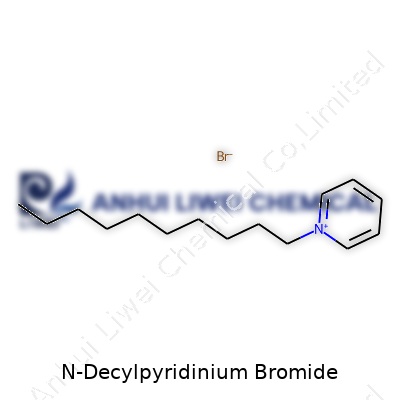
The formula C15H26BrN lays out its structure, with the decyl side chain snugged up to a pyridinium ring, counterbalanced by a heavy bromide ion. As a solid, it offers a melting point around 180-185°C, giving some room to work in synthesis and application. Its water solubility stands out, especially for a quaternary ammonium salt, letting it get right to work in aqueous systems. Left open to the air, it doesn’t pick up moisture as fast as some similar chemicals, so storage mistakes are less likely to cause a headache. Chemically, it's stable in neutral and slightly acidic solutions though it begins to break down under more extreme heat or in strongly alkaline conditions.
Technical Specifications & Labeling
Quality specifications set clear baselines: look for purity not less than 98% per lab analysis, and pay attention to labeled grades — pharmaceutical, cosmetic, or technical. Impurities should stay below 1% for heavy metals and less than 0.05% for free pyridine. Manufacturers run HPLC and GC checks; buyers need batch numbers, manufacturing dates, and storage recommendations on any product label. In practice, the fine granularity and flow properties play a role in formulation, which gets noted on spec sheets for major suppliers. Proper UN numbers, hazard statements about toxicity on ingestion or skin contact, and disposal instructions form part of any compliant package.
Preparation Method
Synthesis takes a straightforward approach: mix pyridine with decyl bromide under reflux, using solvents like ethanol to speed things up. The alkylation reaction bonds the decyl group directly onto the nitrogen atom. After a few hours, crystalline product separates from the solution as it cools. Industrial-scale manufacturers tighten control with batch reactors, recycling solvents and purifying the product through recrystallization or multistage washing. Some labs work up smaller quantities with similar steps but focus on minimizing waste and avoiding side-product formation. Residual solvents and halogenated byproducts wind up in waste treatment, since regulatory scrutiny calls for strict compliance in any manufacturing set-up.
Chemical Reactions & Modifications
N-Decylpyridinium Bromide doesn’t sit quietly in a bottle; under the right conditions, chemists transform it into new quaternary compounds by swapping in different side-chains or counterions. In strong alkaline media, the molecule can degrade via Hofmann elimination, lopping off the decyl chain to yield less active fragments. Swapping bromide for other halides (chloride or iodide) sometimes improves solubility or reduces toxicity, opening doors for new uses. These reactions aren’t just theoretical; research teams in surface chemistry and biotechnology make frequent use of these modifications to fine-tune detergent or antimicrobial effects for specific challenges.
Synonyms & Product Names
On a data sheet or supplier site, you might see synonyms such as 1-Decylpyridinium Bromide, Decylpyridinium Bromide, or Pyridinium, Decyl-, Bromide. Some manufacturers market it as DQuaternary10 or QPyr Decyl Br, signaling blends tailored toward cleaning or sanitizing. In scientific literature, these alternative names can get confusing, which sometimes causes trouble in procurement. CAS registry numbers (CP 1122-93-6) help sort out any mix-ups, as do chemical indexes and safety documents that catalogue synonyms and commercial labels side by side.
Safety & Operational Standards
Handling this compound means paying attention to more than just gloves and goggles. Inhalation or prolonged skin contact causes irritation, and accidental ingestion brings both toxicity and urgent calls to poison control. The compound’s cationic structure interacts with cell membranes, an advantage when killing bacteria but a risk when it comes to mammalian tissue. Avoiding dust formation, keeping containers tightly closed, and using local exhaust ventilation all reduce risk. Material Safety Data Sheets point out that while the bromide ion itself is not the main danger, the molecule as a whole requires caution. Regulatory agencies in the EU and US include it under controlled-use antiseptics and disinfectants, and disposal calls for incineration or treatment as hazardous waste in many regions. Training workers, designing workflows that limit direct handling, and regular health monitoring form part of current good manufacturing practice.
Application Area
The reach of this compound extends from personal care to textiles, plastics, and medical equipment. Dental rinses and mouthwashes take advantage of its anti-plaque properties, while mucosal antiseptics deliver it in carefully controlled dosages. In industrial cleaning, it powers surfactant blends that remove biofilms from steel pipes. Textile finishing plants value its microbial resistance for fabrics in healthcare environments. The compound occasionally finds its way into oil extraction — controlling sulfate-reducing bacteria in reservoirs. I’ve seen research projects test its use as a delivery vehicle for other bioactive agents, relying on its charge and structure to ferry molecules across cell membranes. Each application brings questions about dose, residual levels, and breakdown products, so regulatory compliance and environmental testing never stray far from any practical deployment.
Research & Development
Chemists, microbiologists, and formulators keep pushing boundaries with N-Decylpyridinium Bromide. Work continues on tweaking the molecular structure to increase selectivity for dangerous bacteria without risking human health. Nanotechnology teams study interactions with lipid membranes, looking to leverage this compound’s affinity for certain amphiphilic targets. Environmental researchers investigate how breakdown products distribute through water systems, measuring both total organic bromide and bioaccumulation. Across all these efforts, collaboration between academic teams, government labs, and corporate research outfits sets the pace. Patents track innovations in formulation, delivery, and application of this entire family of surfactants.
Toxicity Research
Looking closely at impact on health, studies in rodents and cell cultures highlight the primary mechanisms of toxicity: disruption of cell membranes and - at high doses - interference with basic cellular functions. At low to moderate doses, mouthwash and surface cleaner testing show acceptable profiles, but the line between antimicrobial power and cytotoxicity can get thin. Chronic exposure raises questions about cumulative effects, particularly in aquatic environments where bromide and long-chain organic fragments can harm non-target species. Regulators ask for LD50 numbers, mutagenicity tests, and detailed bioassays before granting approvals. Researchers keep pace by designing better assays to catch subtle environmental and physiological effects long before they reach real-world significance. Anecdotal reports and occupational exposure cases keep reinforcing the need for vigilance at every stage, from storage to disposal.
Future Prospects
N-Decylpyridinium Bromide doesn’t face an easy road, but demand for effective antimicrobials and specialty surfactants hasn’t let up. As bacterial resistance continues to upend traditional cleaner and disinfectant formulations, new variants and delivery forms may solve some problems but also raise new regulatory and environmental challenges. Ongoing work on greener synthesis routes aims to reduce hazardous byproducts and bring down manufacturing costs. If researchers succeed in modifying the molecule for selective action or enhanced biodegradability, it could see a resurgence in medical and personal care markets, putting it back in focus for the next generation of product development. Until then, the steady push for lower toxicity, reliable performance, and well-documented supply chains will set the standard for any future applications.
Understanding Its Role in Everyday Life
N-Decylpyridinium bromide usually turns up in technical bulletins and research journals, but most people don’t realize how often compounds like this touch their lives. This ingredient doesn’t grab headlines, yet manufacturers lean on it for a reason: it works. In my university chemistry labs, the instructor always said, “Pay attention to the unexpected roles chemicals play,” and he was right.
Taking on Germs in the Lab and Beyond
N-Decylpyridinium bromide acts as a surfactant and antiseptic. You see it mostly where fighting germs matters. Hospitals and dentists count on this chemical to keep surfaces and tools cleaner, cutting down the odds of stubborn infections. In my college years, I worked in a dental office cleaning trays used for impressions. The tech insisted on solutions with this compound for soaking equipment between patients, saying fewer breakouts happen when surfaces get this kind of extra care.
Companies don’t stop at dental work or hospital cleaning. You’ll spot the same ingredient in mouthwashes and gargles designed for sore throats, especially in Europe and Asia. Authorities in many regions recognize the low toxicity and broad action against bacteria. Cleaning crews find it handy, too. Any place that needs deep cleaning — food processing plants, schools, even animal shelters — might use solutions spiked with N-Decylpyridinium bromide. They count on it to break up oily residues and kill pathogens in one sweep.
Consumer Safety and Environmental Concerns
Public trust rests on safety. Over time, regulators and toxicologists have peered closely at compounds used in health and cleaning. With N-Decylpyridinium bromide, decades of safety data back up its current uses. Oral care products do include only a trace, and rinse-out directions limit what stays in the mouth. Still, the world’s changing, and people ask better questions: what goes down the drain? Where does this molecule end up?
Some studies in the last few years point out that surfactants like this can persist in waterways. Persistent does not mean dangerous straight away, but fish and aquatic life may feel effects over time if volumes swell. Environmental scientists urge companies to improve disposal practices and invest in greener surfactant alternatives where possible. I remember classmates hoping to build a better molecule — something that breaks down more completely — but innovation moves slowly compared to demand.
Keeping Clean, Looking Ahead
People want a world where the products they use fight infection without adding hidden risks. N-Decylpyridinium bromide earned trust by making cleaning routines more reliable and keeping healthcare safer. At the same time, new research and better process controls offer hope for a future with lower environmental impact. The push now comes from both sides: keep people healthy today, but also steer these potent tools in a direction that looks out for tomorrow’s rivers and drinking water.
Real progress takes a partnership approach. Industry must tell the whole story about where such chemicals go, while researchers dig into effects on water and soil. Readers, like any of us who have mixed bleach and soap for an extra-clean countertop, play a part by choosing products with clear labels and supporting companies that step up on environmental responsibility.
It’s easy to see N-Decylpyridinium bromide as just another long chemical name. On closer look, the path of this ingredient runs through doctor’s offices, bathrooms, and even concerns about local water. By following its journey, we find a bigger conversation — one that draws in science, policy, and everyday choices.
Understanding the Chemical
N-Decylpyridinium Bromide, a chemical often found in cleaning products and disinfectants, draws plenty of attention every time questions about safety come up. People expect that chemicals used to clean surfaces or preserve products won't harm humans. I’ve spent years reading labels on everyday products, watching regulators approve or ban ingredients, and following research as it emerges. Families deserve both clean spaces and safe products.
How Our Bodies Respond
After brushing up on published studies and regulatory opinions, I see a pattern: low amounts don't always trigger alarm bells, but scientists always urge caution about exposure. Lab tests show this chemical can kill bacteria effectively, making it useful for sterilizing surfaces or prolonging shelf life. In my own home, I take special care with any cleaner that uses words I can't pronounce. N-Decylpyridinium Bromide fits that bill, which means rubber gloves stay close by.
One key point: people don’t eat this chemical. Most contact happens on skin, in mouthwashes, or as residue after cleaning. Some reports say this can cause irritation to the skin, eyes, or mouth. Long-term exposure findings are scarce, so we rely on toxicology studies that use higher doses than found in consumer products. These show signs of toxicity after repeated high-dose exposure, which starts making a stronger case for regulations and warnings.
Expert Opinions and Regulation
Trusted agencies, like the European Food Safety Authority (EFSA) and the U.S. Environmental Protection Agency (EPA), set strict guidelines for how much can show up in food, cosmetics, and cleaning agents. I’ve watched some countries restrict its use or require clear labeling, which helps consumers make an informed choice. It’s not banned everywhere. If it does show up in products, regulators force companies to provide evidence showing safe levels.
I remember reading an EFSA review noting the lack of data on whether N-Decylpyridinium Bromide accumulates in humans over time or disrupts hormones as some synthetic chemicals do. That’s a big red flag for advocates who prefer the “better safe than sorry” approach.
Making Good Choices at Home
Looking for safer options means checking labels, asking questions, and staying tuned to recalls and warnings. I stick to products with transparent labeling and avoid anything that hides behind the word “proprietary blend.” Washing hands and tools well after using chemicals, keeping them out of reach of kids, and ventilating rooms—simple habits reduce risk. I also keep my ear to the ground for new findings, since what’s considered safe today can change fast with new research.
Paths Forward
Researchers highlight the need for more studies on chronic exposure and effects on vulnerable groups like children, the elderly, or people with certain health conditions. Advocacy pushes for more transparency, better regulatory oversight, and rapid updates to public guidance. In families, knowledge empowers better decisions. Skepticism about unfamiliar chemicals like N-Decylpyridinium Bromide isn’t fearmongering; it’s the start of a smarter, safer household.
Why Storage Conditions Make a Difference
Anyone who's handled chemicals—whether in a university lab, a hospital, or a manufacturing plant—knows even a seemingly stable compound can throw a wrench into the works if you overlook storage details. N-Decylpyridinium Bromide isn’t some baking soda you leave on a pantry shelf. It’s a cationic surfactant and packs both utility and risk into its bottle, so smart storage helps sidestep unwanted surprises. I remember opening a poorly capped bottle at school once, only to get a strong whiff that made it clear: paying attention now saves headaches (and safety lectures) later.
Simple Rules For Safe Storage
Start with temperature—room temperature fits here, but forget about those windowsills, radiators, or hot, crowded closets. Heat can change everything. Chemical breakdown accelerates with temperature shifts, not to mention increased risk of fire or fumes. A cool, dry space, with steady conditions, preserves the compound’s integrity.Moisture causes real trouble. Even though N-Decylpyridinium Bromide can dissolve in water, you don’t want ambient humidity seeping in. Extra moisture clumps the powder or forms a crust in solutions, making it harder to measure or mix. I’ve seen humidity ruin weeks’ worth of stored reagents in under a month. Desiccators or cabinets with silica gel work great for keeping things dry, and an airtight, properly labeled container keeps the dust and damp out.
Light Exposure? Keep It in the Dark
I once saw someone store sensitive compounds under harsh LED lights out of habit. Big mistake. Light can alter the chemistry over time, especially ultraviolet. N-Decylpyridinium Bromide doesn’t like extended light exposure—things degrade, effectiveness drops. Amber bottles help, or solid cabinets with doors. If you’ve ever tried to salvage a yellowed, light-damaged reagent, you know prevention pays off.
Keep Incompatible Chemicals Far Away
Some folks overlook this: crowding incompatible substances together. Never store strong acids, oxidizers, or reactive organics close by. You don’t want to risk cross-contamination or a spill that brings two enemies together. I once worked in a teaching lab where a mix-up led to a small—but memorable—reaction. Avoiding shared shelves just isn’t overkill.
Personal Protection Still Counts
No matter how careful you are about sealed containers, opening a bottle of N-Decylpyridinium Bromide deserves gloves and goggles. It stings on contact and can irritate eyes, skin, or lungs. Veterans of the lab know gloves keep your skin safe, and a well-ventilated workspace cuts down on accidental exposure. Label everything, even the backup bottles—when things look similar, mistakes follow.
Inventory and Freshness: Don’t Let Stock Sit Forever
Expired chemicals become unreliable. Even tightly sealed containers can’t promise endless quality. A habit of noting purchase or opening dates pays off during an audit or experiment. If it’s years old, it’s worth replacing, no matter how full it looks. Old stock leads to wasted trials, bad data, or worse—safety risks.
Storage: The Often Overlooked Lab Skill
Taking storage seriously isn’t just paperwork or compliance. Every safe, well-kept bottle of N-Decylpyridinium Bromide means fewer headaches and safer outcomes. Don’t let convenience eclipse care. Proper storage builds trust in your results and keeps everyone out of harm’s way. Sometimes, the boring details matter most.
Kicking Off With The Basics
N-Decylpyridinium Bromide carries a name that sounds intimidating, but anyone who’s spent time in a chemistry lab gets used to breaking compounds down bit by bit. The chemical formula for this substance is C15H26BrN. The formula itself packs a lot of meaning, showing exactly what builds up each molecule: 15 carbon atoms, 26 hydrogen atoms, one bromine atom, and one nitrogen atom. Chemistry stacks elements into combinations that seem simple on paper but represent years of research and application. This surfactant stands out for its strong antimicrobial properties and ability to disrupt lipid membranes, making it valuable for cleaning and disinfection.
Importance in Everyday Life
Thinking back to my university days, everyone took turns working with quaternary ammonium compounds. Whether it was disinfecting bench tops after a long day or prepping chemical solutions for antibacterial studies, substances like N-Decylpyridinium Bromide were regulars in our toolkits. Its structure, especially the decyl group attached to pyridine, gives it a surfactant-like action. That surfactant property—something experienced scientists recognize by sight—means it lowers surface tension, helping to loosen fats and oils and disrupt microbial life on surfaces.
You see it most in mouthwashes, personal care items, and even some pharmaceutical products. Hospital workers and janitorial staff trust it for disinfection. Products containing N-Decylpyridinium Bromide can effectively cut through germs in a way simple soap and water can't always manage. Its cationic nature (that nitrogen with four bonds) means it binds well to negatively charged surfaces, boosting its sticking power and cleaning performance.
Safety, Supervision, and Science
No story about a chemical formula feels right without facing the human angle of safety. At our home labs and research institutions, everyone learned early that these quaternary ammonium compounds, for all their use, demand respect. Ingesting or inhaling particles presents health risks. Long-term exposure, especially in poorly ventilated settings, can cause irritation to the skin, eyes, and respiratory system. Researchers and workplace supervisors stay alert about safety guidelines, requiring gloves and ventilation whenever compounds like this hit the workbench.
Regulators watch over the use of quaternary ammonium compounds including N-Decylpyridinium Bromide, balancing effectiveness and the need to limit harm. The Environmental Protection Agency and similar organizations in other countries insist on risk assessments and transparent product labeling, ensuring users don’t fly blind. Since accumulation of these compounds in the environment raises concerns about aquatic toxicity and antimicrobial resistance, proper wastewater treatment and controlled disposal are key parts of any responsible operation.
Seeking Out Solutions and Responsible Actions
Living in a world where people constantly combine effectiveness with sustainability, the industry keeps searching for safer, greener alternatives. Some innovations target shorter carbon chains or biodegradable versions of quaternary ammonium compounds. Even though no single substitute has taken over the cleaning industry, researchers stay on the hunt. Until a breakthrough arrives, education and responsible habits keep everyone safer—both at work and at home.
To sum it up, N-Decylpyridinium Bromide—with that formula C15H26BrN—forms a backbone for real-world hygiene applications, but every use comes with a need for solid knowledge, careful handling, and an eye toward the health of people and the planet. Staying informed kicks off with something as straightforward as understanding what makes up the chemicals in our lives.
Why Attention to Chemical Spills Matters
Some chemicals bring more risks than others, and N-Decylpyridinium Bromide sits among those that can cause headaches for anyone in a lab or industrial setting. Found often as a disinfectant or surfactant, this compound irritates both skin and the respiratory system. Plenty of studies list its hazards: irritation, coughing, and lung discomfort after inhalation. For those tasked with its use or disposal, avoiding careless spills pays off in fewer health complaints and workplace incidents.
How to Jump Into Action Following a Spill
A fast, steady response always matters. Work experience in busy labs often turns theory into muscle memory. Once this chemical touches the ground, nobody should rush to grab a mop without the right protective gear. At my own workplace, the unwritten rule: gloves, goggles, and a fitted respirator come out before any clean-up. I once saw the aftermath of a rushed response — one colleague’s glove tore, and a minor skin rash followed.
Here’s the practical way to do it. Keep people who aren’t needed out of the room. Make sure the ventilation runs strong, to break up any fumes. No one benefits from lingering chemical smells, especially since N-Decylpyridinium Bromide can bother the lungs. Sometimes you’ll have to clear out air for a few hours after a bigger spill.
Simple Containment and Clean-Up Steps
Lab instructions sound complicated on paper, but in daily work, a few actions get repeated. For a dry spill, a dustpan and brush can lift up the powder — but never sweep quickly, or dust clouds form. Wetting the powder with just a tiny bit of water can help prevent this. For a liquid spill, absorbent material (paper towels or spill pads) offers a direct fix. I’ve found clay-based absorbents work well. Once contained, sweep everything into a sealed, chemical-resistant bag or container.
Every waste bag gets clearly labeled. Chemical waste never mixes with regular garbage. Proper disposal keeps unwanted lingering effects away — groundwater contamination or exposure to custodians. Local hazardous waste collection services always offer chemical-specific drop-off points, which really tightens up safety measures.
Preventing Future Spills
A good storage system takes pressure off workers. In my lab, tighter bottles, double containers, and clear labeling go further than any strict protocol. Fewer accidents happen when bottles carry warning stickers and sit on secured shelving. A monthly review of storage conditions becomes a healthy routine, as someone once caught a leaky cap before it escalated.
Proper training shapes how workers act. Anyone dealing with N-Decylpyridinium Bromide benefits from refresher safety courses. Yearly sessions, or before onboarding new staff, form the backbone of any responsible lab or factory. OSHA recommendations point out that simple reminders — like handwashing after possible contact, never eating around chemicals, and using fume hoods — work in practice.
Through Experience: Small Actions, Big Impact
Every spill holds lessons. Quick action, protective gear, strong ventilation, careful clean-up, and safe disposal stack the odds in favor of health and safety. Watching a team take spills seriously reminds everyone that a little planning today saves headaches — and skin — tomorrow. Fewer workplace injuries turn into smoother operations. The right habits lead the way.