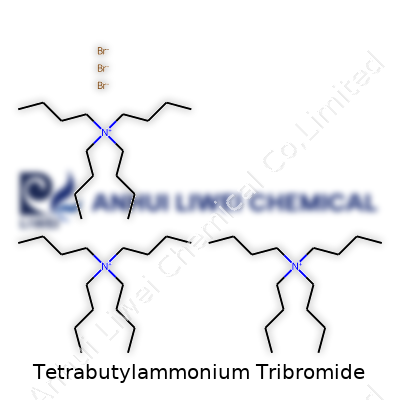
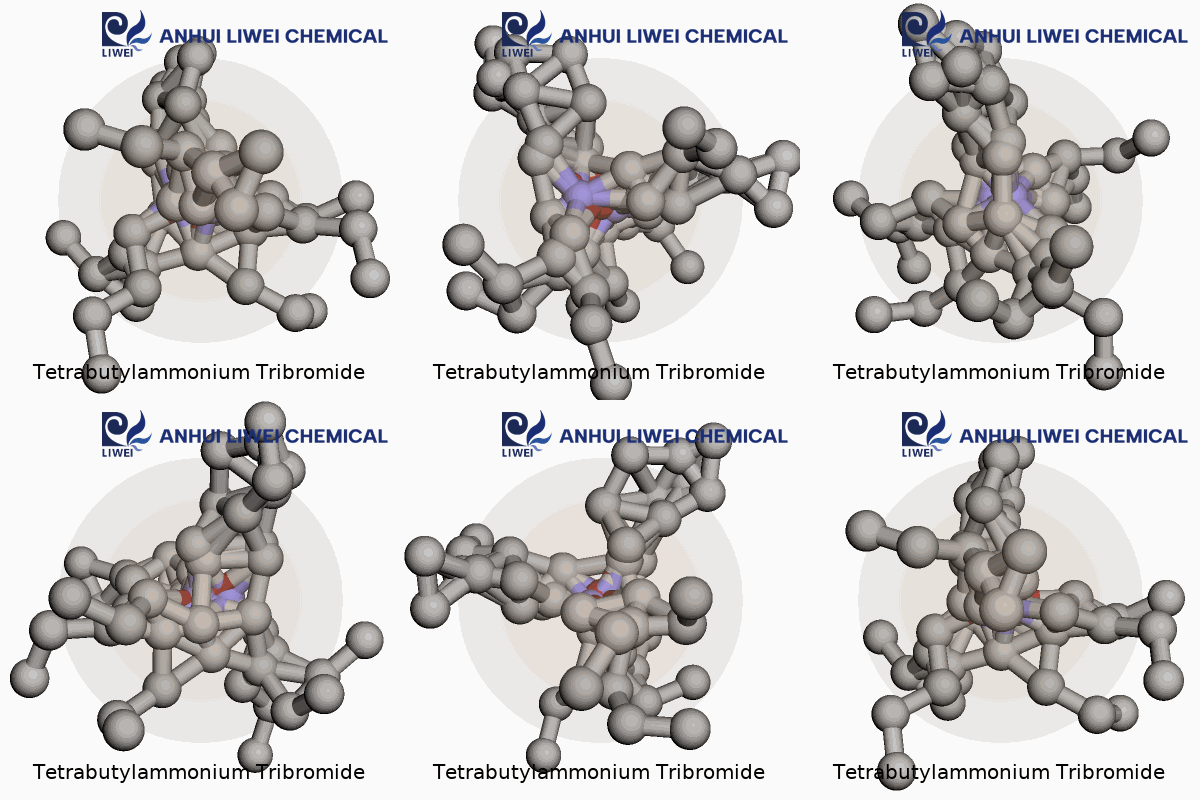
Tetrabutylammonium Tribromide: Ground Reality and Future Landscape
Tracing the Historical Roots
Understanding how tetrabutylammonium tribromide (TBATB) earned its spot in the toolbox of organic chemists involves looking back at bromination chemistry. In the late 20th century, researchers started to tire of liquid bromine. It’s tough to handle, hazardous, and brings unnecessary risks to a lab. TBATB didn’t emerge overnight; chemists were already working with similar bromine donors. But the need for safer, crystalline, easily weighed reagents led to this salt making regular appearances in journals and, later, everyday synthesis. Institutions and industry both turned to TBATB, seeing it as a game changer compared to difficult-to-handle solutions of bromine or potassium tribromide.
Taking Stock: What Sets TBATB Apart
TBATB comes across as a bright orange-red solid, favoring practicality over the volatile mess of liquid bromine. The appeal really hits home if you’ve ever tried to precisely dose a liquid that fumes and stains everything. In bottle or vial, TBATB offers up its three bromine atoms for a range of transformations without the risk of elemental bromine sloshing around your fume hood. This organic salt’s stability keeps things simple on the shelf and safe on the workbench. A casual glance at its molecular structure reveals tetrabutylammonium as the bulky cation, stabilized by three bromines attached to it. Labs often store it in sealed containers, avoiding light and moisture, but it doesn’t demand refrigerated space like some finicky reagents. TBATB’s chemical makeup brings the best of both worlds — an easily handled version of reactive bromine, matched with organic solubility that sidesteps many incompatibilities.
Physical and Chemical Dimensions
What you see with TBATB is what you get: a dense, colorful powder that stands up to normal handling in a lab. Its melting point typically lands between 135°C and 140°C, which is far above room temperature. It’s soluble in organic solvents like dichloromethane, acetonitrile, and chloroform — letting chemists drop it directly into reaction mixtures without sticky issues. On the chemistry side, TBATB serves up bromine in a controlled way. Under standard conditions, TBATB avoids unwanted runaway reactions. In operational terms, it’s non-volatile, so accidental inhalation is much less likely than with open bromine. Reactions using TBATB often show sharper yields due to its consistent release of Br₂, reducing byproducts thanks to the lack of water and excess acid. From a technical view, material purity rests at 98% or higher, counted as premium in commercial supply chains.
Technical Specifications and Labeling
Manufacturers lay out detailed specs. Typical TBATB labels spell out its minimum content (often 98% pure), CAS number (56441-86-0), and storage rules—dry, dark, and usually at 2–8°C or simply out of sunlight and moisture. Some vendors print spectral data, elemental analysis, or straightforward melting range. Batch data sits with safety references, including hazard pictograms and signal words based on GHS. Whether it goes out to a university teaching lab or a process chemistry group, TBATB’s chain of custody usually includes documentation on transportation and shelf-life that’s clear and traceable. These specifics aren’t just bureaucratic—they connect to real safety and reliability, building trust through transparency.
How Labs Make TBATB
TBATB’s synthesis doesn’t stretch the imagination. Most procedures start with tetrabutylammonium bromide mixed in a suitable solvent, followed by the careful addition of bromine. Reaction time and temperature matter here. Stirring the mix at low temperature — typically below 10°C — prevents over-bromination and manages exotherm. Crystals of TBATB come out after solvent removal or simple filtration, then get dried under vacuum. That’s about it. TBATB’s formation comes down to practicality and control, especially for chemists who want lots of product without hazardous leftovers. Waste generated, such as spent solvent and residual bromine, calls for containment—protecting both operator health and the environment.
How TBATB Upholds Itself in Reactions
Out in the field, TBATB sweeps into bromination with finesse. It’s used for the bromination of alkenes, aromatic rings, or even for oxidative transformations. Laboratory workers see it as a simple oxidant for alcohols and as a halogen source in regioselective reactions. TBATB consistently provides high selectivity, especially in electrophilic additions or substitutions. On the modification front, researchers play with its solubility profile, swapping cations or varying solvents to tune reactivity. The reliable release of Br₂ from its crystalline matrix helps labs cut down on reaction mishaps and repetitive trial runs. In some recent examples, TBATB helped unlock new approaches to heterocycle synthesis, metabolic tagging, or functional group conversions without dragging the mess of elemental bromine into the process.
Aliases and Synonyms
The chemical trade doesn’t shy from synonyms. TBATB’s alternate spellings make their way into papers and catalogs: tetrabutylammonium tribromide, TBA tribromide, n-tetrabutylammonium tribromide, and even TBATB, the lab slang. Catalog entries lean on the CAS number or molecular formula C₁₆H₃₆NBr₃ for clarity. Keeping track of all these names matters. Modern supply chain systems depend on clear matchups between supplier documents and laboratory records, ensuring the right bottle reaches the right bench.
Safety, Standards, and Daily Precaution
TBATB is no harmless powder, so it commands respect. Its bromine content means it poses a risk to skin, eyes, and lungs. Labs working with TBATB suit up in gloves, goggles, and lab coats. Reaction setups always live in a good fume hood, keeping vapors away from breathing spaces. Waste handling links up with brominated compound disposal protocols. Documentation from suppliers lists GHS symbols for corrosivity and health hazards, plus emergency steps in case of accidental exposure. Staff training plays a big role: students and professionals learn not to underestimate the dangers of even a stable, solid reagent. Emergency eyewash stations and spill kits stay close at hand. Regulatory standards also demand proper labeling and transport under regulated conditions.
Where TBATB Makes a Mark
TBATB’s footprint covers a lot of chemistry ground. Synthetic organic labs count on it for controlled brominations—everything from pharmaceutical intermediates to agrochemical precursors benefits from the safety and precision. Environmental chemistry groups reach for TBATB to mimic natural halogenation reactions in water studies. Polymer research sometimes uses it to introduce reactive sites or crosslinks, broadening the landscape of functional materials. Teaching labs include it in advanced organic courses, offering students the chance to run bromination reactions without direct exposure to hazardous bromine gas. Industrial scale-ups have been slower, mainly because bulk bromine still runs cheaper, but pilot plants and scale-up teams adopt TBATB for precision or specialty syntheses.
Ongoing Research and Evolution
The literature around TBATB keeps expanding. Journals fill up with papers on tweaking reaction conditions, boosting selectivity, or cutting waste. Research efforts in green chemistry look at TBATB’s environmental footprint, asking if alternative oxidants can be made from less toxic components. Drug discovery chemists find TBATB useful for site-selective halogenations or preparing advanced intermediates with fine control. Even organocatalysis sometimes finds ways to merge TBATB with milder conditions. Automation and flow chemistry—where reactions run continuously—benefit when TBATB replaces fickle liquid reagents that won’t store well on a machine.
What We Know About Toxicity
TBATB’s greatest virtue—delivering bromine in a solid form—doesn’t erase its hazards. Animal models and in vitro tests point to toxicity similar to other brominated reagents. Skin or mucous membrane contact can trigger burns, systemic absorption, or respiratory distress. Chronic exposure isn’t well researched, but cautious chemists treat any bromine source as a persistent hazard. Environmental toxicity stands out as a concern, since brominated organics often persist in waterways. Regulatory agencies, including OSHA and the EPA, keep a close eye on disposal practices to avoid downstream contamination. Safer workspaces depend on informed users, respected containment protocols, and vigilant supervision.
Looking Forward: Is There a Better TBATB?
Few reagents manage to modernize such an old-school chemical transformation without massive tradeoffs. TBATB’s stability and ease push labs toward safer habits and more reliable results. Green chemistry advocates keep raising the bar: they want less toxic byproducts, simplified waste disposal, and renewable feedstocks. Maybe TBATB isn’t the final answer, but it stands as proof that simple design tweaks—like swapping a dangerous liquid for a predictable solid—can shift a whole industry’s approach. Future prospects may include TBATB analogs based on ionic liquids, biodegradable carriers, or even catalytic versions that lower the total bromine footprint per synthetic step. If organic chemistry wants to move ahead, the push for safer and smarter reagents like TBATB will keep leading the way.
Real Uses in Everyday Labs
Tetrabutylammonium tribromide, or TBATB, finds a regular spot on the bench of many research chemists. This orange-red crystalline compound often becomes the choice for adding bromine to various molecules. In college, I remember coming across it for the first time—not because someone said it latched onto a trend, but because old-fashioned liquid bromine came with spill nightmares and safety headaches. TBATB doesn’t leak, doesn’t belch fumes, and packs the same punch when a reaction calls for bromine. Being able to handle such a substance, measure it out with a spatula, and toss it straight into your flask saves real headaches.
Bromination—Why It Matters
Bromine reacts with a lot of different organic chemicals. TBATB brings this ability into play for making drugs, dyes, and polymers. Let’s say you want to add a bromine atom to an aromatic ring. TBATB does it with less mess and fuss. Chemists turn to it for brominating alkenes and alkynes as well. Instead of dealing with glass ampoules of liquid bromine, they use a solid, which cuts down on waste and keeps accidents from getting out of hand. In my early research days, I noticed colleagues from neighboring labs borrowing it because they had their own stories about spilled bromine and ruined clothes.
Cleaner Chemistry, Safer Work
One of the big pluses of using TBATB goes beyond just convenience. Safety counts for so much in a busy synthetic lab. Liquid bromine causes burns, stains, and releases toxic fumes. TBATB changes the working environment. Breathing gets easier, gloves last longer, and cleaning up takes less elbow grease. People around the world have recognized accidents tied to bromine—for example, the United States Chemical Safety Board has raised alarms about liquid bromine’s hazards. The solid form really does help protect students, researchers, and industry workers.
Green Chemistry: A Simple Step Forward
More chemistry now tries to follow ‘green’ principles. TBATB isn’t perfect, but it gets used in reactions needing less solvent, at lower temperatures, with fewer by-products. Each of these factors means less waste and fewer cleanup problems. Textbooks list examples of it helping make medicines where the old ways created a mess to handle. The push for safer chemicals in teaching labs fits with making classroom experiments just as effective, but with a lighter footprint.
Challenges and Solutions
TBATB still has bromine in it, and no one should take it lightly. It ends up as chemical waste after its job is done. Labs need to handle and dispose of the waste safely. Some researchers suggest switching to greener reagents or coming up with ways to recycle TBATB’s by-products. Teaching safe handling methods and testing newer, even safer alternatives remains a non-stop job. Industries making large volumes of brominated products look for systems that capture or break down leftover materials.
Why It Stays on the Bench
TBATB works for those chasing both practical and forward-looking chemistry. It opened doors for new research and day-to-day work, setting a cleaner, safer example for the next round of chemical tools. From experience and seeing others work, TBATB stood out not as a shortcut, but as a clear step toward safer and simpler practices in a field that values both speed and responsibility.
Why Chemical Formulas Matter in Real Work
Every practical chemist I know spends a lot of the workday chasing reliable reagents, struggling to figure out exactly what’s in the bottle. When someone mentions tetrabutylammonium tribromide, it’s not only the long name but also the chemistry behind it that gets my attention. You don’t want any surprises once you’re in the thick of a sensitive synthesis.
So, here’s the straightforward part: tetrabutylammonium tribromide comes with the formula (C4H9)4NBr3. Smells like heavy lab work and a whole lot of chemical reactions to me. “(C4H9)4N” points to the tetrabutylammonium ion, basically a nitrogen sewn onto four butyl chains, making for a bulky and oil-loving cation. The tribromide part, “Br3”, isn’t just three bromine atoms crammed together. It means a bromide anion has latched on to an extra molecule of Br2 — nature’s way of getting reactive bromine into a safe-to-pour bottle.
Why Tetrabutylammonium Tribromide Works
People might shrug about why companies go through all this trouble to make certain salts. My own hands-on experience taught me: a lot of lab bench work suffers not from running out of big, rare chemicals, but from lacking a clean, easy source of a powerful—but manageable—reagent. Straight bromine gas isn’t popular in most labs. Ask anyone who’s uncorked a bottle: it’s a choking orange vapor, a mess for the lungs and the carpet. Tetrabutylammonium tribromide packs the bromine’s punch but comes as deep red crystals, easier to handle, and less drama if you take care. These details save scientists time, nerves, and probably a few ruined pairs of shoes.
Supporting Evidence and Practical Use
Actual reports in peer-reviewed journals, from Synth. Commun. to J. Org. Chem., back up the value of formulations like this. Researchers have shown that using tetrabutylammonium tribromide improves yields in certain halogenation reactions, especially when clean, selective bromination matters. With its structure, the compound dissolves in organic solvents better than old-school alternatives like sodium or potassium salts. That means chemists can skip ugly emulsions and difficult separations.
The bigger butyl chains on the ammonium ensure the molecule stays happy in both polar and nonpolar environments, widening its utility. Chemists exploit this in fields from pharmaceuticals to materials science—fields that shape the pills, electronics, and specialty coatings modern life runs on.
Preventing Missteps and Building Confidence
I’ve seen misunderstandings about chemical formulas cause real headaches. Getting the exact numbers wrong can mean botched reactions, lost money, and safety hazards. Clear labeling and knowledge of the chemical structure let labs avoid mistakes and handle hazardous reagents smarter. As manufacturers focus on transparency and accuracy, the risk drops, trust grows, and meaningful progress in chemistry picks up speed. Tools like the PubChem entry (CID 21816003), safety data sheets, and supplier-specific technical support provide essential confidence, letting chemists focus on solving real problems.
Looking for Improvement
Still, every system leaves room to grow. Boosting education so that young scientists can connect complicated names to real formulas, encouraging producers to keep documentation up-to-date, and investing in cleaner, safer analogs all make major differences. A deep understanding of working formulas—built from day-to-day experience, not just classroom lectures—pushes the whole field ahead.
Getting to Know the Risks
Tetrabutylammonium Tribromide, familiar to anyone who’s spent time in a chemistry lab, stands out as a mosaic of three elements that demand respect. It’s a powerful brominating agent, which means you don’t want it hanging around somewhere it shouldn’t. A few years back, I walked into a small lab where someone left this compound a little too close to sunlight and humidity—a lesson nobody needs to learn twice.
The Trouble with Moisture and Heat
Moisture and Tetrabutylammonium Tribromide do not get along. Exposure to water or even high humidity leads this solid to release bromine gas, and you don't want to taste or breathe that—believe me. Keeping this material bone dry isn’t just a good suggestion; it keeps work safe and smooth. Storage in a tightly closed container, lined with glass or a chemical-resistant polymer, keeps wandering water vapor out. My own habit comes from seeing too many ruined reagents: always seal the jar tightly, wipe it down, and make sure no moisture comes near the cap.
Light and Chemical Stability
Direct sunlight doesn’t do Tetrabutylammonium Tribromide any favors. Light exposure, especially UV, can trigger chemical break down, jeopardizing purity and releasing inhalable bromine—one more hazard nobody wants to invite. My approach has always leaned on the old-school advice from my first PI: keep the container in a shaded spot, or ideally in a closed opaque storage box. Most chemical suppliers provide amber or opaque bottles for a reason.
Temperature Control
Leaving Tetrabutylammonium Tribromide in a hot room, or anywhere near heaters or direct ventilation outlets, gets risky. Warmth makes it less predictable, increasing the odds of decomposition or hazardous vapors. I’ve seen small storage cabinets tucked near radiators, and it feels like a shortcut to disaster. Room temperature, steady and moderate, chalks up far fewer accidents and loss of material than cooler or warmer extremes.
Why Proper Labeling and Secondary Containment Matter
One issue that gets glossed over too much in real labs: secondary containment. A cracked jar or a leaky cap means chemical leaks, and with a bromine compound, that spells trouble. Placing the tightly-closed container in a secondary, sealed containment tray or box prevents those leaks from turning into big, unmanageable messes. Standard practice in my experience always involved a physical buffer—a tray, a bin, or even a plastic bag when better options were out of reach.
Ventilation Counts—But Don’t Overdo It
Air flow matters, but direct exposure to the open lab air increases risk of spread if things go wrong. An enclosed, vented storage cabinet rated for corrosives, isolated from the main workspace, makes managing accidental releases much more straightforward. For small academic labs, that sometimes means modifying available cabinets with vent risers and warning signage.
Improving Lab Safety with Training and Routine Checks
All the good chemical handling habits in the world collapse if nobody knows what’s inside those containers. Proper chemical labeling is more than a regulatory hoop—everyone in the workspace needs instant recognition of hazards to respond quickly in an emergency. It’s easy to get complacent, but routine checks for damaged glass, loose lids, or improper placement have saved more than one colleague from a nasty surprise.
Taking Responsibility for Shared Spaces
Safe storage reflects a commitment to the people in the workspace as much as to research quality. I’ve worked in settings where everyone takes five minutes a week to double-check the chemical storage area, and the peace of mind pays dividends. If something looks off, action is immediate. These shared responsibilities build trust, avoid mistakes, and ensure that chemicals like Tetrabutylammonium Tribromide remain a useful tool instead of becoming a safety headline.
Everyday Risks Hidden in the Lab
Tetrabutylammonium tribromide, sometimes spotted in university or industrial labs, isn’t something the average person finds at the local store. As a brominating agent, researchers lean on it for its ability to add bromine to organic molecules with a bit more convenience than handling pure bromine. It looks less frightening than a bottle of liquid bromine, but that can lure some into lowering their guard. The reality: safety sheets paint a clear flag about risks connected with this chemical.
What Makes It Harmful
Tetrabutylammonium tribromide gives off a pungent odor and sheds off brown fumes if it meets moisture or heat. These fumes contain elemental bromine, which is extremely harsh on lungs, skin, and eyes. Anyone who’s had the misfortune of getting a nose full of bromine will tell you the pain feels instant and memorable—burns, choking, stinging eyes. Even short contact with dust on skin or eyes can start a chemical burn. Plenty of people working in synthetic chemistry count at least one accident by the stink of this compound.
Besides the immediate caustic effects, tribromide sticks to its toxic roots after exposure. Some animal studies link repeated contact with organobromine compounds to nervous system issues and, in severe cases, effects on thyroid function. The tributylammonium part, by itself, can irritate the respiratory tract, so the combination brings stacked risks.
The Human Side: Why Caution Matters
A safety sheet might list “harmful if swallowed” or “causes burns,” but the message only lands after watching a classmate rush to the sink because they underestimated a simple spill. Inexperienced chemists sometimes see the white crystals and jump right in, leaving gloves behind because the bottle looks clean. My own introduction to tribromide came during graduate research, and I remember entering the lab the day after someone spilled a few grams. The sharp twinge in my throat made sure I kept that lab coat zipped up tight the next time.
Better Practices for Safer Labs
Basic steps go a long way—always wear gloves and safety glasses, avoid handling it in the open, and keep tribromide in tightly closed bottles. Fume hoods do more than protect from smells; they make sure any stray vapors don’t hit your lungs. It’s easy to forget that waste and glassware carry lingering danger until you get a skin rash a few hours later. Proper training and reminders about safe disposal and cleanup mean a lot in an environment where mistakes can cost more than a ruined experiment.
Organizations like OSHA in the US publish guidelines on hazardous chemical handling that don’t just help with compliance—they help preserve sight, skin, and health. For industry, regular refresher training can stop the complacency that creeps in after months without incident. Smaller teaching labs should make sure anyone opening a bottle of tribromide first reads the full safety data sheet and knows what to do in an emergency.
Reducing Hazards Beyond the Lab
Disposal raises its own set of problems. Tetrabutylammonium tribromide can’t go down the drain or in the regular trash. Left unchecked, it can damage plumbing and harm aquatic life. Partnering with certified chemical waste handlers, using neutralizing agents, and logging all usage can help control risks outside the lab.
As research pushes for greener, less toxic reactions, options using milder, non-brominated reagents have gained traction. Shifting toward safer substitutes—already possible for a few reactions—makes sense for our health and for the environment as a whole.
The Stuff in the Bottle: Why It Matters
Anyone working in a lab long enough learns to spot trouble in a bottle. Tetrabutylammonium tribromide isn’t exactly household bleach, and it won’t win any safety prizes just for looking tame. Bromine-based chemicals pack more punch than they first let on. Picture fifteen years ago, fresh out of school, swabbing down spills and coming face to face with that itchy bromine smell. It leaves a mark. These are the lessons I’d give anyone bent over a bench with those familiar orange crystals.
Direct Contact: Dodge It
Tetrabutylammonium tribromide causes burns on skin—painful, deep, and not soon forgotten. Never scoop, pour, or weigh it out barehanded. Nitrile gloves work well, but I always double up. One day in the summer heat, a bit of sweat sneaked under the glove and made contact with a fleck of chemical dust. Lesson learned: clean, dry hands before gloving up. Safety goggles stay on your face, not ‘floating’ on your head or hanging from a lanyard. I’ve watched a coworker flush their eye for twenty minutes because they got sloppy. There’s no cool way to explain carelessness to an ER nurse who sees the same story every week.
The Air in the Room
The fumes coming off this chemical mean business. Some younger folks think opening a window will do the trick. Don’t bet on it. Chemical fume hoods aren’t props—they’re your first line of defense. Between tight schedules and crowded benches, labs sometimes catch people cutting corners. Being in that room when the air tastes odd once is enough for most folks to swear off improvising.
Accidents Happen Fast
Sometimes things slip. A bottle tips, a scoop falls off a spatula. The material reacts with water and even organic solvents. I’ve watched beakers sizzle and smoke, and all it takes is a distracted second or a misread label. Keep spill kits stocked. Everyone in the lab should practice the cleanup drill at least a couple of times a year. More than once, I’ve seen seasoned researchers freeze up when a spill happens—the only thing that snapped them back was training, not a warning label.
Keeping It Out of Reach
Storing this stuff in plain sight invites trouble. Use a dedicated corrosives cabinet, and check the seals and secondary containers every month. Stories float around of shelf leaks destroying inventory, but what you don’t want is someone reaching past to grab innocuous glassware and brushing against an open or damaged cap. Label everything. Lab labels fade, get smudged, or torn. Regular spot checks make a difference.
Waste Goes One Place: The Right Place
Finishing an experiment brings that little temptation—pour leftover solution down the drain and save hassle. Don’t. Hazardous waste containers should stay in easy reach of workstations. Once your waste jug is half full, record it in the log and send it off for proper disposal. Years ago, my old college had a pipe burst below a sink because someone dumped halogenated waste. Cleanup took days, and we lost an entire academic wing until the mess got sorted. Not worth the shortcut.
The Best Shield: Honest Talk and Shared Responsibility
Young researchers make mistakes. Veterans forget things after late hours. Nobody benefits from silent, pretend-it’s-fine culture. Regular safety briefings, asking for help, and checking up on your lab partners turn risky routines into habits you can trust. Handle tetrabutylammonium tribromide like it wants to remind you how it got its reputation. Respect goes farther than any warning sign. Safety always starts with respect earned from experience—too often, the hard way.