Tributylmethylphosphonium Chloride: An In-Depth Commentary
Historical Development
The road leading to the use of tributylmethylphosphonium chloride in laboratories and industry stretches back to the golden years of organophosphorus chemistry. After the Second World War, chemists started exploring phosphonium salts for their potential in phase-transfer catalysis, solvent systems, and synthetic support. Tributylmethylphosphonium chloride, with its unique combination of alkyl chains and quaternized phosphorus center, began appearing in research journals as early as the 1970s. Its manageable synthesis and promising physical attributes drew attention in fields ranging from catalysis to ionic liquids. Each decade since the mid-20th century has seen incremental improvements in the purity, yield, and application breadth of this salt, fueled by expanding curiosity about sustainable solvents and ionic compounds. The history of this chemical often reflects a broader movement toward greener and more adaptable options in synthetic strategy.
Product Overview
Tributylmethylphosphonium chloride usually arrives as a colorless to pale yellow liquid, sometimes solidifying at lower temperatures. Unlike ammonium salts with rigid use cases, this phosphonium variant steps into multiple roles in labs and manufacturing plants. It serves as a phase-transfer catalyst, ionic liquid precursor, or a component in advanced material synthesis. The product stands out in purity-based grading—lower chloride content and cleaner distillation increase value for fine chemical uses. Packaged in glass or inert plastic containers, it comes labeled for moisture sensitivity and air exclusion, since the compound doesn’t like getting exposed to water vapor or open air.
Physical & Chemical Properties
With a molecular formula of C13H30ClP and a molecular weight sitting around 252.8 g/mol, this salt carries typical phosphonium features: bulky butyl groups, a methyl cap, and a highly polar ionic bond with chloride. Its melting point generally hovers close to room temperature, making storage a balancing act between solid and liquid states. Solubility in polar solvents remains high, and its ionic nature translates into robust conductivity in solution. Chemists respect its resilience to base or mild oxidation, though strong acid or heavy oxidation will break it down. There’s usually a faint, characteristic odor, remembered by anyone who’s logged hours in a synthesis lab.
Technical Specifications & Labeling
Manufacturers often detail the minimum purity, typically above 97%, water content below 1%, and residual phosphorus impurities. Chloride analysis appears on most certificates of analysis, confirming the expected ion pairing. Product labels emphasize handling directions: laboratories keep it tightly closed, stored under toxic chemical protocols, away from sources of moisture and heat. Labeling includes CAS registry, hazard pictograms, chemical abstract references, expiry dates, and batch numbers for traceability.
Preparation Method
Tributylmethylphosphonium chloride comes about through a straightforward quaternization reaction. In the classic approach, tributylphosphine reacts with methyl chloride in anhydrous conditions. The reaction runs in a sealed vessel under gentle heating with strong agitation, often inside a glove box or under nitrogen to block water and oxygen. The crude product gets cooled, washed with petroleum ether (to remove excess tributylphosphine), dried under vacuum, and purified by recrystallization or distillation if required. No high-tech know-how, just careful monitoring, a clean workspace, and patience—any stray atmospheric moisture can dramatically lower yields or encourage byproduct formation.
Chemical Reactions & Modifications
In chemical syntheses, tributylmethylphosphonium chloride can function as more than just a phase-transfer agent. The cation’s bulky phosphonium structure offers stability in basic and mildly acidic media, supporting alkylation reactions, nucleophilic substitutions, or serving as a precursor in the creation of task-specific ionic liquids. Some chemists swap out the chloride for other anions through metathesis, introducing functionality with fluorinated or hydrophobic anions for tuneable solubility or selectivity. There’s a methodical flexibility to modifying this compound; its structure holds up in many reaction environments without decomposing, but hard oxidation or dehydration will split the phosphorus backbone or cleave alkyl chains, rendering it unusable.
Synonyms & Product Names
Throughout the literature and supplier catalogues, tributylmethylphosphonium chloride goes by more than one name. Look for terms like methyltributylphosphonium chloride, P4441 chloride, or TBMP chloride. Some proprietary blends use branding adapted from these core terms, reflecting the consistency of the compound’s core structure. CAS number 4584-49-0 offers a reliable anchor point for searching internationally, sidestepping translation issues or vendor marketing tweaks.
Safety & Operational Standards
No chemist approaches tributylmethylphosphonium chloride without preparation. Phosphonium salts can irritate skin, eyes, and lungs. Standard lab procedures recommend gloves, splash goggles, and adequate ventilation or fume hoods. Spills on skin demand immediate washing with water and mild soap, and accidental release into the environment raises red flags because of persistence and aquatic toxicity. Disposal practices keep waste streams isolated and go through certified chemical waste handlers. In larger facilities or manufacturing settings, operational protocols call for careful inventory management and routine inspection for leaks or container breaches, especially in humid climate zones.
Application Area
Tributylmethylphosphonium chloride’s main calling comes in catalysis and advanced materials. It catalyzes reactions that struggle in traditional setups, acting as a liaison between organic and inorganic partners. It forms a backbone in ionic liquids, which show up in green chemistry, separations, and electrochemistry. The compound finds limited use in pharmaceuticals as a reagent, though regulatory standards limit large-scale exposure. Engineers sometimes load it into polymer blends to adjust thermal or electrical properties, and academic researchers rely on it for selective phase transfer work. Its ionic nature, ease of modification, and broad electrochemical window offer design opportunities that few other salts can match.
Research & Development
Research continues to push tributylmethylphosphonium chloride into new territory. Academics experiment with custom anion swaps to build task-specific ionic liquids that answer industry’s demand for non-volatile and thermally stable solvents. Some labs focus on optimizing its use in battery electrolytes, leveraging its ionic conductivity to boost overall efficiency and lifespan. Early work in catalysis focused on yield improvement, but recent papers tackle selectivity, reaction time reduction, and recyclability. Environmental chemists study degradation pathways to anticipate environmental loading, aiming to design safer replacements based on the phosphonium core’s modularity. Industry partnerships bankroll larger-scale manufacturing methods and new purification techniques, cutting down costs and raising safety standards in production plants.
Toxicity Research
Toxicity sits front and center for any new use of tributylmethylphosphonium chloride. In rodent models and cell cultures, the compound shows moderate acute toxicity but relatively low chronic impact compared to many similarly structured organophosphorus chemicals. It doesn’t metabolize quickly, raising concern about bioaccumulation in aquatic settings. Eye and skin irritation studies confirm potent irritant effects but fall short of defining it as a systemic toxin in the short term. Regulatory bodies keep updating workplace exposure limits based on animal studies and incident investigations. Efforts continue to profile ecotoxicity, focusing on breakdown products and environmental persistence. These data points guide both lab safety choices and regulatory policy at regional and global levels.
Future Prospects
Tributylmethylphosphonium chloride’s future could pivot on the growing demand for sustainable technologies. As industries head toward greener processes, this compound gets attention for supporting ionic liquids that recycle easily and catalyze reactions with less waste. Chemists search for more biodegradable analogs, but few structures offer the same performance for the price. Digital design and machine learning feed ongoing experiments, with AI models predicting novel derivatives or use cases. Global regulations will continue to shape availability—the drive for safer chemicals could direct researchers to refine synthesis routes to limit contamination, raise selectivity, and cut down on waste streams.
Bringing Chemistry Out of the Shadows
Tributylmethylphosphonium chloride doesn’t often make headlines. For most people, it sounds like a mouthful that only a chemist could love. Yet, beneath that dense name sits a chemical that quietly impacts many industries. In my own years troubleshooting problems on factory floors and consulting with research labs, I’ve seen this compound open new doors for chemists and engineers. It delivers help in places where less specialized materials stall out.
Industrial Uses That Make a Difference
Manufacturers dealing with tough chemical processes need reliable catalysts and solvents. Tributylmethylphosphonium chloride shines in these roles. Because of its ionic liquid nature, it acts like a flexible tool for tasks where temperature stability and chemical compatibility make or break the process. Take organic synthesis, for example. The chemical’s unique ion structure helps boost reaction rates and create cleaner results, which cuts down on unwanted byproducts. Fewer impurities translate to safer products and a less messy clean-up at the end. I recall a specialty plastics plant that cut its waste handling costs by shifting to phosphonium-based reagents; that’s not a splashy announcement, but it matters to the operators on the shop floor and the folks breathing the air outside.
Green Chemistry Pushes Progress
Research keeps highlighting tributylmethylphosphonium chloride for its potential as an alternative to traditional solvents. Unlike many volatile organic solvents that pollute the workspace and the planet, this compound holds low vapor pressure. That means lower emissions during use. Safety managers appreciate fewer headaches over fumes, and environmental teams track less risk for groundwater contamination. It’s not a cure-all, but it’s hard to ignore the edge it brings in safer, greener operations. Several pharmaceutical companies, aiming to clean up their footprints, have switched some steps to ionic liquids like this one. They reported cost savings not just in materials, but in safety gear and regulatory filings as well.
Challenges Standing in the Way
No chemical solves all problems. I’ve seen plants struggle balancing the up-front cost of new reagents like tributylmethylphosphonium chloride. Supply chain hiccups can hit smaller buyers, especially those far from major chemical hubs. Waste management policies still lag behind innovation, with old rules sometimes confusing newer, less hazardous materials. Navigating these hurdles takes good communication between suppliers, buyers, and regulators. Honest discussions about lifecycle impact—not marketing claims—help engineers make smarter decisions on the factory floor.
Paving a Clearer Path Forward
With climate concerns climbing and industrial safety in sharper focus, more managers now weigh the hidden benefits of tools like tributylmethylphosphonium chloride. Switching to greener, high-performance reagents isn’t a simple flip of the switch. It calls for training people on new procedures, investing in storage updates, and sharing know-how between companies. Governments can speed things up by refining guidelines that recognize the real risks and advantages of these modern chemicals. Universities could boost skill levels by including hands-on demos in their chemistry programs. Trust grows fastest through solid partnerships and transparent reporting of outcomes, good or bad.
Shared Responsibility, Shared Opportunities
Tributylmethylphosphonium chloride, with all its syllables, ends up telling a story about chemical progress. It’s not just about molecules or mechanisms; it’s about the people who pick the best tools for the job, who take pride in cleaner, safer results, who keep testing and teaching so that something as technical as a phosphonium salt translates into a better standard of living. Technical know-how, steady investment, and open dialogue will keep this—and other smarter chemicals—on the right track.
Breaking Down the Name
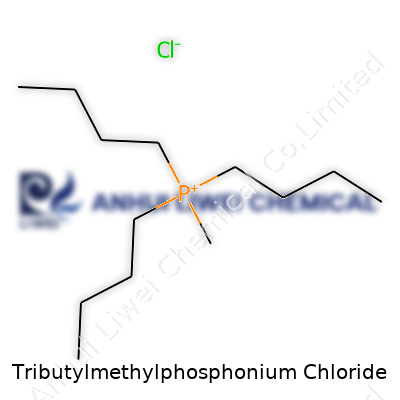
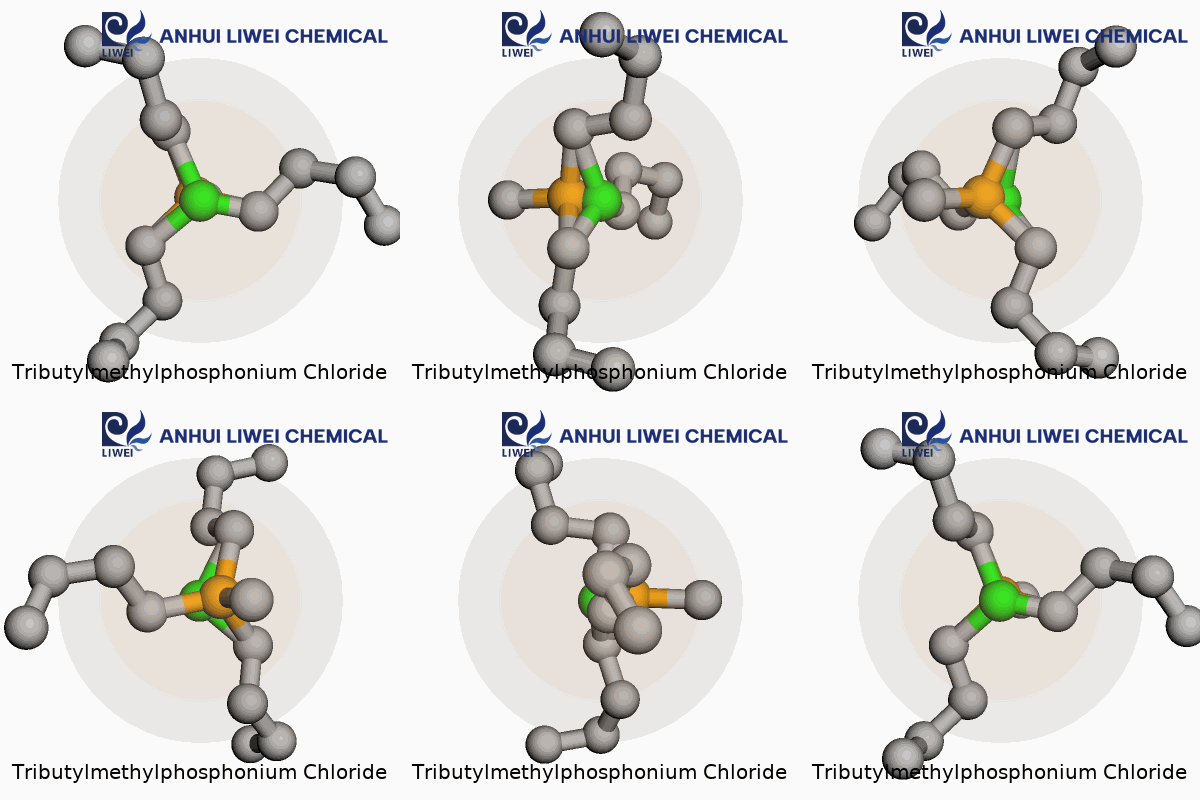
The name “tributylmethylphosphonium chloride” might look like a tongue-twister, but it holds clues. At its core, this compound includes a phosphorous atom surrounded by three butyl groups (each butyl is a straight chain of four carbons: C4H9–) and an extra methyl group (CH3). These four groups attach to the phosphorous, making a positively charged ion, or cation. The chloride part refers to a chloride ion, which is the counterbalancing anion in this salt.
Piecing Together the Formula
I still remember the first time I read the formula for a phosphonium salt in a chemistry lab. It was a bit daunting until I broke it down, group by group. Tributylmethylphosphonium cation brings together three butyls and one methyl around a phosphorus atom, forming [P(C4H9)3(CH3)]+. Those butyls—each being C4H9—add up, and the methyl tags along. Then the chloride anion (Cl–) comes in to balance the charges.
The exact chemical formula: C13H32PCl.
Chemists constructed this formula by adding up three butyl chains (3 × C4H9 = C12H27), one methyl (C1H3), the central phosphorous (P), and then the chloride (Cl). Bring them together: C12 + C = C13, H27 + H3 = H30. With two hydrogens coming from the positive charge stabilization in the cation, the total hydrogens are H32. This math gets easier after you do it a few times, just like following a family recipe by memory.
The Relevance in Industry and Research
This compound has carved out roles in both lab research and production. As an ionic liquid or as a phase transfer catalyst, tributylmethylphosphonium chloride often slips into complex organic syntheses. For folks working in sustainable chemistry, the ionic liquid angle attracts attention. A lower-melting point means it can sometimes replace more volatile organic solvents in certain situations. This switch supports safer environments and less waste–something everyone can get behind.
Handling salts like these calls for respect in the lab. The phosphorus-based cations can change the rate or outcome of reactions, especially those involving nucleophiles, so every student in advanced organic labs soon learns how small tweaks can yield big changes. Chemistry instructors and researchers see value in studying these compounds, thanks to their versatility in extraction, catalysis, and more.
Safety and Environmental Considerations
Like many chemicals, tributylmethylphosphonium chloride deserves attention regarding health and the environment. Some phosphonium salts can break down into less-friendly by-products, especially with heat or improper disposal. I always recommend double-checking the material safety data sheets, keeping spills contained, and thinking ahead about disposal. In university research, we treated these compounds as “use with care” items: gloves, good ventilation, and thoughtful waste management stayed front of mind. Small lab actions make a difference in reducing chemical hazards outside lab walls.
Moving Toward Safer Chemistry
Could industry use greener alternatives? Researchers push all the time for ionic liquids that break down more easily after use, and for more natural catalysts. The search for sustainable substitutes comes from both grassroots scientists and regulatory nudges, aiming for a world where chemistry powers progress without causing headaches. Wider awareness—by scientists and manufacturers alike—pushes safer practices into the routine, not just the exception.
The formula C13H32PCl sticks with anyone who spends time in the lab, not just for what goes on the page, but what it means for safer, smarter chemistry.
Digging Into the Safety of Tributylmethylphosphonium Chloride
My first encounter with chemicals like tributylmethylphosphonium chloride came in a university lab, where gloves and goggles were just a small part of the big picture. Reports show more companies pull compounds like this off shelves for specialized industrial tasks. As interest grows in innovative ionic liquids, safety slips to the front of any responsible conversation. The trouble? Even seasoned chemists sometimes treat new substances like old familiar solvents, only to get caught off guard.
Toxicity Risks Based on the Science
Data on tributylmethylphosphonium chloride remains pretty limited, but we know that many quaternary phosphonium salts bring their own baggage. Several safety data sheets flag eye and skin irritation as common concerns. If you spill any on your hands, redness and a burning sensation sneak up quickly – I’ve stocked labs where you could smell the difference if someone got careless with a similar compound. Swallowing or inhaling this type of chemical would be a bad call, with risks of nausea, headaches, or worse. Some phosphonium salts also show toxicity for aquatic life. It doesn’t take a giant spill to trigger a red flag; labs now regulate even gram-sized experiments.
Chronic Exposure — Lessons From Other Salts
Long term effects often fail to show up on initial tests. Occupational exposure stories from the chemical industry suggest repeated skin contact makes eczema or dermatitis more likely. Inhalation, even in small amounts, sets off respiratory symptoms like cough and sore throat. Regulatory agencies haven’t labeled tributylmethylphosphonium chloride as a confirmed carcinogen, but scientists keep an eye out for surprises as the years go by. Until larger and better-documented toxicology work turns up, it makes sense to lump this compound together with other organophosphorus options: treat it with respect, limit contact, use proper extraction hoods, and keep airtight containers.
Taking Personal and Environmental Safety Seriously
In my own research, fume hoods weren’t just for show — inhaling low levels of novel chemicals isn’t a great strategy for a long career. Gloves, safety goggles, and dedicated lab coats provide clear barriers. I’ve watched colleagues pay careful attention to how waste gets labeled and stored, especially since city wastewater systems can’t break down every kind of chemical. Many companies now encourage double-bagging and secondary containment, so nothing leaks.
At the environmental level, tributylmethylphosphonium chloride tracks a pattern shared by many synthetic salts. Once they enter waterways, reversing the damage gets expensive and complicated. Even chemicals showing only moderate toxicity can accumulate or interact with other agents, causing trouble for fish and amphibians. Waste professionals advocate for collection and specialist disposal — not the kitchen sink. Small acts like reading the MSDS sheet and following green chemistry guidelines help.
Steps Toward a Responsible Future
Manufacturers supply bulk quantities and engineers dream up new uses for ionic liquids every year. This should always come with updated guidance and clear instructions for users. Training everyone who handles such materials on spill protocols, personal protective equipment, and disposal is not a bureaucratic box-check; it’s a need for health and environmental protection. Any researcher or worker noticing burning eyes or skin after exposure shouldn’t shrug it off — reporting and medical checks catch the unusual cases before a minor exposure becomes a bigger story. Acting mindfully with chemicals like tributylmethylphosphonium chloride isn’t just for safety’s sake; it’s a matter of daily trust, inside and outside the lab.
Why Safe Storage Matters
Tributylmethylphosphonium chloride isn’t the sort of thing you want to treat casually in the lab or warehouse. Anyone who has spent time around specialty chemicals knows mistakes create serious risk. Mishandling brings everything from mild irritation to environmental harm. Keeping these risks in check means more than tossing a container on a shelf. Based on my own years in academic chemistry, proper storage stops problems before they start and protects everyone—coworkers, the janitor, the overnight security guard. It’s about real safety, not crossing items off a checklist.
Factors Influencing Storage Decisions
So what sets this compound apart? For starters, tributylmethylphosphonium chloride reacts differently under heat or light compared to an ordinary salt. Storing it at room temperature, away from sources of moisture or direct sunlight, prevents unexpected changes. Moisture encourages clumping, breakdown, and possibly even creates byproducts that can confuse downstream applications. According to major suppliers, dry, cool storage extends shelf life and delivers pure product, which means fewer headaches during important experiments or industrial runs. The last place I want to find a surprise contaminant is in a reaction that took weeks to set up.
Containment and Labeling Make a Difference
In my own lab, swapping mystery bottles for labeled containers drove home how small habits stack up. Clear chemical names, hazard warnings, and dates of receipt carve out a safer environment. Tributylmethylphosphonium chloride should stay in airtight containers built from materials that don’t react with organophosphorus salts. Polyethylene or glass generally holds up well. It’s easy to overlook container compatibility, but mismatched storage could cause leaks or contamination. People who worked in chemistry before strict labeling rules came into play recall how even experienced staff ended up with accidental exposures due to generic or reused containers.
Separate from Incompatibles
Good storage helps by keeping reactive materials apart. Phosphonium salts should not share space with oxidizers or strong acids. Storing in dedicated cabinets—especially chemical safety cabinets—means fewer accidents if a spill happens. In my experience, even the most careful lab worker occasionally drops a bottle or leaves a cap loose. Segregation limits the consequences to a small area so cleanup is faster and people stay safe. It also cuts the risk of small fires or chemical releases, which never look good in an incident report.
Spill Control and Access
Only trained personnel should handle or access this substance. Accidental spills demand a plan with materials like absorbent pads and proper disposal bags on hand. After cleaning up more than one chemical spill myself, I know speed and preparation matter even more than having the right binder in the office. Proper ventilation where the chemical is stored also makes a difference, since it helps keep airborne concentrations low if bottles leak or break. A dedicated storage area, with signs warning about hazards, signals to everyone that this isn’t just sugar or table salt—it’s something that could hurt someone who isn’t careful.
Emphasizing a Culture of Safety
No one can anticipate every hazard, but clear rules and careful habits limit the possible fallout. Safety data sheets from trusted suppliers detail protection standards, so review those regularly and stay current with best practices. Teaching newcomers in the lab saves future trouble. Responsible storage of tributylmethylphosphonium chloride builds trust among team members and sets a lasting example for younger scientists learning the ropes.
Understanding What You're Dealing With
Handling chemicals in a lab doesn’t forgive carelessness, and Tributylmethylphosphonium chloride belongs to the group that really tests attention to detail. This compound, like many ionic liquids, doesn’t give off the same clues you might expect from more volatile reagents. No strong smell, no obvious color change, but trouble shows up quick enough if you drop your guard. Years of lab work have taught me that cutting corners, even on “routine” days, sets you up for a whole world of discomfort if something splashes or spills.
Gloves Matter More Than You Think
Nitrile gloves serve as a strong line of defense with this chemical. Skin exposure can irritate or even burn. I learned this lesson after watching a colleague shrug off a tiny splash, only to complain about itching and redness within an hour. Disposable lab coats block most splatter, but I always recommend wearing long sleeves underneath as backup. Safety goggles aren’t optional either, especially since some people react strongly even to indirect contact with their eyes or eyelids.
Ventilation Cuts Down the Risks
Pouring or transferring Tributylmethylphosphonium chloride in open air exposes you to airborne particles, which you don’t want in your lungs. A chemical fume hood does most of the heavy lifting, pulling away stray mists and vapors. Even if paperwork claims it's not very volatile, every scientist I know sticks to the hood for such tasks. I keep solvent-resistant paper towels close by — vinegar and water for basic cleanups, but a full spill kit if things go sideways.
Respect Every Label, Double-Check Every Step
Reading labels every time you pick up a bottle or vial saves a lot of grief; old containers can be especially easy to mix up. I’ve seen talented folks wreck glassware or waste hours by rushing through their prep. Labels and Safety Data Sheets (SDS) fill in gaps about stability and reactivity, so reviewing the SDS before the workday becomes a habit. That habit helps anyone predict how this salt might react with acids, bases, or even moisture, which isn’t always obvious at first glance.
Don’t Skip Emergency Prep
Knowing where the eyewash station and shower sit in the lab changes a close call into a non-event. Training sessions seemed boring to me as a student, but after using the eyewash for a splash, I realized just how quickly the right gear prevents a bigger disaster. Before opening up a new bottle, I always make sure the eyewash isn’t blocked and the nearest spill kit stays fully stocked. A small emergency card listing the right response to exposure — including who to call and how — hangs by my desk. There’s no shame in going slow if you’re looking out for both yourself and your coworkers.
Keep Cleanup Honest and Direct
Waste from Tributylmethylphosphonium chloride can’t get tossed in the drain. Designated chemical waste bins or sealed containers go straight to official disposal channels. I never trust quick fixes or shortcuts for cleanup, since they tend to create messes nobody wants to deal with down the line. Log every disposal and note any accidents, since tracking mistakes helps the whole team avoid repeating them.
Treating every compound with real respect isn’t just about ticking boxes on a safety checklist. It builds trust in yourself, your team, and the work you do. No experiment or shortcut outweighs staying healthy and sending everyone home safe once the day is done.