Tributyloctylphosphonium Bromide: A Grounded Look at a Unique Chemical
Historical Development
The path leading to tributyloctylphosphonium bromide traces back to the growing need for more specialized ionic liquids and efficient phase transfer catalysts. Chemists working through the late twentieth century began pushing boundaries with quaternary phosphonium salts, using their unique properties for a new level of control in organic synthesis and industrial separations. Major breakthroughs popped up as researchers swapped out traditional alkyl groups for bulkier or more hydrophobic ones — that’s where the octyl group entered the picture, creating hybrids that could handle tough solvents and high temperatures. Over the years, the popularity of this class of compounds didn't spike by accident; plenty of evidence suggested their use led to greater efficiency, cost savings, and sometimes even fewer byproducts.
Product Overview
Tributyloctylphosphonium bromide belongs to the phosphonium salt family, sporting a heavy alkyl chain alongside the well-known triplet of butyl groups anchored to a phosphorus center. Folks in the chemical industry recognize it as a standout for its role in catalysis, extraction, and synthesizing complex molecules. The presence of the octyl group tweaks not only its solubility and stability but also expands the utility of this compound in tough organic and inorganic environments. You’ll spot it on shelves bearing trade names such as TBOPBr or with codes unique to different manufacturers.
Physical & Chemical Properties
This compound shows up as a white to off-white crystalline powder, free of strong odor but sometimes a bit waxy to the touch. It boils and melts at temperatures considerably higher than similar quaternary ammonium salts, giving it staying power in harsh processing conditions. Water solubility runs low due to the long alkyl chain, but it slides easily into organic solvents like dichloromethane and toluene. The phosphonium core remains steady in bases and weak acids, though strong oxidizers can break the molecule down. The bromide counterion adds heft and stability, especially for use in high-ionic-strength media.
Technical Specifications & Labeling
Every batch of tributyloctylphosphonium bromide comes with a detailed certificate of analysis, spelling out not just purity (often north of 98%) but also levels of moisture, chloride byproducts, and trace metals. Labels flag hazards tied to skin and eye irritation, plus toxicology details and unique CAS details for tracking and traceability. In labs and factories, workers rely on standardized packaging that blocks light and moisture exposure, using tough containers that hold up against breakage. Clear instruction sheets outline safe handling, storage, and disposal.
Preparation Method
Typical synthesis starts with reacting tributyloctylphosphine with a brominating agent like benzyl bromide, running the process in solvents like acetonitrile or toluene under controlled temperatures. These conditions keep side reactions in check and produce a clean yield. Crystallization and multiple filtration steps knock out residual reactants and byproducts. Specialized purification, involving washing or re-crystallization, dials the final product up to research or industrial standards. The process leans on careful timing and precise measurements; seasoned chemists have learned from experience that even small shifts can throw off yield and purity.
Chemical Reactions & Modifications
This compound acts as a robust phase transfer catalyst, moving ions between water and organic layers to speed up reactions that would otherwise crawl. It supports nucleophilic substitutions, facilitating the transfer of large ions or molecules through immiscible solvent systems. On top of that, chemists tweak the molecule itself to tailor solubility and thermal resistance, swapping out alkyl groups as needed to suit a particular use-case. Thanks to its unique architecture, tributyloctylphosphonium bromide laughs off many common reaction conditions, hanging tough in processes where other salts break down or lose effectiveness.
Synonyms & Product Names
A stroll through any chemical supplier’s catalog might list this compound as TBOPB, tributyloctylphosphonium bromide, or simply with its systematic IUPAC name. Depending on the branding, you’ll see short-hand codes, sometimes based on batch or grade, accompanying it on order forms. Researchers looking back through literature also stumble across older or alternate names, reflecting shifts in chemical nomenclature and trade standards over the decades.
Safety & Operational Standards
Working with tributyloctylphosphonium bromide demands respect for its physical hazards. Skin or eye contact frustrates more than just the unprepared—chemical burns and lingering irritation remain a real risk. Inhalation of powder, especially during mixing or weighing, should never be taken lightly. Standard personal protective equipment becomes the norm: gloves, goggles, and protective lab coats. Ventilated hoods and fume extractors help cut down on inhalation. Storage relies on well-sealed containers in cool, dry environments, away from oxidizers and acids. Disposal happens through accredited waste handlers, since the molecule’s breakdown products can threaten water and soil if released carelessly.
Application Area
Industries put tributyloctylphosphonium bromide to work in a host of arenas, mainly as a phase transfer catalyst in organic synthesis and polymer production. Manufacturers making specialty plastics, surfactants, and agrochemicals take advantage of its sturdy structure and broad compatibility. In pharmaceuticals, its use streamlines steps that require moving stubborn ions or molecules between solvents. Researchers in green chemistry eye this compound for developing less wasteful processes, leveraging its ability to run reactions under milder conditions with fewer toxic side-products. Its performance in handling stubborn ionic transfers or driving tough reactions places it several steps ahead of lighter, less robust alternatives.
Research & Development
The last decade brought a burst of interest in the ways ionic liquids and phosphonium salts like this one can create safer, more sustainable chemical processes. Research teams push boundaries by exploring new reaction mechanisms, making use of tributyloctylphosphonium bromide’s ability to boost yields or enable clean separations. Some groups work on recycling methods, hoping to reclaim and re-use spent catalyst instead of disposing of it. Advances in analytical chemistry allow deeper insight into how this compound interacts with substrates across temperatures and pressures, opening up possibilities for continuous-flow reactors and modern high-volume production. Collaboration between academia and industry leads to incremental, steady progress backed by practical, real-world data.
Toxicity Research
Early work on this class of compounds flagged some toxicity risks, mainly tied to the bromide ion and the bulky organic cation. Rodent studies suggest that chronic exposure or accidental ingestion triggers nervous system symptoms and can strain kidney and liver function over time. Human case reports, though rare, point out the dangers of careless handling or incomplete protective measures. Water treatment professionals worry about the accumulation of phosphonium residues in runoff and groundwater, as their structure resists microbial breakdown. Regulations now push for better containment, environmental controls, and personal safety measures, reflecting practical lessons learned in labs around the world. Scientists keep working on less toxic tweaks and greener disposal solutions to lessen future risk.
Future Prospects
Looking forward, tributyloctylphosphonium bromide stands out not just for what it does today, but for the role it might play in tomorrow’s chemical industry. As calls for greener, more efficient production methods intensify, demand for catalysts and ionic liquids with this level of toughness and flexibility will climb. Innovation in synthetic chemistry continues to break old bottlenecks, using tools like this compound to boost yields and lower energy use. Researchers also keep a close eye on environmental and health risks, dedicating resources to making safer variants and smarter recycling technologies. With each step forward, achievements in both effectiveness and responsibility become more attainable, promising a future where compounds like this one pull double duty — powering breakthroughs and safeguarding health and the planet in parallel.
The Real-World Role of Tributyloctylphosphonium Bromide
Most people don’t recognize tributyloctylphosphonium bromide by name, but its reach extends into many chemical processes that shape new products. In a research lab, the compound draws interest because of its function as a phase-transfer catalyst. With its unique molecular makeup, it can help blend substances that resist mixing. In daily life, no one asks whether adhesives contain phase-transfer catalysts, but when glue needs to set quickly and bond tough surfaces, tributyloctylphosphonium bromide often plays a hidden role.
Applied Chemistry in Action
My experience working alongside chemical engineers led me to see how efficiency can mean the difference between mediocre and great results. Tributyloctylphosphonium bromide shows up in reactions where water and oil normally don’t mix. It stands at the boundary, creating a bridge between those worlds, pushing molecules from one phase into another so they can react together. Factories take advantage of this to speed up chemical reactions, reduce waste, and sharpen purity in the final product.
Industries tackling polyether and polyester production favor this catalyst for its ability to coax raw materials into forming bonds that matter. For instance, without it, a simple polymerization drags out for hours, chewing through more power and resources. With a well-chosen catalyst, the job finishes in less time and with fewer unintended byproducts. The boost in productivity benefits companies, but it also means less impact on the environment. Leaner processes mean fewer leftovers entering the waste stream.
Quality and Safety Considerations
It’s easy to fall into the trap of chasing productivity without thinking through broader consequences. Safety and handling become a priority any time a chemical like tributyloctylphosphonium bromide enters the picture. The substance isn’t something anyone wants in drinking water or skin contact. I remember protocols that demand gloves, goggles, and serious attention during use. Responsible facilities monitor and contain the material closely, and waste undergoes neutralization before leaving the premises.
Regulatory agencies such as the EPA and OSHA keep a close watch on chemicals of this sort. These agencies drive research toward greener alternatives and better waste management. Some companies now develop catalysts that match or outperform tributyloctylphosphonium bromide but with less toxicity. Cleaner methods come from pressure by both regulators and informed customers demanding safer goods.
Looking Forward: Safer Innovation
Science never remains static. As society looks for ways to reduce environmental risks, the spotlight lands on both the benefits and downsides of manufacturing aids like tributyloctylphosphonium bromide. Alternatives will emerge. Until then, education, training, and responsibility keep both workers and the environment a step ahead of the hazards. Sharing accurate information, from top journals down to worker training, helps everyone see both the risks and the value of these tools in the industry.
Chemicals like tributyloctylphosphonium bromide help deliver materials used every day. Awareness, strong safety habits, and innovation steer us toward a future where results come with fewer trade-offs.
Breaking Down the Molecule
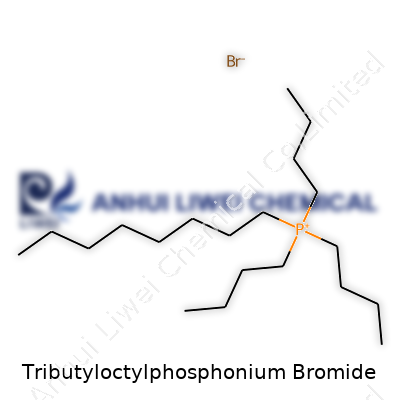
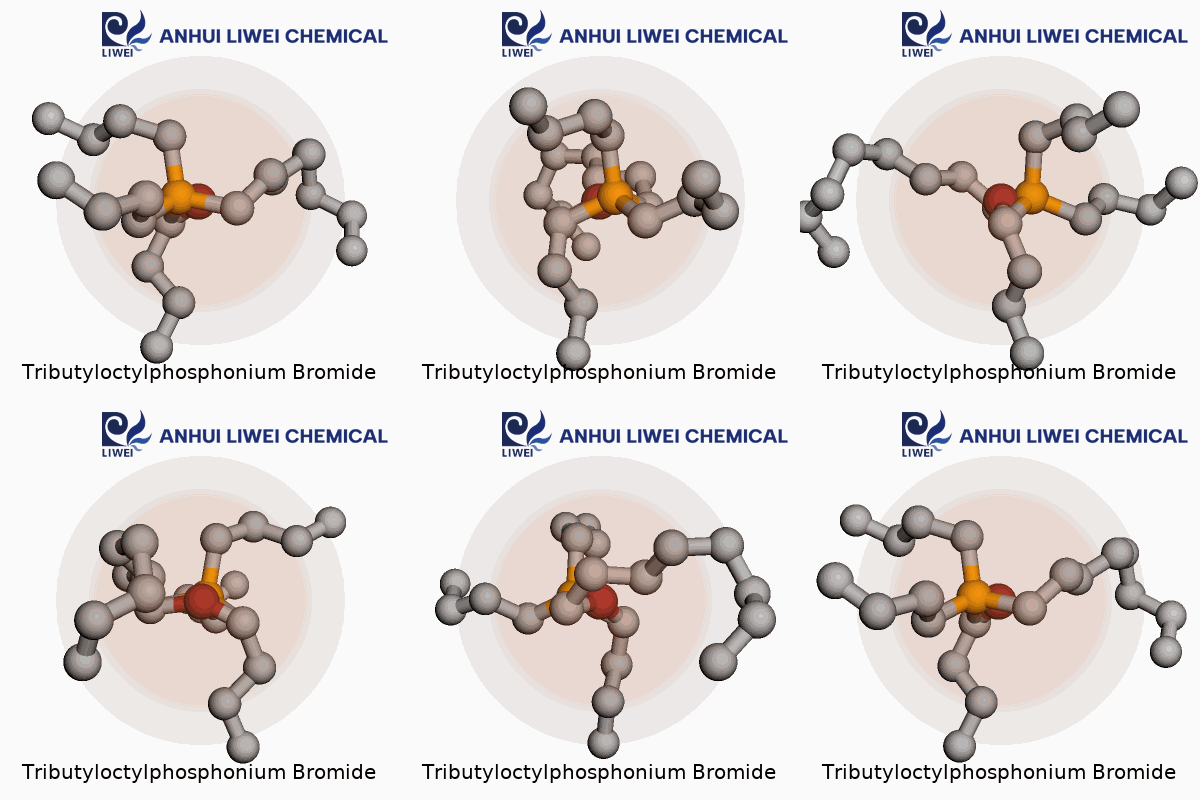
Tributyloctylphosphonium bromide stands out from the usual suspects in the world of salts. The name sounds complicated, but zoom in and you’ll find a pretty clear story. At the core sits a phosphorus atom, acting as the central connector. Four big, carbon-rich arms extend from it: three butyl chains (each holding four carbons) and one octyl group (an eight-carbon chain). This makes the cation (positively charged part) look like a well-dressed phosphorus, surrounded by its hydrocarbon entourage. Next to it, a single bromide ion balances things out, holding a negative charge.
So the full formula reads as [(C4H9)3(C8H17)P]+ Br-. Here, chemistry brings structure and charge together, showing more than just a jumble of atoms—there’s a real backbone to how these elements bond and interact, and that backbone shapes the way this salt behaves.
Putting Knowledge Into Perspective
I first came across phosphonium salts during a lab project tracking the stubborn residues in wastewater treatment. Salts like tributyloctylphosphonium bromide aren’t just theoretical curiosities; they slide right into tasks where other chemicals would fumble. The large, bulky organic groups create space around the phosphorus, making the whole ion big and slow-moving compared to something like sodium or potassium. This size and shape impact how the molecule dissolves, interacts, and sits in environments, from industrial processes to experiments looking for green chemistry solutions.
Scientists and engineers keep coming back to these phosphonium salts because the bulky arms open the door to unique physical properties. For instance, compared to traditional salts, these can lower melting points and boost solubility in organic solvents. You see them show up in ionic liquids—liquids made entirely of ions that stay runny even at room temperature. It’s almost like having a salt that pours smooth as olive oil, which could shake up solvent choices for separating chemicals or storing energy.
Why It Matters in Practice
Understanding the structure isn’t just about filling a textbook chart. I’ve watched colleagues run into problems with toxicity, corrosiveness, or cost when reaching for traditional solvents or electrolytes. Compounds like tributyloctylphosphonium bromide offer another path: low volatility, tunable properties, and, sometimes, a friendlier face for both people and the planet. Of course, every new chemistry solves some problems and makes fresh ones. The long alkyl chains might stick around in the environment, so attention turns to designing versions that break down faster.
Looking at the molecule piece by piece lets researchers fine-tune it for different uses. Swap one chain, adjust the length, and suddenly you have a salt that works better in a battery, carries less environmental baggage, or cuts down on flammable hazards in the workplace. Research poured into these functions could help industries step away from harsh chemicals. More support for carefully tracking how these new materials behave—from the lab bench to the wild—would keep the focus sharp as these phosphonium salts become more common.
Practical Steps Toward Better Chemistry
Clear chemical structure opens the door to practical questions: How can new salts replace riskier or less efficient substances? Could wider adoption help industries meet stricter safety and environmental rules without breaking the bank? Labs building data on toxicity, recyclability, and real-world performance shine a light through the fog. Partnerships between researchers, industry, and regulators might set fair ground rules and move promising tools like tributyloctylphosphonium bromide from oddities into workhorses, shaping a better path for science, safety, and sustainability.
Real Risks Call for Real Action
I’ve seen plenty of labs and facilities relax after a shipment of chemicals moves from receiving to the shelf. But Tributyloctylphosphonium Bromide doesn’t reward carelessness. This isn’t table salt; it’s a specialty compound that can disrupt your workflow or even threaten your safety if you treat it with less respect than it deserves. Common sense and science line up on this one: proper storage keeps both workers and inventory safe, and helps companies meet regulatory standards.
Checking the Right Environment
This chemical reacts to moisture in ways that cause headaches in both the short and long term. Once exposed to air with even a little humidity, clumping and degradation follow. At one contract research lab, I saw a batch get ruined only because someone left the cap loose overnight. Equipment started failing calibration, and no one wanted to admit the source. That batch ended up as hazardous waste and ate into the budget.
Airtight containers offer the first line of defense. Polyethylene or glass jars with tight sealing reduce contact with humid air, and desiccant packs inside the container can make a huge difference. If you’ve ever opened a bottle and been hit by a musty smell, you know the desiccant ran out and the chemical took in water.
Temperature Makes or Breaks Stability
Rooms that swing hot and cold shorten the shelf life fast. Ideally, this chemical sits at stable, cool to room temperatures. In my experience, refrigeration adds a layer of protection against chemical change, but only if the substance doesn’t freeze near that temperature. With tributyloctylphosphonium bromide, refrigeration slows decomposition and keeps unexpected reactions at bay. If labeling instructions suggest, refrigeration wins over the open bench every time.
Shielding from Light
It’s easy to underestimate light exposure, especially in brightly lit storerooms. This chemical can break down or discolor under harsh light, which erodes trust in assay results. Amber bottles give an extra buffer, blocking ultraviolet rays. Don’t leave bottles on the window ledge — closed cabinets or chemical storage fridges with opaque doors handle the job.
Labeling and Segregation
Nothing brings on confusion faster than unlabeled containers or mixed-shelf storage. At my former workplace, chemicals wound up in the wrong section too often, leading to near-misses. Clear, bold labels showing full names, dates received, and hazard warnings make retrieval safer. Keep tributyloctylphosphonium bromide apart from foodstuff, acids, and other reactive chemicals. Storing in a dedicated section limits accidents if someone grabs the wrong jar by mistake.
Training: A Regular Investment
No storage system endures without staff training. Updating everybody on new storage rules, making checklists for required handling gear, and supervising how chemicals move between rooms stop shortcuts from becoming habits. Safety gear like disposable gloves and goggles forms a solid backup. I’ve watched the difference between a lab with ongoing training and one that calls annual refreshers a nuisance. The former dealt with fewer spills and never scrambled for SDS sheets during emergencies.
Moving from Routine to Safe Habits
Tributyloctylphosphonium bromide doesn’t belong on a dusty storeroom shelf, left to fate. Small steps make big differences: use the right containers, control air and light, keep temperatures steady, and label clearly. Every cycle of proper handling pays back in safety, resource savings, and clean audit trails. The people using these chemicals keep themselves and their workplaces safer with a little vigilance and a refusal to take risky shortcuts.
Digging Into the Facts
Tributyloctylphosphonium bromide sits on a long list of chemicals that most people outside of specialty labs never hear about. The name sounds complicated, but what really matters to most of us is simple: is this stuff bad for our health or the environment? My conversations with chemists and a bit of old-fashioned digging say we should pay close attention—these quaternary phosphonium salts haven’t earned much mainstream public scrutiny, but that doesn’t mean they’re safe by default.
Stepping back to those with first-hand lab experience, the stuff gets respect for its power and stability. A compound like this doesn’t break down easily, and that’s where trouble can start. Substances that stick around end up everywhere. Research shows some phosphonium salts bioaccumulate in aquatic animals, which can set off a chain reaction through the food web. That’s not just a theory—real-world measurements have pulled related compounds out of river sediment and shellfish near industrial sites.
What about human health? Most common laboratory protocols treat phosphonium salts with gloves, goggles, and plenty of ventilation, suggesting experts don’t trust skin or lung exposure. Acute toxicity numbers might look low, but that ignores what actually happens after years of tiny repeat exposures. Nobody wants to gamble with that in their body, and slow, silent effects like hormone disruption often take years to surface. Without long-term public studies on tributyloctylphosphonium bromide itself, trusting the absence of evidence seems reckless. It reminds me a bit of early BPA debates, where people waited for disaster instead of acting ahead of time.
Misplaced Confidence in Regulation
Pointing to a material safety data sheet for comfort only gets folks so far. Government guidelines often trail behind real science. Some countries regulate compounds like this tightly, but others don’t check at all. It’s not rare to find hazardous materials flowing freely through supply chains where oversight is spotty—think about the global nature of chemical trade for a second, and the lines between “safe” and “unsafe” blur.
My own reading of regulatory filings and chemical warning reports consistently shows one pattern: too many chemicals turn out to be hazardous only after decades of unchecked use. One can look at PFAS or flame retardants as cautionary tales. Often the people downstream from chemical production—workers, communities near plants, even small children—face the worst risks, while manufacturers move on to the next new thing.
Better Choices, Real World Action
Putting all that together, a push for strong workplace protections and real monitoring provides the only sensible way forward. Facilities using tributyloctylphosphonium bromide ought to invest in sealed systems and strong air handling. Workers deserve accurate hazard training, not boilerplate handouts. Down at the consumer level, honest labeling and more open reporting about environmental releases help build public trust and protect those who don’t get a say in what chemicals end up on their doorstep.
Alternatives to tricky compounds exist, but only if industry keeps searching and governments set the bar higher. From my own time working with researchers trying to swap out persistent chemicals, real change takes both pressure and creativity. Chemists, public watchdogs, and even the occasional stubborn journalist all have a role to play.
The Many Hats of a Specialty Chemical
Tributyloctylphosphonium bromide doesn’t make headlines, but that’s often the case with specialty chemicals that quietly support much bigger processes. Dig into any modern production chain, and odds are you’ll bump into chemicals like this one—each carrying a mix of utility, risk, and opportunity. This compound has a knack for helping machines and chemists push through difficult syntheses or separations. Useful isn’t always glamorous, but it’s valuable in ways that affect whole industries.
Key Roles in Pharmaceuticals and Catalysis
For anyone working in pharmaceutical labs, reaction speed and clean end-products always matter. Tributyloctylphosphonium bromide earns its keep as a phase-transfer catalyst. In simple terms, it helps shuttle ions or molecules out of their comfort zones—across barriers that slow reactions in standard setups. Removing those bottlenecks means fewer steps, less waste, and often a better yield. Published studies back up these claims: research from the American Chemical Society shows improved efficiency in organic synthesis using phosphonium-based catalysts.
Chemists like to avoid unwanted leftovers in their batches. This compound often helps build purer molecules, especially in making complex organic drugs or active pharmaceutical ingredients (APIs). Its structure—a bulky phosphonium ion—lets it perform where others stall out, stepping in to solve problems with solubility or stubborn by-products.
Polymers and Materials Science
Beyond the lab, manufacturers of specialty plastics and composites appreciate the advantages Tributyloctylphosphonium bromide brings to polymerization reactions. It influences the structure and properties of plastics by guiding the way monomers snap together. This means companies can fine-tune the flexibility, strength, or stability of products. In the world of high-performance coatings and adhesives, these benefits turn up in better performance on production lines and in end products that last longer under stress.
Electrochemistry and Energy Storage
The shift toward greener batteries and capacitors puts new demands on supporting chemicals. Electrolytes inside batteries need to allow ions to move with as little resistance as possible while staying stable under heavy use. With its ionic character, Tributyloctylphosphonium bromide steps in, creating new electrochemical environments. Some research circles focus on these salts for their low volatility and high ionic conductivity, reducing the risks linked to battery fires or leaks. Peer-reviewed articles from journals like Energy & Environmental Science demonstrate positive results for phosphonium salts in lithium-ion batteries.
Environmental Considerations and Safer Handling
No chemical in industry deserves a free pass on safety. Older compounds with similar structures often show up on regulatory watchlists. Tributyloctylphosphonium bromide gets regular scrutiny in green chemistry efforts. Technical leads and plant managers can limit exposure and waste by closing the loop—recovering catalysts and recycling them. Investment in safer alternatives or bolt-on purification might cost more at first, but health and environmental data suggest the effort pays off down the line. Industry guidelines from the European Chemicals Agency (ECHA) highlight ongoing work to ensure strict standards in its handling and disposal.
Finding Solutions in Real-World Operations
In my time working with engineers and chemists in processing plants, any tool that shortens production time or reduces chemical leftovers gets everyone’s attention. The path forward looks practical: focus on process optimization, invest in recovery systems, and push for collaboration between labs and safety teams. This chemical may never attract big headlines, but its role in tough reactions and demanding environments keeps modern industry running a bit smoother—and that’s worth understanding.